
Last updated November 21, 2026
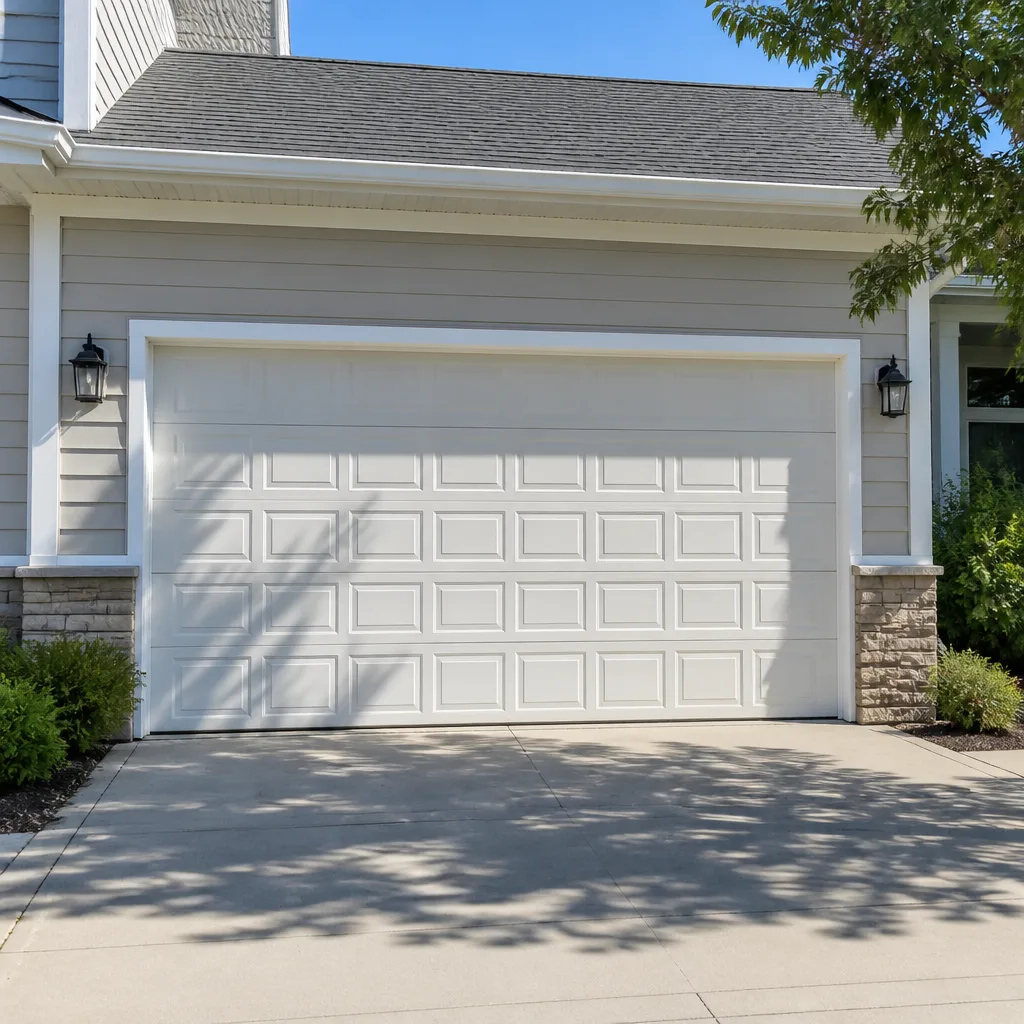 Raised-panel steel
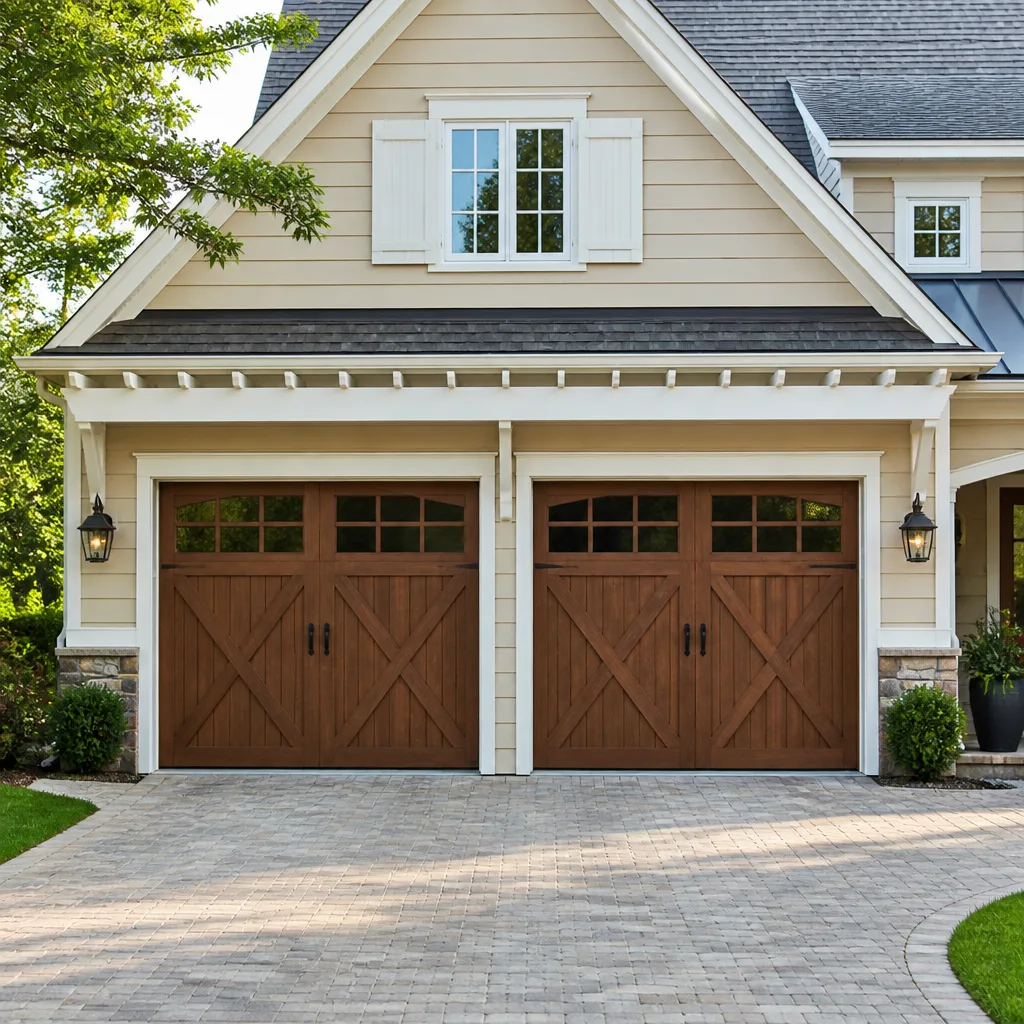 Carriage house
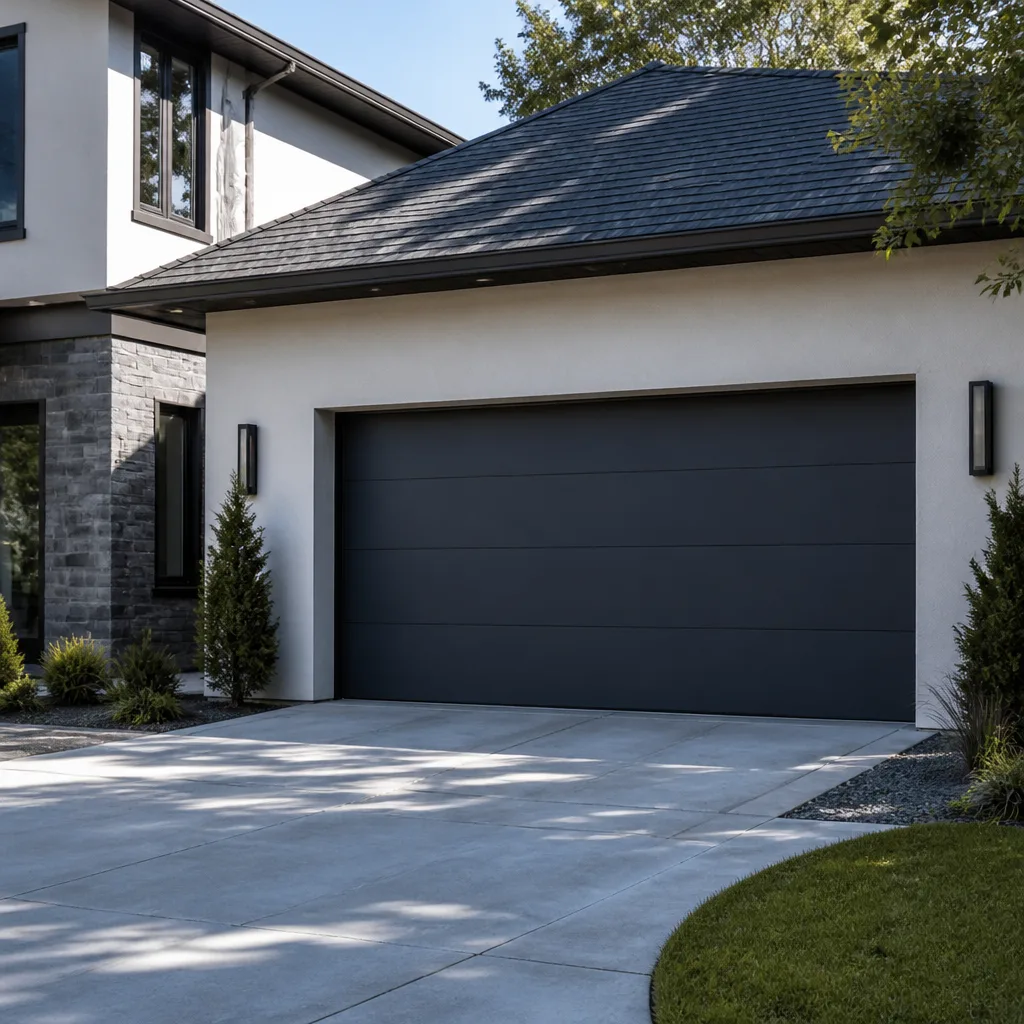 Modern flush
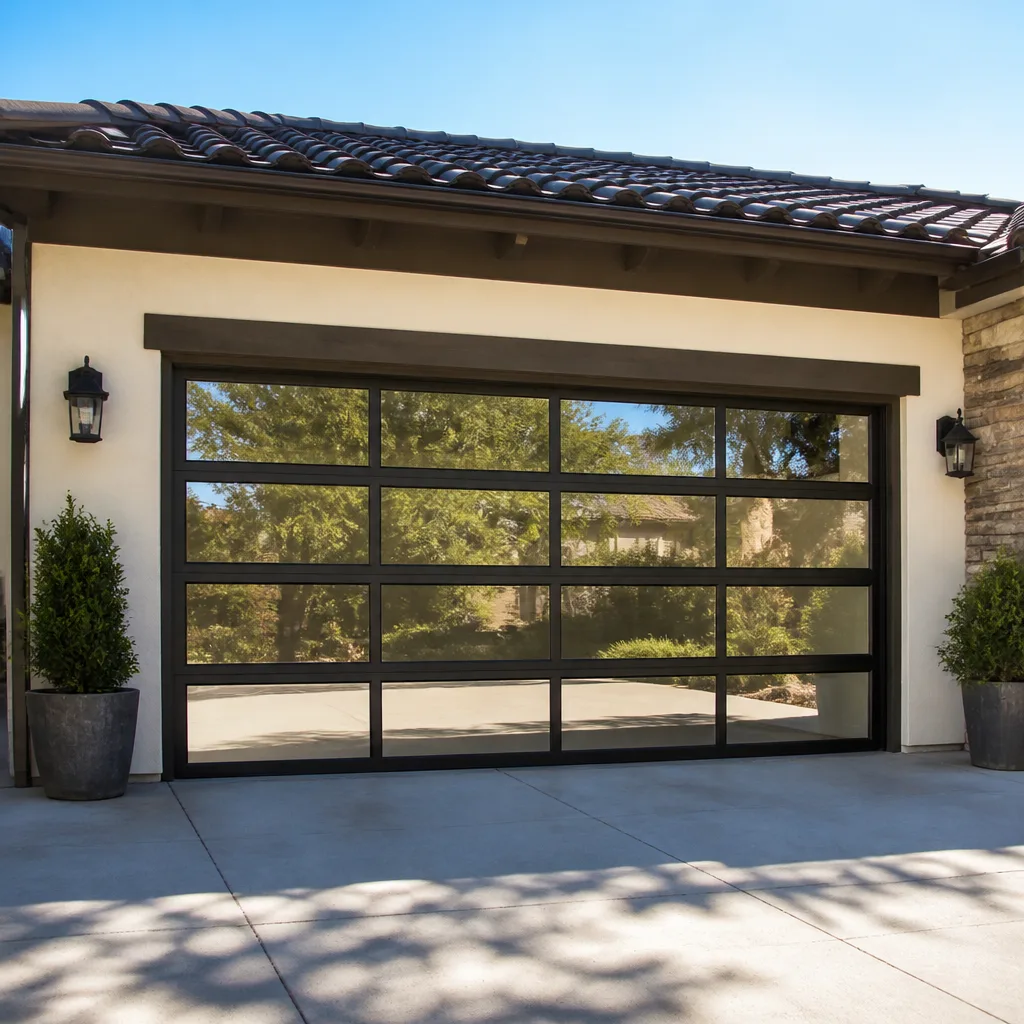 Full-view glass
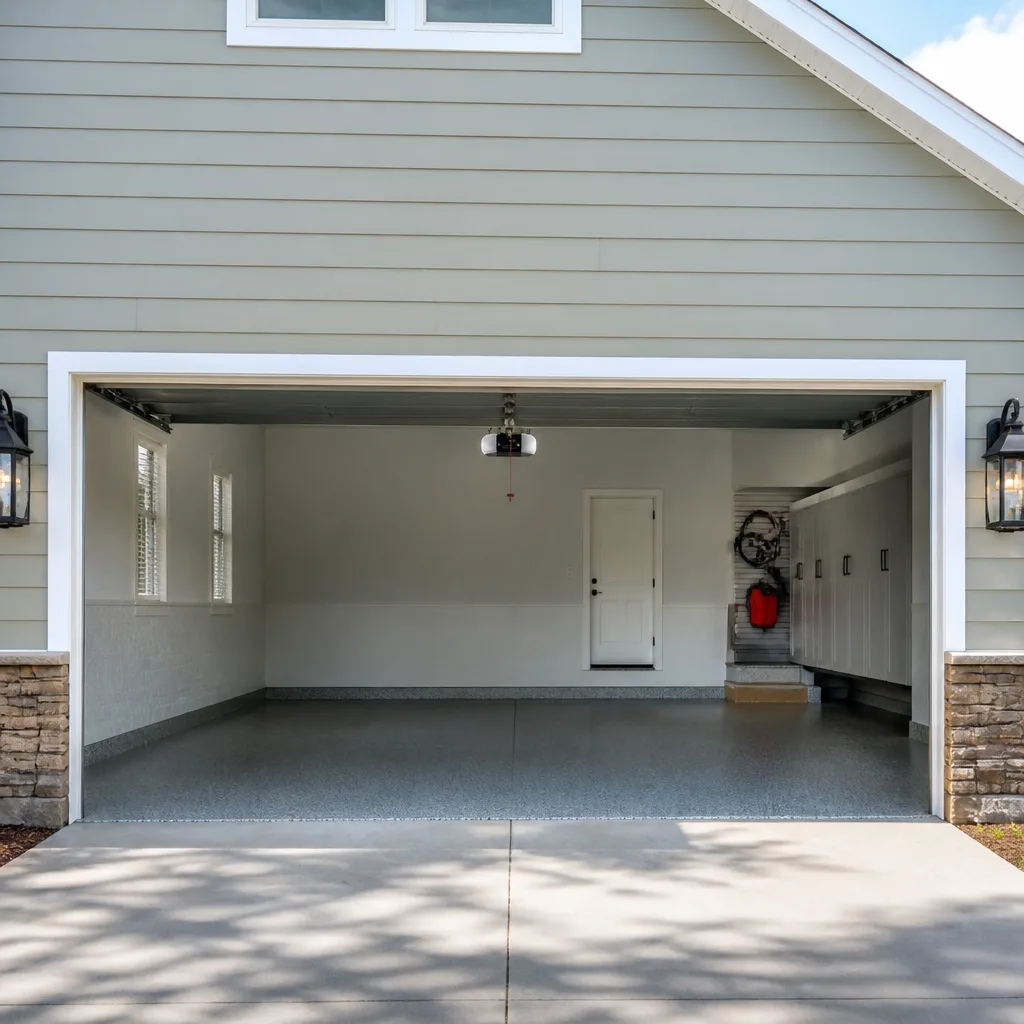 LiftMaster openers
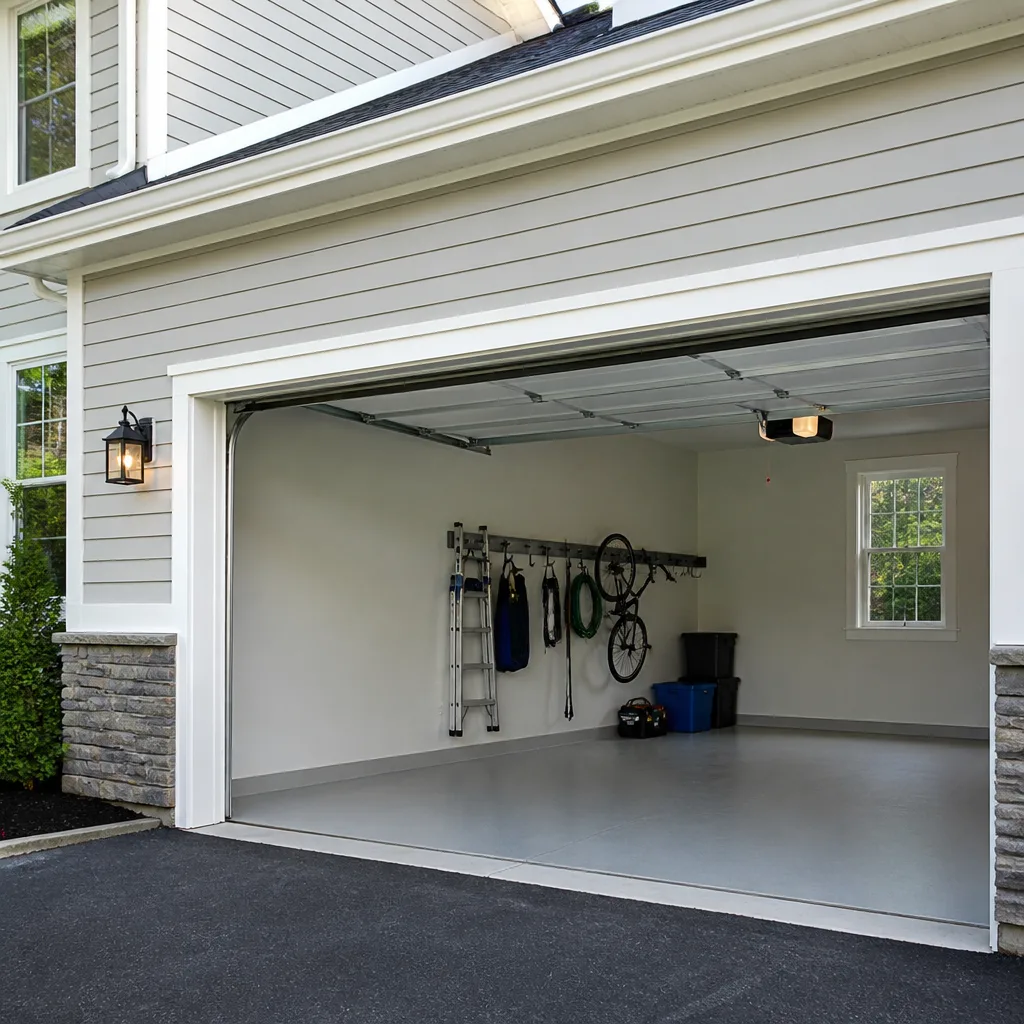 Chamberlain openers
Full 25-point door and opener safety check with every visit - springs, cables, rollers, tracks, and your LiftMaster or Chamberlain opener included
You get a price before we start. It does not change when the pro arrives.
Get your free estimateThe Complete Guide to Garage Doors in Baytown
A steel garage door that performs perfectly in Phoenix can rust through its bottom panel after a few humid Baytown summers. That’s the part most national buying guides leave out. They’re written for a country that doesn’t have our heat, our humidity, or our wind season, and they hand you advice that quietly fails here. This guide is organized around the Gulf Coast environment instead of treating it as a footnote: how the climate affects which door you buy, which opener lasts, why your bottom seal rots while your neighbor’s inland door doesn’t, and what work actually costs in Baytown. By the end you’ll know how to choose, maintain, and repair a garage door system built for this specific place.
Quick Answer
A garage door in Baytown needs to survive heat, humidity, and hurricane-season wind, so the right choice usually means a galvanized steel door with a heavier gauge and proper bracing, a bottom seal suited to a flood-prone lot, and an opener rated for attic heat that climbs past 130°F in summer. Repairs are straightforward for a specialist and risky for a generalist, especially anything involving springs. A free written estimate from a garage door specialist is the fastest way to know what your particular system needs.
Styles & brands we work with
- Raised-panel steel
- Carriage house
- Modern flush
- Full-view glass
- LiftMaster openers
- Chamberlain openers
Table of Contents
- Why Garage Doors Age Differently in Baytown
- Wind-Load Requirements and What They Mean for Your Door
- Choosing Materials for Coastal Humidity and Heat
- Openers in a Hot Attic: LiftMaster, Chamberlain, and Genie
- What Garage Door Work Costs in Baytown
- Flood-Prone Lots, Threshold Seals, and Weatherstripping
- A Maintenance Routine Built for the Gulf Coast
- Springs: The Part You Should Never Touch Yourself
Why Garage Doors Age Differently in Baytown
Most garage door advice assumes a dry, stable climate. Baytown doesn’t offer one. The combination of sustained summer heat, high humidity for much of the year, and a real hurricane season puts more stress on a door system than temperature swings alone ever could. Understanding that stress is the difference between a door that lasts and one that starts failing in a few years.
Three forces do most of the damage here:
- Heat. Summer attic temperatures in Baytown regularly climb past 130°F. That’s where your opener motor lives, and it’s the environment that determines whether an opener lasts or overheats.
- Humidity. Moisture in the air attacks the bottom edge of the door first, where steel, paint, and weatherstripping meet the floor. That’s the spot that rusts and rots while the rest of the door still looks fine.
- Wind season. A door is a large flat surface, and in a high-wind event it takes load the way a sail does. Doors without proper bracing and reinforcement can buckle under that pressure.
What this means practically: the material choices, the gauge of steel, the bottom seal, and the opener all matter more in Baytown than they would in a drier Texas city. A door that’s “fine” by national standards may be undersized for what our environment delivers. When homeowners tell us their door handle problems quickly here, it’s rarely random – it’s one of these three forces doing its work.
Wind-Load Requirements and What They Mean for Your Door
Wind-load requirements shape which door construction is actually appropriate in Baytown, and most buying guides skip this entirely. A garage door is one of the largest openings in your home, and under wind pressure it’s one of the most vulnerable. Harris County’s requirements exist for that reason. If you’re replacing a door, you want a product rated for the wind exposure at your property, not a generic door pulled from a national catalog.
Broadly, doors fall into three categories of reinforcement:
- Standard construction. Fine for most everyday residential use, but not built to hold up under significant wind load.
- Braced or reinforced doors. Extra struts and heavier hardware stiffen the door so it resists deflection under pressure.
- Impact and wind-rated doors. Purpose-built to meet specific wind-load ratings, typically with heavier gauges, more robust hardware, and engineered bracing.
Which one you need depends on your home’s location, exposure, and what the local building department requires for your project. We don’t guess at that and you shouldn’t either. The right move is to ask the City of Baytown’s building department what a garage door replacement requires for your address, then match the product to that answer. The written estimate should spell out the door’s rating so you know exactly what you’re buying. This is the single most important step most homeowners skip before a replacement, and it’s the one that determines whether the door is right for Baytown wind.
Choosing Materials for Coastal Humidity and Heat
Material choice is where national advice fails most often in Baytown. A steel door, a wood door, and an aluminum door all behave differently under constant humidity and strong sun, and the cheaper option up front often isn’t the cheaper option over time. The gauge of steel, in particular, matters more here than it would inland.
Here’s how the common materials hold up here:
- Galvanized steel. The most common choice, and for good reason. Galvanized coating resists rust, and a heavier gauge resists denting and flexing. In Baytown’s humidity, the gauge is what separates a door that lasts from one that rusts through at the bottom edge. Don’t buy by price alone; ask what gauge the steel is.
- Aluminum. Won’t rust, which sounds perfect for humidity, but it dents more easily and can flex under wind. A reasonable fit for some homes, a poor one for a high-exposure wall.
- Wood. Beautiful, but the most demanding here. Constant humidity causes wood to swell and contract, and that means more frequent refinishing and a higher chance of warping over the years.
- Composite and insulated options. Worth asking about if you want quieter operation or better heat resistance. Insulation also helps if the garage shares a wall with living space.
For most Baytown homes, a well-made galvanized steel door with a heavier gauge and good bracing is the sensible starting point. Brands like Clopay offer steel doors across a range of gauges, and it’s worth seeing the actual specifications rather than taking “steel” as a complete answer. The bottom line: in our humidity, pay attention to coating and gauge, not just the color and the style.
Openers in a Hot Attic: LiftMaster, Chamberlain, and Genie
Your opener lives in the hottest part of your house. Baytown attics regularly exceed 130°F in summer, and that heat is the single biggest factor in opener lifespan. A motor that performs flawlessly in a mild climate can overheat, stall, or fail early in an attic that gets that hot. That’s why the right opener here is about heat tolerance and duty rating, not just features.
What actually separates the major brands in this environment:
- LiftMaster. Known for solid build quality and belt-drive models that run quietly and stand up well to heat. A strong default if you want long service in a hot attic.
- Chamberlain. Shares a great deal of engineering with LiftMaster, and many of its belt and chain drives are very capable. A good value choice, and parts are widely available.
- Genie. Offers dependable chain and belt drives and a range of models. Worth comparing on duty rating and drive type for your specific door weight.
Two practical rules for a Baytown attic: choose a belt drive over a chain drive if noise matters and you want smoother operation, and check the motor’s duty rating against how often you use the door. If an opener is failing repeatedly, heat is often the reason, and swapping in another under-rated unit just repeats the problem. An opener repair call can usually tell you whether the unit is overheating, misadjusted, or simply at the end of its life. Your LiftMaster or Chamberlain system, specifically, will have its own quirks, which is why brand familiarity matters when a technician shows up.
What Garage Door Work Costs in Baytown
Garage door pricing here doesn’t match the national averages you’ll find online, and it’s worth understanding why. Labor rates and supplier markups in the Baytown market differ from other parts of Texas, and the material requirements we just covered – heavier gauge, wind bracing, heat-rated openers – affect what a job actually involves. The ranges below are typical estimates for the Baytown area, not national figures. The written estimate sets the final price for your specific job.
| Service | Typical estimated range |
|---|---|
| Garage door spring repair (one spring) | $180-$340 |
| Spring replacement – matched pair | About twice the single-spring range, since both are usually replaced together |
| Opener repair | $120-$260 |
| Opener replacement (unit and install) | $320-$650 |
| Bottom seal / weatherstripping replacement | $90-$220 |
| Panel and hardware repair | $150-$450 |
| New door installation | $900-$3,500 depending on material, size, and wind rating |
Two things drive the numbers up or down: the brand and model of your equipment, and how much of the system needs attention. A single spring replacement is one price; springs that failed and took cables and rollers with them is another. A standard steel door install is one price; a wind-rated door with impact bracing is another. When you get an estimate, ask for it in writing, line by line, before any work starts. That’s the number you should be able to hold us to.
If your door is already down and you need it back in service today, that’s garage door repair, and it’s often a same-day job. For a full opener swap, that’s garage door opener repair territory, and we’ll quote it before we touch anything. And if you suspect the springs are the problem, that’s a different, more careful conversation, which we cover below.
Flood-Prone Lots, Threshold Seals, and Weatherstripping
Baytown has low-lying lots, and that fact changes how you should think about your garage door’s bottom edge. The seal at the floor does two jobs: it keeps water out during heavy rain and it keeps drafts and pests from getting in year-round. On a lot that takes on water, that bottom weatherstripping is the first line of defense, and it’s also the first thing to fail in our humidity.
What to know before you replace it:
- The seal has to sit flush. A gap under the door lets water in during a heavy rain. Check that the door closes against the floor evenly across its width.
- Material matters. Some seals hold up better to moisture and heat than others. Cheap foam weatherstripping degrades fast here; ask what you’re getting.
- The threshold matters too. If your garage floor slopes toward the door or your lot collects water, a raised threshold or a more robust seal can make a real difference.
- Inspect after storm season. Wind-driven rain and debris are hard on bottom seals. Look for cracking, flattening, or gaps at the corners.
A worn bottom seal is one of the cheapest fixes on a door and one of the most valuable in a flood-prone area. It’s also an easy thing to put off until water is actually pooling in the garage. If you’re not sure whether your seal is doing its job, that’s a quick thing for a specialist to check while they’re looking at the rest of the system.
A Maintenance Routine Built for the Gulf Coast
A garage door is a mechanical system with springs, cables, rollers, and tracks that all wear. In Baytown, heat and humidity speed that wear up, which means a maintenance routine here should be a little more frequent than what a national guide recommends. The good news is that most of it is simple inspection, not repair.
- Lubricate the moving parts. Rollers, hinges, and the spring coils benefit from lubrication a few times a year. Use a garage-door-appropriate lubricant, not household oil.
- Check the balance. Disconnect the opener and lift the door halfway by hand. A balanced door stays put. One that drops or rises on its own needs attention.
- Look at the cables and springs. You’re looking for fraying, kinks, gaps, or rust – not touching them, just checking. If something looks wrong, stop and call a specialist.
- Inspect the bottom seal and weatherstripping. Check for cracking and flattening, especially after summer and storm season.
- Test the safety reverse. Put a small object in the door’s path and close it. The door should reverse. If it doesn’t, the opener needs adjustment.
- Listen. Grinding, popping, or a door that jerks on its way up is telling you something is loose or worn. Catch it early and it’s a small fix.
Run through this a couple of times a year and you’ll catch most problems before they become repairs. The two things you should never adjust or replace yourself are the springs and the cables – we’ll explain exactly why next.
Springs: The Part You Should Never Touch Yourself
Torsion and extension springs store an enormous amount of energy, and that energy is what lifts your door. When a spring breaks, it releases that energy all at once. This is not a job for a homeowner with a ladder and a YouTube video, and it’s not a job for a general handyman either. Spring replacement is one of the most hazardous jobs in the trade, and it requires a true specialist with the right tools and knowledge.
Here’s what matters when a spring goes:
- Recognize the signs. A loud bang from the garage, a door that opens a few inches and stops, or a visible gap in a torsion spring are all signs of a broken spring. Don’t force the door open.
- Never lift a door with a broken spring by hand or with the opener. The opener isn’t built to lift a door without spring assist, and forcing it can damage the opener and the door.
- Replace matched pairs together. If one of a pair fails, the other is usually near the end of its life too. Replacing both at once avoids a second breakdown soon after.
- Brand and model matter. Springs are matched to the door’s weight and the system’s design. The right spring for your door is a specific part, which is why a specialist diagnoses before replacing.
Spring repair is a core service for us, not an upsell, because it’s the repair that requires the most expertise and carries the most risk. For that reason, when a homeowner calls about a spring, we treat it as an urgent safety matter and get a trained technician out to assess it. That’s the garage door spring repair conversation, and it’s a good one to have before the spring breaks rather than after.
Common Mistakes to Avoid
- Buying a door by price and style alone. In Baytown, gauge and wind rating matter as much as the look. A cheap door that isn’t rated for local wind load is a false economy. Ask for the specs before you sign.
- Ignoring the bottom seal until it leaks. The bottom edge is the first thing to fail in our humidity and the cheapest thing to replace early. Check it after storm season and don’t put it off.
- Replacing an opener without checking attic heat. If your attic runs hot, an under-rated opener will fail again. Choose a unit with the right drive type and duty rating for a hot space.
- Letting a handyman touch the springs. Springs carry stored energy and can injure badly if handled wrong. This is a specialist job, every time.
- Forcing a door with a broken spring. Running the opener on a door without spring assist can damage both the opener and the door panels. Stop and call a professional.
- Skipping the local building department. Wind-load requirements are set locally. A five-minute call to the City of Baytown’s building department tells you what your project actually requires.
- Accepting a verbal price. Get the estimate in writing, line by line, before work starts. The written estimate is the price you should be able to hold anyone to.
See the difference
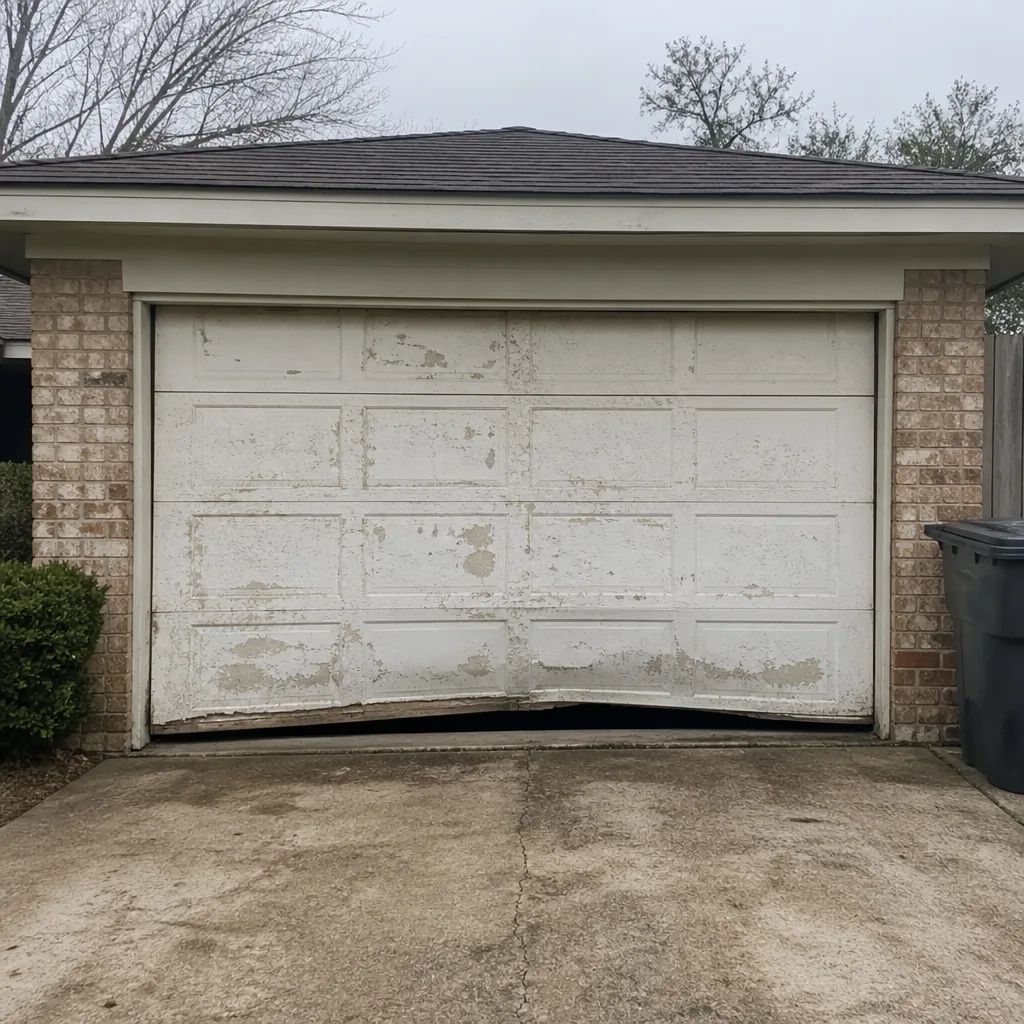 Before
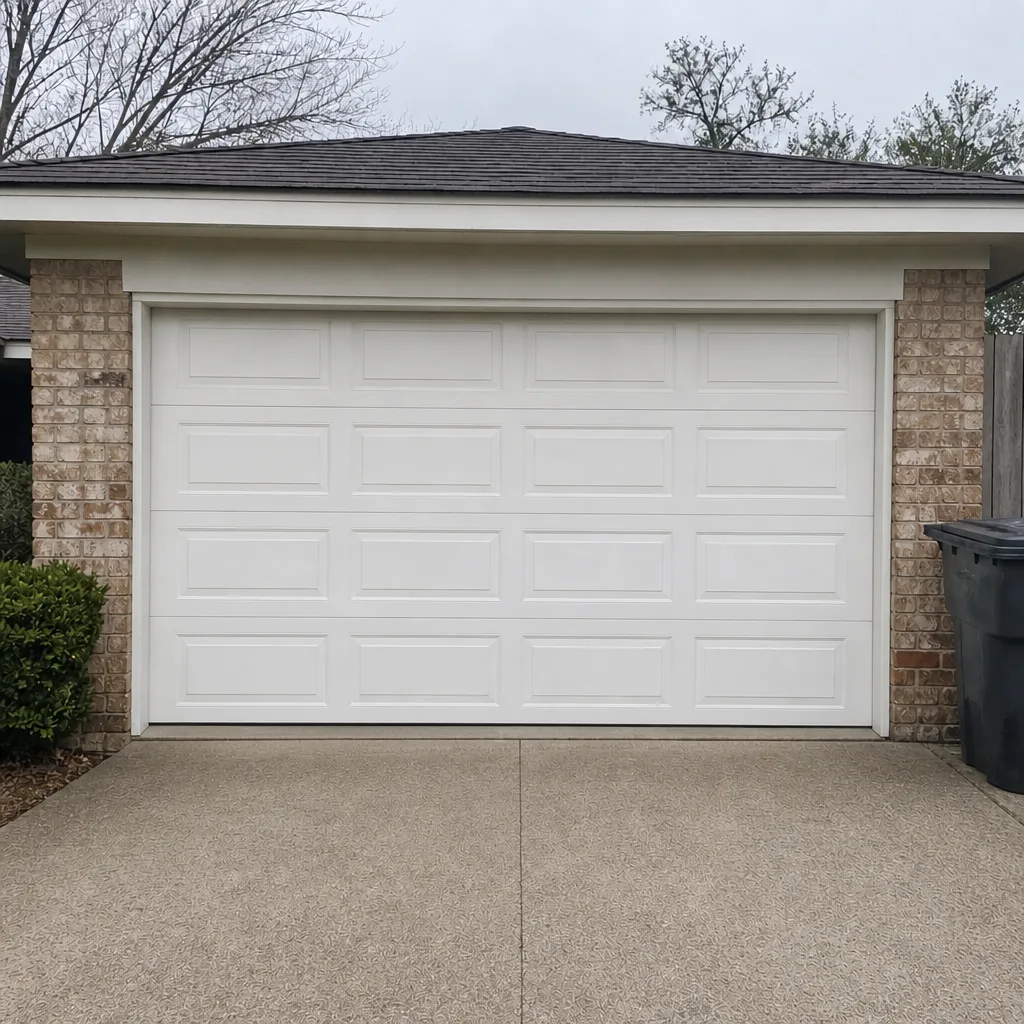 After
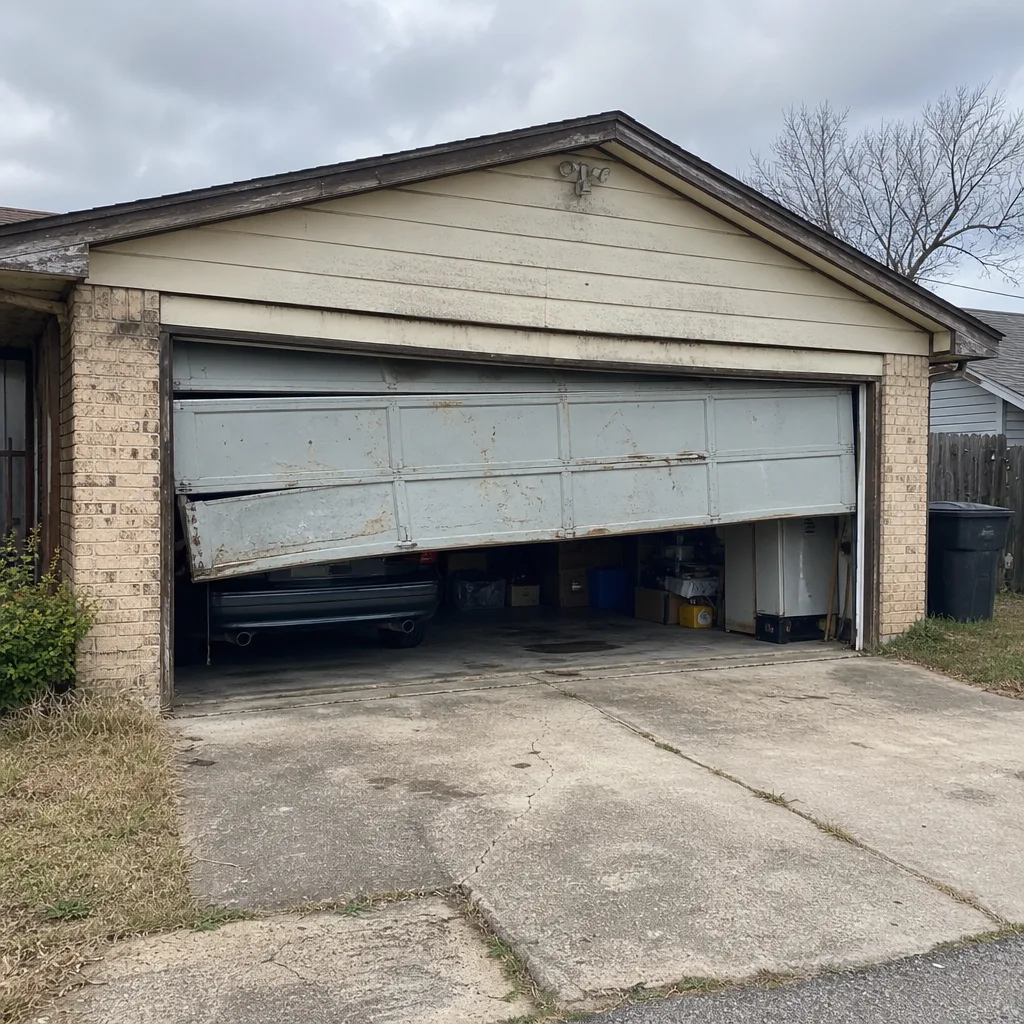 Before
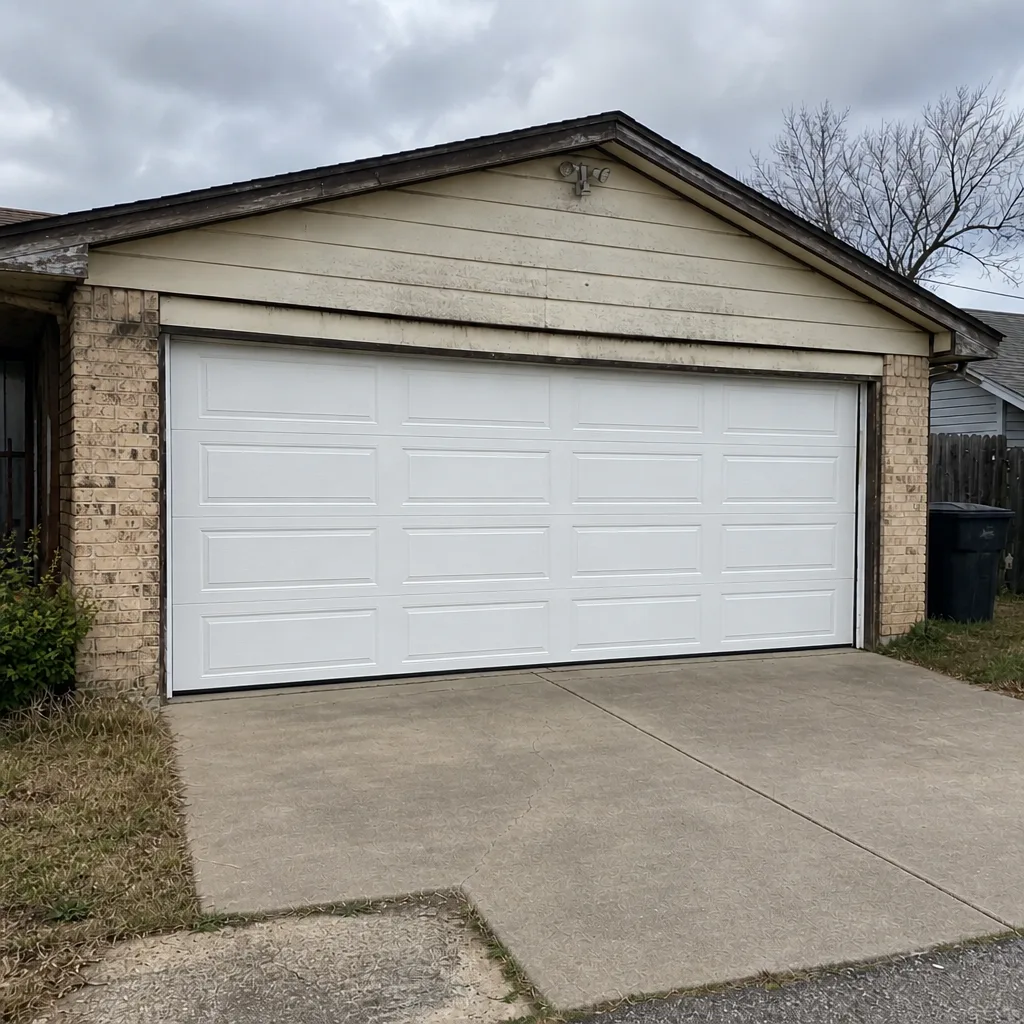 After
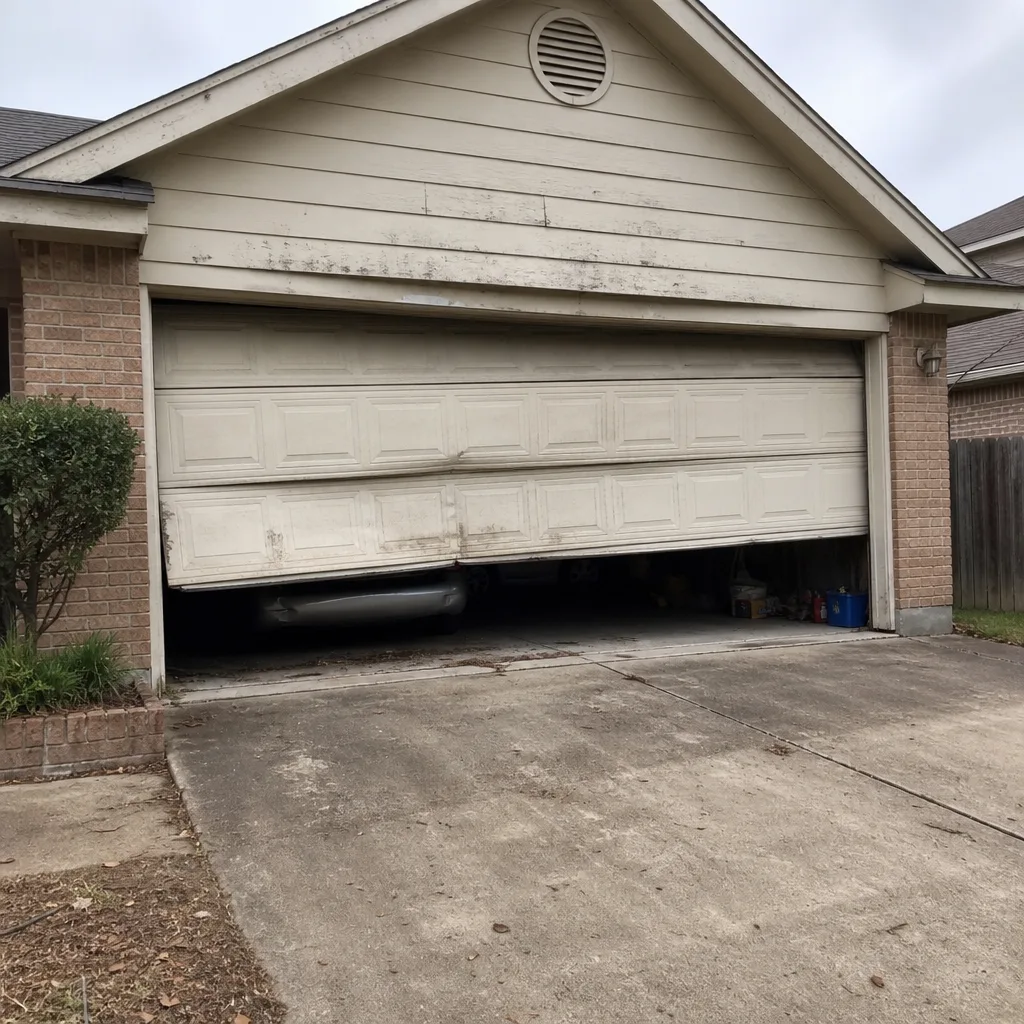 Before
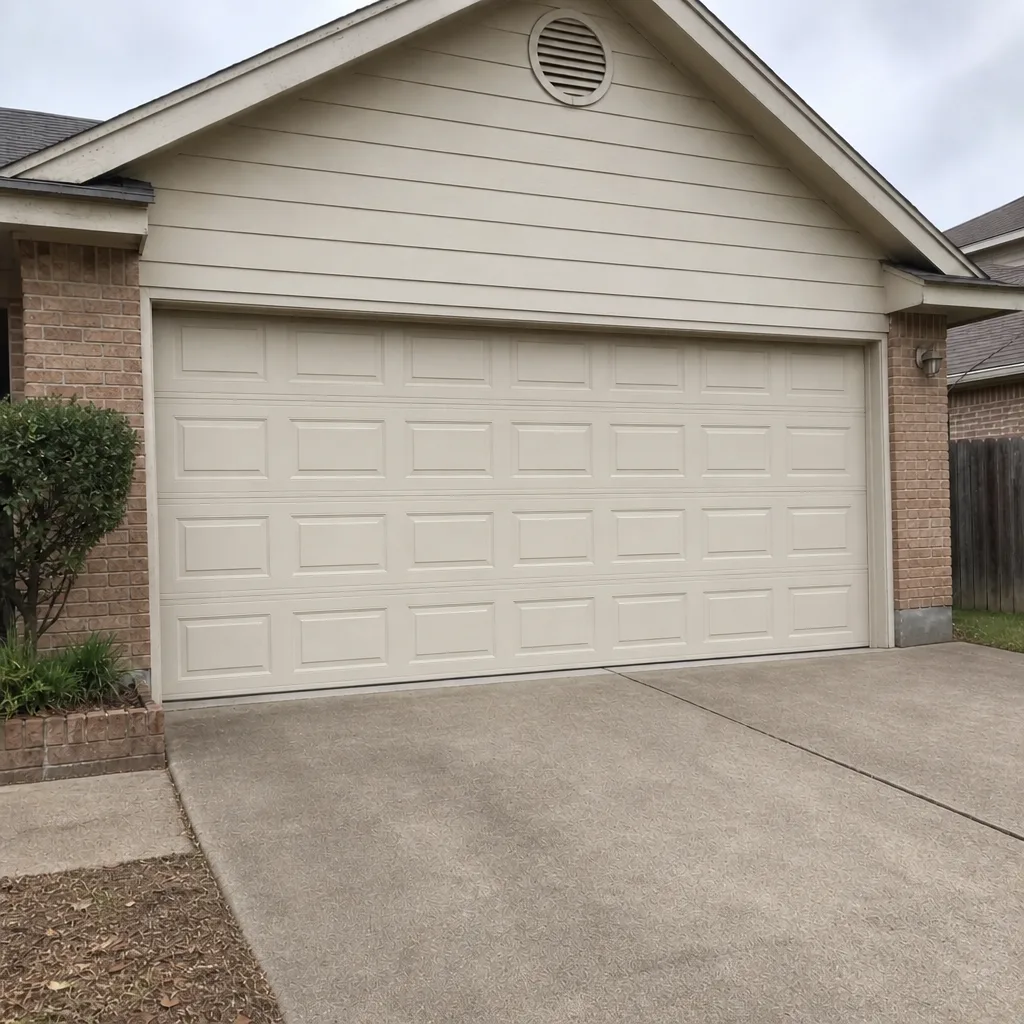 After
When to Call a Professional
Some garage door issues are genuinely dangerous or cause real damage if handled wrong, and those should always go to a professional. Call us when a spring has snapped, when a cable is frayed, or when the door is stuck open or shut and you can’t secure the house. Call when the opener runs but the door doesn’t move, when the door comes off its tracks, or when a panel is damaged and the door won’t close evenly. And call before a replacement, so the door you buy is actually rated for your home’s wind exposure and your lot’s water situation.
Baytown Garage Door Repair Pros offers free estimates in Baytown – call (877) 492-3142. We answer 24/7. Fast dispatch from 7am to 7pm, Sunday through Friday. Our technicians have up to 14 years of experience, and we work on the brands you actually own, including LiftMaster, Chamberlain, Genie, and Clopay.
Frequently Asked Questions
Spring repair in Baytown typically runs about $180-$340 for one spring, and a matched pair costs about twice that since both are usually replaced together. The exact figure depends on your door’s weight and system design, and the written estimate sets the final price before any work starts. Call (877) 492-3142 for an exact quote – estimates are free.
In many cases, yes – a stuck door is often a same-day repair. Emergency service is available for situations where a door is stuck open or shut and creates a security or access problem. Call (877) 492-3142. We answer 24/7, with fast dispatch from 7am to 7pm, Sunday through Friday.
No. The written estimate is the price, and no work starts until you’ve agreed to it. If we find something that changes the scope after we arrive, we’ll tell you and re-quote before touching anything, not after. Call (877) 492-3142 for a free estimate.
Galvanized steel with a heavier gauge and proper bracing is the most practical choice for most Baytown homes, because it resists rust and holds up to wind. Aluminum won’t rust but dents easily, and wood needs more upkeep in constant humidity. Ask for the steel gauge and the door’s wind rating before you buy. Call (877) 492-3142 to talk through the right fit for your home.
We work on LiftMaster, Chamberlain, Genie, and other major brands, and the right one for a Baytown attic comes down to heat tolerance and duty rating. Belt-drive models from LiftMaster and Chamberlain tend to hold up well in hot attics. Call (877) 492-3142 and we’ll help you match a unit to your door and your space.
You may need a door rated for the wind exposure at your property, and the requirement depends on your specific address and project. Ask the City of Baytown’s building department what applies to your home, then match the door’s rating to that answer. Call (877) 492-3142 and we’ll make sure the door in your estimate meets it.
The Bottom Line
Garage door advice written for the rest of the country doesn’t fit Baytown, and this guide is built around that. The environment here – heat, humidity, and hurricane season – puts more stress on a door system than the national averages account for. That means heavier-gauge galvanized steel, a wind rating that matches your property, a bottom seal suited to your lot, and an opener rated for a hot attic. Get those right and the rest is maintenance. Get them wrong and you’ll be repairing the same problems repeatedly. Whatever your door needs, a free written estimate from a specialist is the smartest first step, and we’re happy to provide one for homeowners across Baytown.
Ready to sort out your door? Call Baytown Garage Door Repair Pros at (877) 492-3142 for a free estimate. We answer 24/7, with fast dispatch from 7am to 7pm, Sunday through Friday. Whether it’s a snapped spring, a tired opener, a worn bottom seal, or a brand-new door, we handle the whole system – and as a garage door specialist rather than a generalist, we arrive already familiar with your equipment. For everything from a full installation to a same-day fix, Baytown Garage Door Repair Pros is here to help.
Written by the team at Baytown Garage Door Repair Pros.