
Last updated November 21, 2026
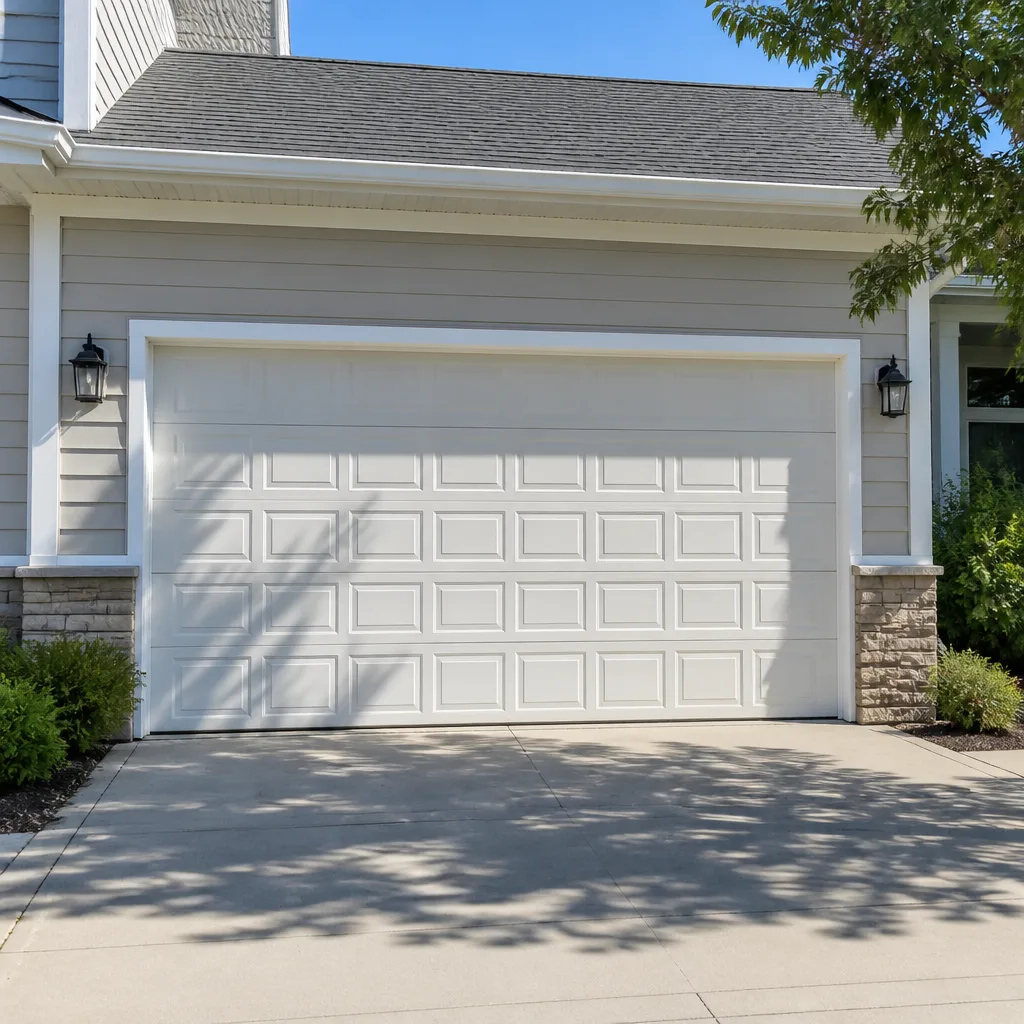 Raised-panel steel
 Carriage house
 Modern flush
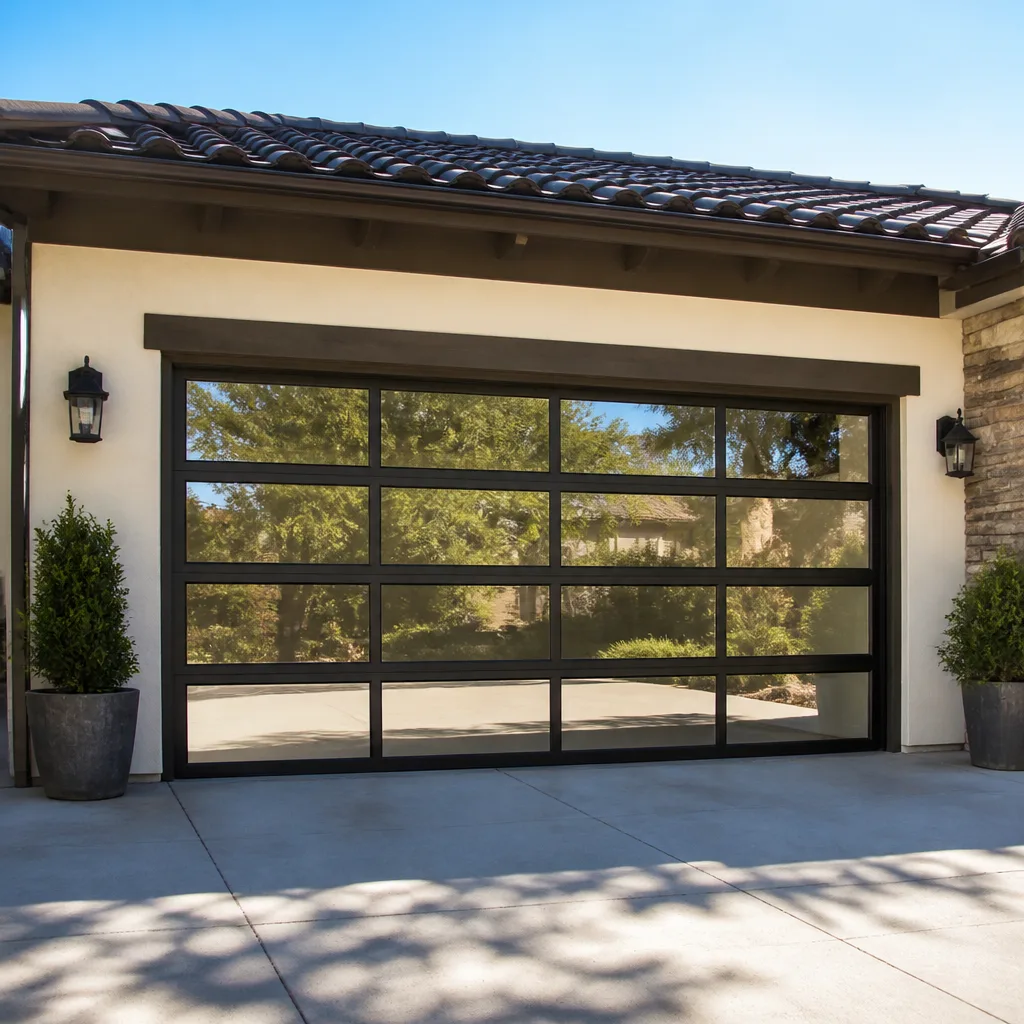 Full-view glass
 LiftMaster openers
 Chamberlain openers
Full 25-point door and opener safety check with every visit - springs, cables, rollers, tracks, and your LiftMaster or Chamberlain opener included
You get a price before we start. It does not change when the pro arrives.
Get your free estimateGarage Door Warning Signs: A Baytown Homeowner’s Reference Guide
A garage door that hesitates for two seconds before closing is not the same emergency as one that slams shut. Yet most homeowners treat both the same way, either ignoring both or panicking about both. Warning signs carry different weight, and knowing which is which saves you money, downtime, and injury risk. In this Baytown guide, we sort every common symptom into three tiers: stop using the door now, schedule service this week, and monitor and maintain. You’ll also learn how to test your door’s balance safely, what your opener’s error lights are telling you, and which quiet problems turn expensive within 60 to 90 days.
Quick Answer
Garage door warning signs fall into three urgency tiers. Stop using the door immediately if you see a broken spring, a frayed or snapped cable, or a door that has come off its tracks. Symptoms like grinding from the opener, an uneven gap along the floor, or a slow auto-reverse belong in the schedule-this-week tier. Cosmetic and minor issues like surface rust, small weather seal gaps, and faded paint can be monitored and handled on a regular maintenance timeline.
Styles & brands we work with
- Raised-panel steel
- Carriage house
- Modern flush
- Full-view glass
- LiftMaster openers
- Chamberlain openers
Table of Contents
- How do you triage garage door warning signs?
- Which garage door problems mean stop using the door now?
- Which warning signs mean schedule service this week?
- Which issues can you monitor and maintain?
- How does Baytown humidity show up in your garage door hardware?
- How do you safely test garage door balance?
- What are your opener’s error lights telling you?
- Which noisy-but-functional problems become expensive within 60 to 90 days?
How do you triage garage door warning signs?
You triage a garage door symptom by asking one question: does this problem involve tension, weight, or the travel path of the door? Springs, cables, and tracks all carry or guide the full weight of the door, so anything wrong there is a stop-use situation. The opener and its drive components carry far less load, which means most opener symptoms let you keep using the door short-term while you book service. Everything else is cosmetic or weather-related.
Think of it as three tiers:
- Stop-Use-Now: broken spring, frayed or snapped cable, door off its tracks, door that will not close fully and cannot be safely secured.
- Schedule-This-Week: grinding or straining opener, uneven gap along the floor, slow or inconsistent reversal, door that keeps re-triggering the opener’s safety sensor.
- Monitor-and-Maintain: surface rust on hardware, minor weather seal gaps, fading paint, light squeaking that quiets after lubrication.
Why the tiers matter: a door with a snapped torsion spring is dead weight in a way most people do not expect. The springs are what lift the door, not the opener. Running the opener against a broken spring can burn out the motor and, worse, drop the door. A door that grinds but still opens is a different animal entirely; it’s telling you a bearing, roller, or gear is wearing, and you have days, not minutes. Homeowners in Baytown sometimes lump all of these together and either keep cycling a dangerous door or pay for an emergency visit on a lubrication problem. Sorting the symptom first gets the right response.
One rule applies in every tier: never reach into the door’s moving parts or attempt to adjust springs and cables yourself. The hardware under tension is genuinely hazardous. Our position is simple: springs, openers, panels, the whole system is something we handle, and a trained garage door specialist should handle that tension hardware every time. If you’re ever unsure which tier a symptom belongs to, treat it as the higher one until you’ve talked to someone.
Which garage door problems mean stop using the door now?
Stop using your garage door the moment you see a broken spring, a damaged cable, a door off its tracks, or a door that no longer travels evenly. These are the problems where continued cycling risks injury or further damage. Stop cycling the door, keep it secured as best you can, and call for emergency service.
Here is what signals the stop-use tier:
- Broken spring: you’ll usually hear a loud snap, and the door suddenly feels extremely heavy. Torsion springs on the header or extension springs running along the tracks may show a visible gap or hanging coil.
- Frayed or snapped cable: look for loose wire, a cable that has come off its drum, or cable strands unwinding. A snapped cable can whip with real force.
- Door off its tracks: if a roller has jumped the track or a panel is bent out of the rail, the door can come down crooked or fall.
- Door stuck open and unsecured: if the door cannot be closed, your home is exposed. This warrants urgent service rather than a scheduled visit.
- Visible bend in the bottom section: a bent bottom panel is often a sign the door struck something or the lift hardware is failing.
In Baytown, the signs above show up for the same structural reasons they show up anywhere; the door system carries hundreds of pounds and the springs are under constant tension. What we’d stress is what NOT to do: don’t try to force the door up or down by hand, don’t disconnect the opener and pull, and don’t attempt to take pressure off the springs. The windings store a lot of energy. Getting a technician out is the safe move.
For the stop-use tier, emergency garage door service exists precisely for these situations: broken springs, failed openers, and doors stuck open or shut. You can reach us at (877) 492-3142. We answer 24/7. Fast dispatch from 7am to 7pm, Sunday through Friday. Keep the door secured and keep people and vehicles clear of it until a technician arrives.
Which warning signs mean schedule service this week?
Schedule service this week for symptoms that don’t block the door from operating but are accelerating toward a failure. Grinding from the opener, an uneven gap along the floor, slow reversal, and repeated sensor trips all belong here. These problems usually won’t strand you today, but each one tends to get worse and more expensive the longer it runs.
What to watch for:
- Grinding or straining opener. A gear or bearing is wearing. That’s a task for garage door opener repair, and the earlier it’s caught the less the fix usually involves.
- Uneven gap along the floor. One corner of the door meets the ground while the other hovers. This can mean a worn roller, a bent track, or a door that needs adjustment, and it also lets weather and pests in.
- Slow or inconsistent auto-reverse. The door should reverse reliably when it meets an obstruction. If it barely reacts or reacts randomly, the safety system needs a look.
- Repeated sensor trips. If the door closes, then reopens on its own, the safety eyes are misaligned, dirty, or failing. A door that won’t stay closed is also a security concern.
- Door that runs loud with age. A sudden increase in noise from a door that used to be quiet points to worn rollers or loose hardware.
The good news on this tier is planning. You can call and book a service window without the scramble of an emergency visit, and we can usually confirm what’s going on before we arrive if you can describe the sound and where it comes from. A grinding sound from the opener head is different from a squeal at the rollers, and telling them apart helps us carry the right parts. We stock parts for the brands we service, including LiftMaster, Chamberlain, and Genie systems, so a typical repair doesn’t turn into a two-visit job.
If you’re not sure whether your symptom is week-tier or stop-now-tier, err upward. Call (877) 492-3142 and describe what you’re seeing and hearing. We’ll tell you which tier it sounds like. Estimates are free.
Which issues can you monitor and maintain?
Monitor and maintain problems that are cosmetic or gradually developing: surface rust, small weather seal gaps, fading paint, and light squeaks that respond to lubrication. None of these need a service call on their own, but keeping an eye on them prevents them from graduating into the schedule-this-week tier.
This tier includes:
- Surface rust on hinges and hardware. Rust on fasteners and hinges is common in a garage setting. Cleaning and light lubrication slows it; if it reaches a hinge pivot, that hinge will eventually stiffen and stress the door.
- Minor weather seal gap. The rubber seal along the bottom slowly hardens and flattens. A gap that lets in a sliver of daylight is a monitor item; a gap you can fit a finger under is a replace item.
- Fading paint on steel doors. Cosmetic for most doors, though persistent sun on one side can eventually affect the finish and, on a wood door, the wood itself.
- Light squeaking that quiets after lubrication. If a drop of lubricant on the rollers and hinges settles it, you’re in good shape. If the noise returns within a couple of weeks, that’s a signal to look closer.
This is also where regular maintenance lives. A twice-a-year check of your door gives you a chance to catch rust, seal wear, and loose bolts before they cost you. The check itself is simple: look, listen, and test. Look for rust and gaps, listen for new sounds, and run the door once to make sure it still reverses on contact. A door that has been quiet and true for a long time can drift out of adjustment slowly enough that you don’t notice, so a quick walk-around with a flashlight twice a year pays for itself.
Plenty of Baytown homeowners read about warning signs only after something breaks. We’d rather you test your door twice a year and never need us for anything beyond a tune-up. When something does move out of this tier, garage door repair is the call to make.
How does Baytown humidity show up in your garage door hardware?
Baytown’s humid Gulf climate accelerates two things on a garage door: corrosion on metal parts and changes in how the door moves. You’ll see this first as white corrosion powder on springs, rust weeping from roller brackets, and a door that seems to stick in the middle of a humid stretch. Each sign points to a specific mechanical cause, not just “weather.”
Here’s how to read them:
- White powder on spring coils. This is oxidation on the spring’s coating or wire. Light dusting is a monitor item; heavy blooming across the coil suggests the coating has failed and the spring’s life is shortening. Springs are under tension, so this is inspection work, never a wire-brush job for a homeowner.
- Rust weeping from roller brackets. You’ll see orange-brown streaks running down from where the bracket meets the track. That’s the bracket or the fastener rusting. Left alone, the rust can seize the roller stem and force the door to drag.
- Door sticking in high humidity. A humid day can swell a wood door or tighten a seal enough that the door drags. If the drag disappears on a drier day, it’s seasonal movement. If it drags every day, something is out of adjustment.
None of these signs mean the door is about to fail. They mean the hardware is working harder than it should, and in this Baytown climate, that’s something to check during your twice-a-year walk-around. A light application of a proper garage door lubricant on rollers, hinges, and the spring (following the manufacturer’s guidance) slows the corrosion and quiets the motion. What you don’t want to do is ignore the white powder for years and then be surprised by a snapping spring.
One clarification: Baytown’s humidity is the main climate factor we see affecting doors here. We don’t see freeze-and-thaw problems in this part of Texas. The wear we see is humidity and heat. That’s a different profile than a cold-climate door, and it’s worth knowing when you read generic warning-sign lists that talk about winter damage.
How do you safely test garage door balance?
You test garage door balance with the manual disconnect: with the door closed, pull the opener’s release handle to disconnect the door from the motor, lift the door by hand about halfway, and let go. A properly balanced door holds its position at roughly halfway up. A door that drops on its own or refuses to lift is out of balance, and a technician needs to look at the springs.
Here’s the step-by-step version to do safely:
- Close the door fully. Make sure no one is under or near it.
- Pull the release handle. This disconnects the door from the opener so you’re only testing the door and its springs. Know that this handle is a pull-and-let-go mechanism; if you need to re-engage the opener, the door usually has to be in a specific position, so read your opener’s manual or call us for guidance.
- Lift the door by hand to about waist or chest height. Lift slowly, using the bottom edge, not the handle. If the door is extremely heavy, stop. Heavy means the springs are doing little or none of the lifting.
- Let go at the halfway point. Watch and listen. A balanced door holds position. A door that drops quickly or rushes down is a stop-use situation.
- Re-engage the opener per the manufacturer’s instructions. This is the step people skip. If the door and the opener are out of sync, the next cycle can jam.
The manual disconnect test is also how you can give us accurate information over the phone. Telling us “the door drops when I let go at the halfway point” is a different diagnosis than “the door barely lifts, and I can’t get it up.” In our experience, homeowners who run this test before calling end up with a faster, more accurate visit.
One more caution: the balance test is a lifting test, not an inspection of springs or cables. Don’t put your hands anywhere near the springs or cables while doing it, and don’t use the test as a reason to try adjusting anything. If the door is out of balance or you see any damage under tension, the safe move is a call for garage door spring repair. Our technicians have up to 14 years of experience with tension hardware, and that experience is exactly what this task needs.
What are your opener’s error lights telling you?
Your opener’s error lights tell you which subsystem is failing: safety sensors, travel limits, or the logic board. A sensor light that won’t settle points to the safety eyes and their wiring. A light pattern during travel points to travel limits or the drive. A repeating code with no door movement often points to the logic board itself, especially when it happens more than once.
The two major consumer opener families handle this differently. LiftMaster and Chamberlain units, which share much of their internal engineering, typically use a diagnostic LED on the motor head and a set of up/down light patterns that flash in sequence. Genie units often use their own light codes and a small diagnostic panel. Rather than try to memorize every flash pattern for your model, keep the owner’s manual in the garage or look it up on the manufacturer’s site with your exact model number. The pattern is telling you something specific, and matching it to your model is the fastest way to decode it.
What to look for in plain terms:
- Safety eye light won’t stay solid. Usually a misalignment, a sun glare problem, or a wiring issue. This is a schedule-this-week signal.
- Door reverses during closing. Something is interrupting the beam or triggering the force setting. Treat it as schedule-this-week.
- Repeated flash pattern with no movement. Often the opener’s logic board. The key warning is that this starts intermittently and becomes constant over time. Repeated codes are the early predictor of logic board failure, and catching it before it strands you is the goal.
- Remote works only up close. Usually a battery or antenna issue, and a low-cost fix in most cases.
If your opener is showing a code you can’t decode, note the model number and the exact pattern of flashes and give us a call. A quick conversation with a specialist can save a visit. And if your opener has already failed, garage door opener repair is the right call. We work across LiftMaster, Chamberlain, Genie, and other major brands, so we know your equipment before we arrive.
Which noisy-but-functional problems become expensive within 60 to 90 days?
Several “works fine but noisy” problems turn into costly repairs within 60 to 90 days: worn rollers that grind, a straining opener gear, a loosening hinge, a dragging bottom seal, and a track that has drifted slightly out of alignment. Each of these functions today but is accelerating wear and setting up a failure.
The pattern is the same in each case. The part is still working, so you keep using the door, but the wear is compounding. Here’s what we mean:
- Worn rollers. A grinding roller adds friction to every cycle. The friction stresses the track, the opener, and the hinges over time. Replace it early and the rest of the system keeps its life.
- Straining opener. If the opener sounds like it’s working harder than it used to, it is. A worn gear or bearing in the opener’s drive will eventually fail, and a full opener replacement is more expensive than a repair if you catch it early.
- Loosening hinge. A hinge that’s working loose puts stress on the adjacent panel. Left long enough, that can bend a panel.
- Dragging bottom seal. A seal that drags will eventually tear, and it can also affect how the door closes and reverses.
- Slightly out-of-alignment track. A track that has drifted a quarter inch doesn’t stop the door, but the rollers are now wearing unevenly against it.
The 60 to 90 day window is not a hard rule; it’s a pattern we see often enough to call it out. The point is this: the “quiet” category is where preventive service saves real money. A tune-up that replaces a couple of rollers, tightens a hinge, and adjusts a track is a small cost today. A failure of the whole opener gear assembly or a bent door panel from a jumped roller is a bigger one. If your door is noisy but working, that’s the ideal time for us to look at it: we can diagnose faster because nothing’s broken yet.
For Baytown homeowners, that timing matters because of the humidity we talked about. Humidity accelerates rust and swelling, which is exactly what wears these parts. A door that gets a look every 6 to 12 months will usually stay in the monitor-and-maintain tier. A door that only gets looked at when it fails will eventually slide into stop-use.
Common Mistakes to Avoid
- Treating every symptom as an emergency. Grinding from the opener is a schedule-this-week problem, not a call-the-fire-department problem. Sorting by tier saves you the urgency tax.
- Treating every symptom as nothing. The opposite failure. A dragging seal or a loose hinge can grow into a bigger repair over a few months. If something has changed, look at it.
- Forcing a stuck door. If a door won’t move, don’t push or pull it. The spring and cable hardware can be under enough tension that forcing it can cause the door to drop or the cable to snap.
- Ignoring repeated opener codes. A light pattern that shows up again and again is telling you the logic board is following a failure path. Note it and get it checked before it stops working.
- Running the opener with a broken spring. Nothing good comes of this. The opener isn’t built to lift the full weight of the door, and it will burn itself out.
- Assuming winter damage when the problem is humidity. Baytown’s climate puts wear on springs and hardware through moisture and heat, not freeze-and-thaw. If you read a generic article about winter garage door problems, recognize it’s not describing your door.
- Skipping the twice-a-year walk-around. The single best preventive step is 15 minutes with a flashlight twice a year. Look for rust, listen for new sounds, and run the balance test.
See the difference
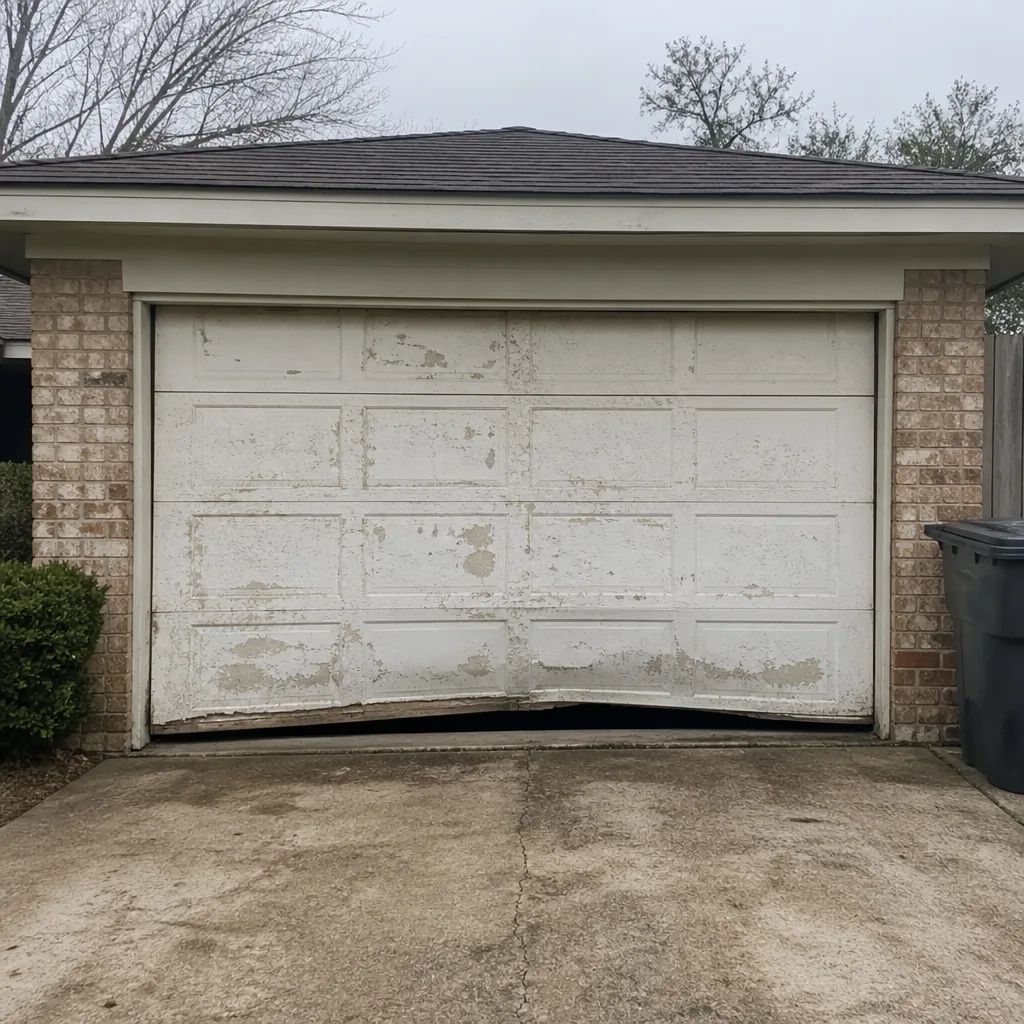 Before
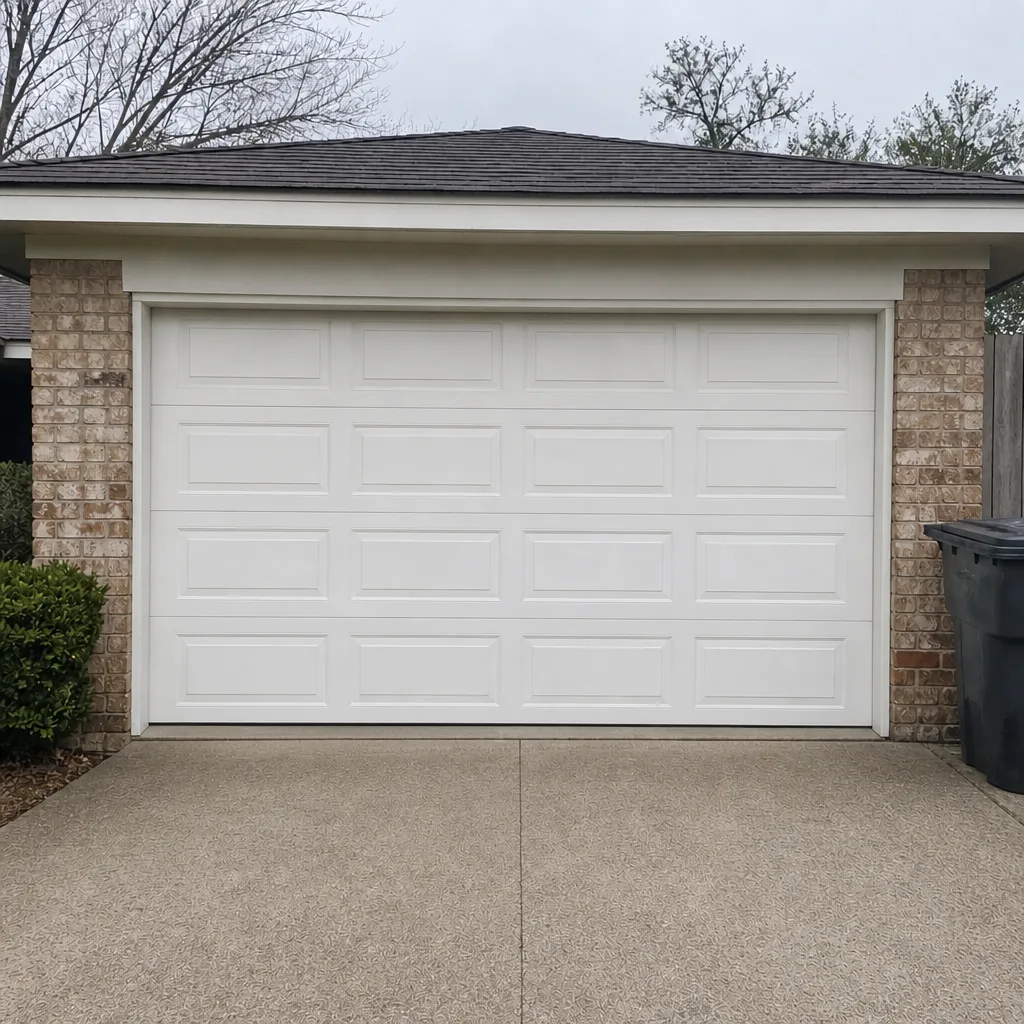 After
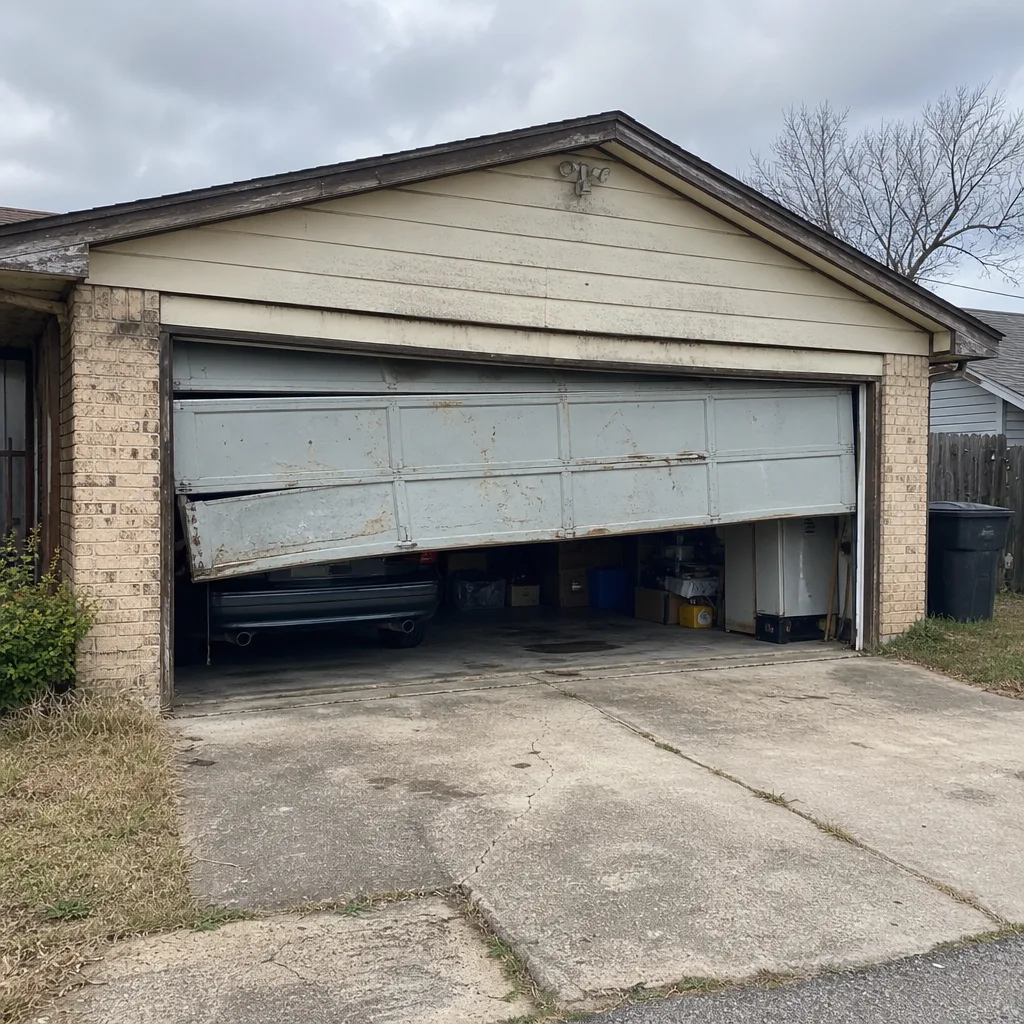 Before
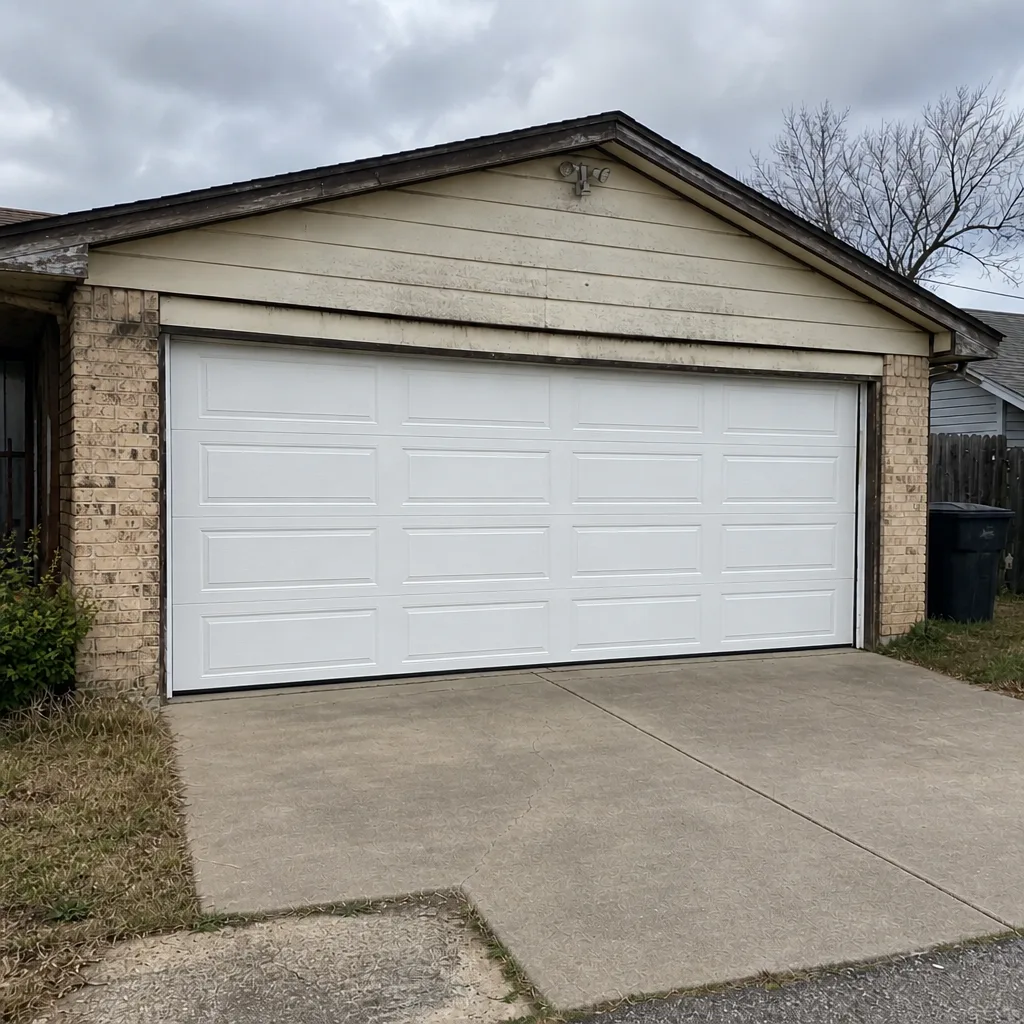 After
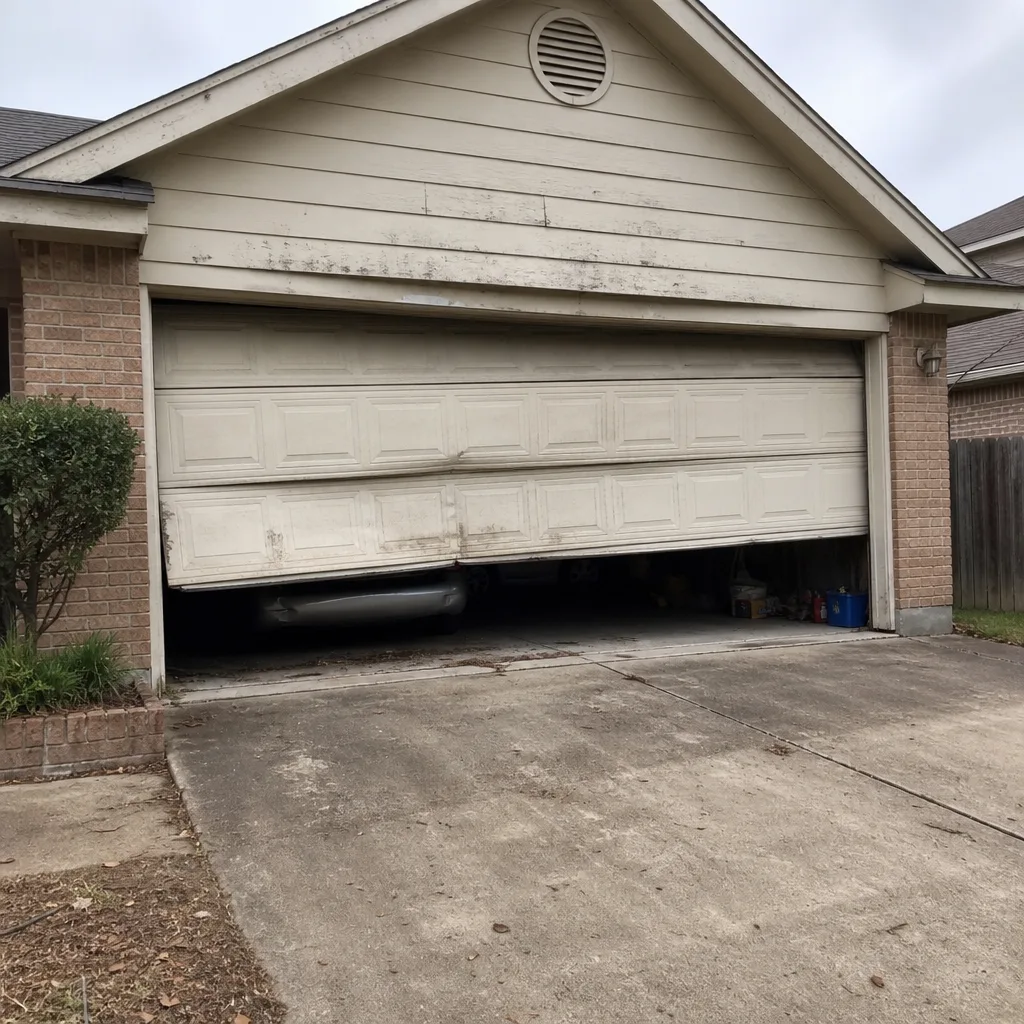 Before
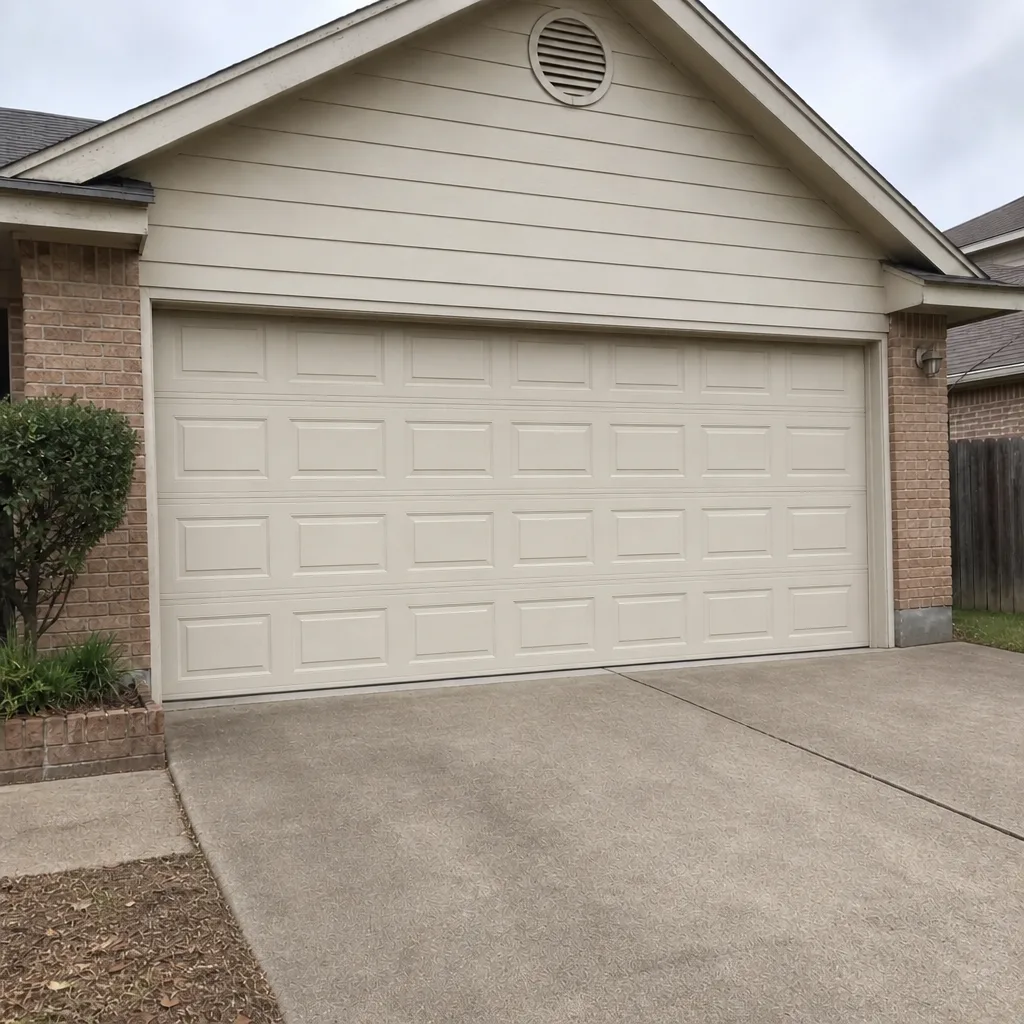 After
When to Call a Professional
Call a professional immediately if you see a broken spring, a frayed or snapped cable, a door off its tracks, or a door that’s stuck open and can’t be secured. Also call if the manual disconnect test shows the door dropping or refusing to lift, or if your opener is showing repeated error codes. Schedule a call within the week for grinding openers, uneven floor gaps, sensor trips, and any noise that’s new. And if your door is just noisy but working, that’s the ideal time for a check, so the small repair doesn’t turn into a big one.
Baytown Garage Door Repair Pros offers free estimates in Baytown. We’re a garage door specialist, not a generalist, so your LiftMaster, Chamberlain, or Genie system gets handled by someone who works on it regularly. The price is quoted and agreed before any work starts, and the written estimate sets the final price. Call (877) 492-3142. We answer 24/7. Fast dispatch from 7am to 7pm, Sunday through Friday.
Frequently Asked Questions
The first sign of a failing spring is usually a change in how the door feels or sounds: it gets noticeably heavier to lift, the opener strains, or the door makes a popping sound. White corrosion powder on the coil can show up before a break. If you see a broken coil or the door drops when you run the balance test, stop using the door and call (877) 492-3142 for an exact quote. Estimates are free.
No. Do not use a garage door with a broken spring. The opener is not designed to lift the full weight of the door, and running it against a broken spring can damage the opener and cause the door to drop. Keep the door secured, keep people and vehicles clear, and call for emergency service at (877) 492-3142.
A garage door is out of balance if it won’t hold its position when you lift it by hand about halfway with the opener disconnected. If it drops or refuses to rise, the springs need a technician. Don’t adjust the springs yourself; call (877) 492-3142 and describe what you saw. Estimates are free.
A door that reverses before touching the floor is usually reacting to a misaligned or dirty safety sensor, or its force setting is out of adjustment. Either way, it belongs in the schedule-this-week tier. Clean the sensor lenses and check alignment first, and if the problem stays, call (877) 492-3142 for an exact quote.
Baytown’s humid Gulf climate accelerates corrosion on springs and roller brackets, and it can cause a door to drag in a humid stretch. Homeowners here often see white oxidation on spring coils and rust weeping from brackets. If those show up on your door, get them checked before a spring fails. Call (877) 492-3142; estimates are free.
No. The written estimate sets the price, and the price is quoted and agreed before any work starts. If we find something that changes the scope, we’ll talk about it with you first; you won’t get a surprise invoice. Call (877) 492-3142 for an exact quote, and estimates are free.
The Bottom Line
Garage door warning signs are not all the same. Sort them by tier before you act. Broken springs, damaged cables, and off-track doors are stop-use-now situations that call for emergency service. Grinding openers, uneven gaps, and sensor trips are schedule-this-week problems that get more expensive if ignored. Rust, seal wear, and fading paint are monitor-and-maintain items you can stay ahead of with a twice-a-year walk-around. In Baytown’s humid climate, corrosion on springs and brackets is the wear pattern to watch most closely. Use the balance test to give a technician accurate information, and treat noisy-but-working symptoms as your best chance to save money: that’s the window when a small repair prevents a big one. Whether you need a garage door repair or a full system check, we’re a garage door specialist, not a generalist, and we handle springs, openers, panels, and the whole system. Baytown Garage Door Repair Pros is here for the diagnosis and the repair.
Call (877) 492-3142 for a free estimate. The price is quoted and agreed before any work starts, and the written estimate sets the final price. We answer 24/7. Fast dispatch from 7am to 7pm, Sunday through Friday.
Written by the team at Baytown Garage Door Repair Pros.