
Last updated November 21, 2026
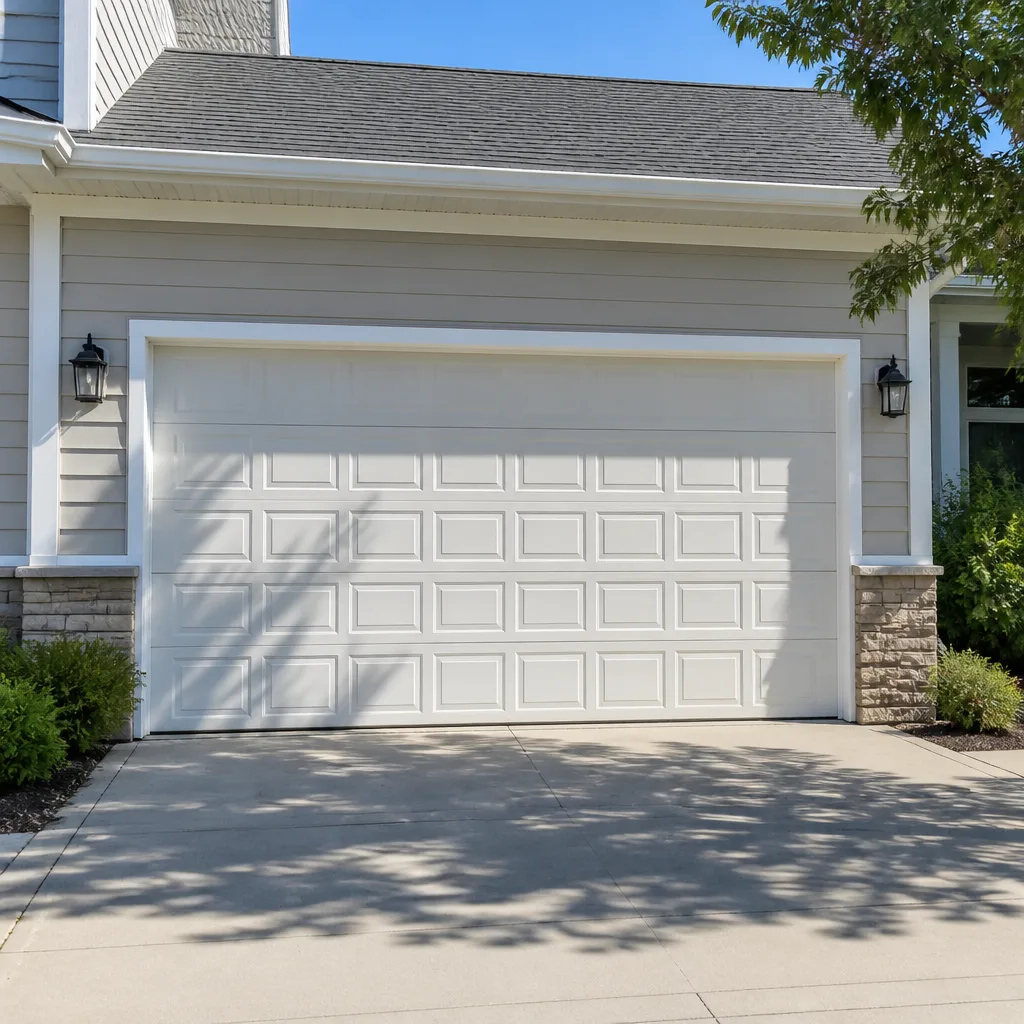 Raised-panel steel
 Carriage house
 Modern flush
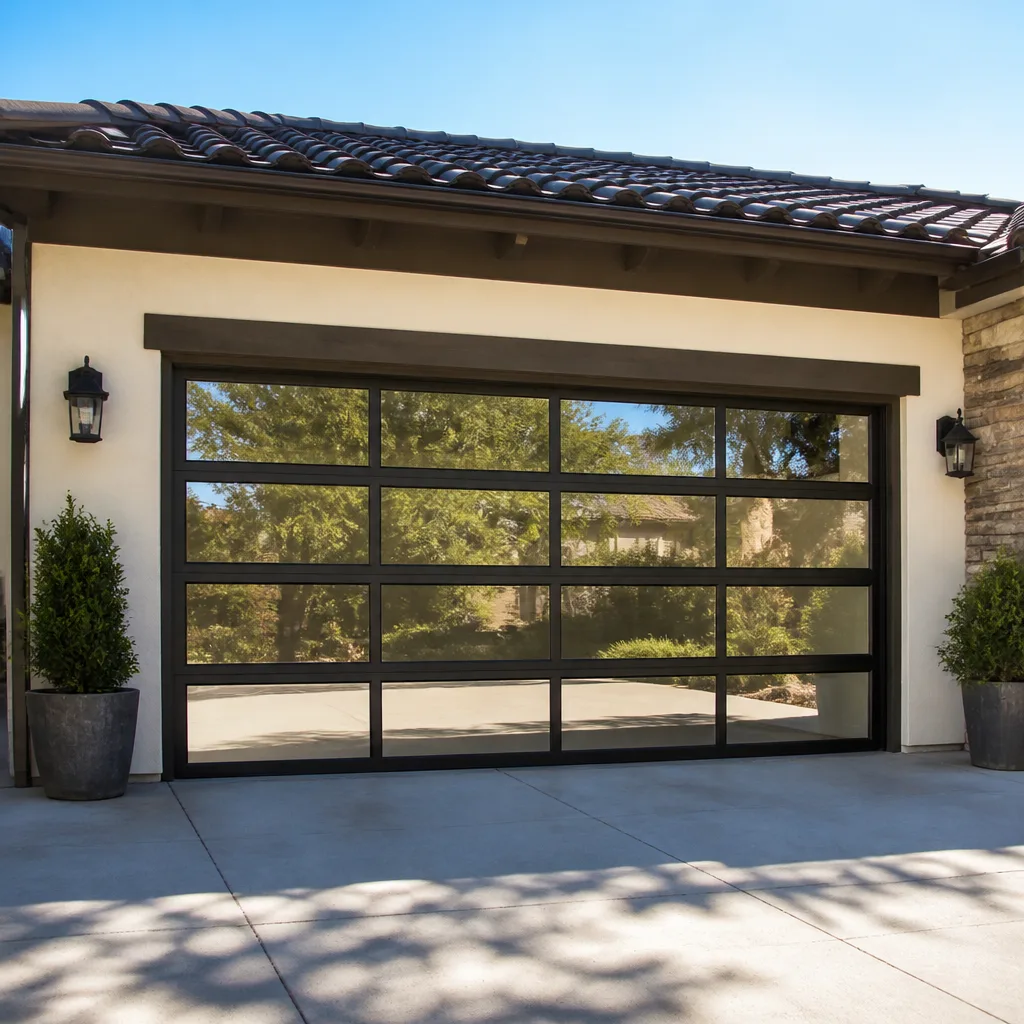 Full-view glass
 LiftMaster openers
 Chamberlain openers
Full 25-point door and opener safety check with every visit - springs, cables, rollers, tracks, and your LiftMaster or Chamberlain opener included
You get a price before we start. It does not change when the pro arrives.
Get your free estimateGarage Door Repair Maintenance Schedule: What to Do and When
The most common maintenance mistake we see isn’t skipped tasks. It’s the wrong lubricant applied in the wrong month. Summer in Baytown pushes humidity through the roof, and a petroleum-based spray on your hinges and rollers turns into a grit magnet long before the first cold snap. That sticky coating collects dust, pollen, and fine grit, and together they grind your rollers down faster than doing nothing at all. In our experience, a door that got “helpful” oiling every June fails sooner than one that got nothing but a quarterly wipe-down. This guide lays out a maintenance schedule built around Baytown’s actual climate calendar: what to check, when to check it, and which product goes on which part.
Quick Answer
For a Baytown garage door, run a 10-point visual inspection and a light lubrication pass every three months, do a full hardware and spring check each October after summer, prep the tracks and seals for storm season in May, and inspect weatherstripping and reverse-safety function in December. Springs are replaced on cycle count, not calendar age, so track how often the door runs. Everything else is seasonal and cheap; springs and cables are the parts you leave to a specialist.
Styles & brands we work with
- Raised-panel steel
- Carriage house
- Modern flush
- Full-view glass
- LiftMaster openers
- Chamberlain openers
Table of Contents
- Why a Baytown Door Needs Its Own Calendar
- The Quarterly 10-Point Inspection
- Which Lubricant Goes Where
- May: Pre-Summer and Storm-Season Prep
- October: The Post-Summer Corrosion Check
- December: Cold-Snap Seal and Safety Inspection
- How to Calculate Your Spring Replacement Date
- Using Opener Diagnostics to Catch Problems Early
Why a Baytown Door Needs Its Own Calendar
A door in Baytown works harder in June than it does in January, and it works against different enemies. The Gulf humidity through summer puts moisture on steel tracks, hinge pivots, and spring coils. Then dry, warm weeks in spring and fall pull that moisture back out and leave behind light surface oxidation on anything not protected. A schedule copied from a national blog written for a dry climate misses the whole first half of that cycle.
Baytown also sits in hurricane country. Wind-driven rain and debris are real, and the way a door seal and track align in late spring matters in a way it doesn’t in, say, Amarillo. And the housing stock here is a mix: newer subdivisions with Clopay and Amarr doors and builder-grade openers, older homes with heavier steel doors and Wayne Dalton systems that have run for years. Each needs the same schedule with a different emphasis.
What that means practically:
- Summers demand moisture protection. Lubricant choice matters more in June than in February.
- Storm season sets a May deadline. Tracks, seals, and anchor points need to be sound before weather arrives.
- Fall is your audit month. Whatever summer exposed gets caught in October, before cold weather makes small issues worse.
- Winter is short but not irrelevant. Even a mild cold snap can make a brittle seal crack or expose a slow-reacting safety reverse.
We’ve seen how differently doors age here compared to dry inland parts of Texas, and the pattern holds: moisture control and cycle tracking do most of the work.
The Quarterly 10-Point Inspection
Homeowners can run the same 10-point visual inspection a technician runs, once every three months. It takes about fifteen minutes, it needs no tools beyond a flashlight and a rag, and it surfaces most developing problems before they become breakdowns. Run it standing back from the door first, then walk the perimeter.
- Balance test. Disconnect the opener (pull the release handle), lift the door halfway, and let go. It should hold. A door that drifts down or slams up has a spring or tension problem.
- Spring condition. Look at extension springs along the sides and torsion springs above the door. A visible gap in a torsion coil means a broken spring. Rust streaking on either type is a warning sign.
- Cable inspection. Cables should run straight and sit snugly in their drums. Fraying, kinks, or slack mean trouble.
- Track alignment. Tracks should be straight and parallel. A dented or bent section will catch a roller.
- Roller wear. Steel rollers develop flat spots; nylon rollers crack. Listen for a rumble as the door moves.
- Hinge play. Grab each hinge and wiggle it. Loose hinges cause panel stress and squeal.
- Panel condition. Look for dents, separation at the seams, and bubbling paint that hides rust.
- Weatherstripping. The bottom seal should touch the floor evenly across the full width. The side and top seals should sit flat against the frame.
- Safety reverse. With the door closing, wave an object in front of the photo-eye sensors. The door must reverse. Then test the mechanical reverse by placing a piece of wood flat on the floor.
- Opener behavior. Listen for grinding, hesitation, or a door that reverses without cause. That’s a symptom, and diagnostic openers will often tell you which one.
Any item that fails the first three points on this list deserves a call, not a second look. Springs under tension and fraying cables are where injuries happen.
Which Lubricant Goes Where
This is where most Baytown doors get hurt by well-meaning maintenance. Lubricant is not one product applied everywhere. It’s three products, applied to three different surfaces, and some parts get nothing at all. Getting this right in summer is the single highest-value habit on the whole schedule. Head over to ours Baytown Garage Door Repair Pros for a fuller explanation of why the wrong product backfires in this climate.
- Springs and hinges: white lithium grease. It goes on torsion spring coils, extension spring coils, and the pivot points of each hinge. Lithium grease stays put through heat and holds up against moisture without collecting grit the way a thin spray does.
- Weatherstripping and seals: silicone spray. The rubber bottom seal and the side and top seals benefit from a light silicone spray, which keeps the rubber supple and slows the cracking that comes from summer sun and dry winter air. Silicone also doesn’t degrade the rubber.
- Tracks: nothing at all. This is the counterintuitive one. Tracks get wiped with a dry rag, never lubricated. Lubricant in a track collects grit, and grit in a track ruins rollers. A dry track is a quiet track.
What to avoid: petroleum-based sprays anywhere on the moving parts. They attract grit from the air and turn into a grinding paste in the humidity. Also skip anything marketed as a “one-spray solution for the whole door.” That’s how rollers die. We’ve seen doors lubricated this way go through rollers at roughly twice the rate of properly maintained ones. Your whole system – springs, hinges, rollers, weatherstripping – has different parts with different needs. So does the opener. When the motor is grinding or struggling, it’s time to look at garage door opener repair, since openers have their own maintenance profile. Do the lubrication pass once every three months, timed with the quarterly inspection, and don’t touch the tracks.
May: Pre-Summer and Storm-Season Prep
May is the busiest month on this schedule because you’re doing two things at once: preparing for the heat and humidity, and preparing for hurricane season. A door that’s true and sound in May handles summer better and handles a wind event better. Both are about the same systems, and it takes an afternoon.
Start with a full clean. Wipe the tracks dry. Clear the floor of debris. Wash the door panels with mild soap and water, then rinse and let them dry fully. It’s also a good moment to check for anything loose around the anchor points and to look at whether the door sits square in the frame. A door that’s grown out of alignment over winter will rub all summer. Wind-driven rain finds horizontal tracks that no longer slope correctly, so it’s worth checking the slope, and worth checking the bottom seal for a flush fit.
Then service the moving parts:
- Wipe and re-grease hinges and spring coils with white lithium grease.
- Spray weatherstripping with silicone spray and check for gaps at all four sides.
- Test the safety reverse mechanism and note the results so you can compare in October.
- Check the opener’s force adjustment if the door seems to work harder than it used to.
- Look at the wall bracket and header bolts. Any loose bolts need to be tightened.
If any of the structural checks fail, that’s the moment to bring in a specialist. A door with a bent track or a spring that’s sagged under summer fatigue isn’t a do-it-yourself job, and it’s worth having looked at before the season’s worst weather. This is the natural time to schedule a garage door repair if the May inspection turns up something. Don’t defer.
October: The Post-Summer Corrosion Check
October is the audit month. Six months of Baytown humidity, sun, and daily cycles have exposed whatever is going to fail. This pass is more detailed than the quarterly 10-point inspection, and it’s the one where you’re most likely to catch something worth fixing.
Start looking for rust. Real rust shows up first on hinge pivots, at spring coils, and along the seams between panels. Surface oxidation on steel tracks and hinges is normal after a humid summer. Pitting or flaking means the part is going and needs replacing. On doors with wood or wood-composite panels, check the paint integrity and probe for soft spots. Clopay and Amarr steel doors hold up well but need their hinge points attended to. Wayne Dalton models have specific parts that wear in specific places, and if you own one, this is the pass to look carefully.
October checklist in detail:
- Inspect every hinge for rust and grease loss, and re-grease with lithium. Any hinge that wobbles more than a quarter inch is loose and should be tightened or replaced.
- Inspect both spring styles for rust, stretch, or coil gaps. Extension springs often stretch over summer; torsion springs may lose tension slightly. This is where you’ll learn whether a spring is headed for replacement.
- Test the door’s balance again and compare it with the May result. Any change in balance points to a spring losing tension.
- Wipe the tracks clean and confirm they’re still straight. Repeat the roller sound test. Worn rollers announce themselves in October.
- Check the seals. Rubber that was supple in May may have dried and cracked by October. Replace cracked weatherstripping before winter.
- Listen to the opener. If it’s laboring, cross-check against its own diagnostic features (see below).
The goal isn’t perfection. It’s catching the two or three items that will cause problems before winter. Catch them now, and the December inspection is a quick confirmation. Skip October, and you’re doing the full check in the cold.
December: Cold-Snap Seal and Safety Inspection
Baytown winters are mild, but they still do one thing to garage doors: they dry things out. Cooler air holds less moisture, and rubber seals that spent the summer staying pliable begin to harden and crack. Combine that with the occasional cold snap that drops into the thirties, and a brittle weatherstrip can curl away from the floor and frame. That’s a seal failure that lets in cold air, moisture, and pests, and lets heat out.
December is the month to check seals first and safety second. Run a flashlight along the bottom seal and confirm it contacts the floor evenly from one side to the other. Lift the door slightly and look at the contact point. If the rubber is cracked or has begun to separate from the panel, it’s a five-minute replacement piece – inexpensive and worth doing before the coldest nights. Check the side and top seals too. Press them flat to the frame; any gap should be filled.
Then re-test the safety features. Cold weather changes the lubricity of metal surfaces, and a door that reversed correctly in October may hesitate in December. Run both the photo-eye test and the mechanical reverse test again. Confirm that the photoelectric sensors are aligned and clean. Then check the opener’s force sensitivity: if the door has to be pushed or pulled to open on a cold morning, that’s a symptom worth looking into. On brands like Amarr and Clopay with heavier insulated doors, this cold-weather strain is more noticeable, and it’s worth noting for the spring.
The lift cables and bottom brackets are the parts not to touch in December. If they look wrong, call a technician rather than reaching under the door.
How to Calculate Your Spring Replacement Date
Springs don’t fail on a calendar. They fail on cycles. Every time the door opens or closes, it counts as one cycle. Most manufacturers rate springs for a specific number of cycles, and once you know that number, you can work out when your springs are approaching their limit, which is far more accurate than looking at the spring and saying “it looks old.”
Here’s the math:
- Count your typical daily openings. A single-car household that leaves in the morning and returns in the evening may open the door 2 to 4 times a day. A busy family might do 6 to 10.
- Multiply by 365 to get annual cycles. Four openings a day is about 1,460 cycles per year. Ten a day is 3,650.
- Find your spring’s cycle rating. This is on the spring tag or in the door’s documentation. It’s typically printed on a paper tag wrapped around the spring itself. Note it in a spot you won’t lose.
- Divide the rating by your annual cycles to get the expected calendar lifespan.
A spring rated for, say, 10,000 cycles on a door that runs four times a day lasts about seven years on paper. That same spring on a door that runs ten times a day lasts less than three. National averages assume a certain number of openings per day and get the date wrong for both households. Track what your door actually does. Then you’ll know exactly when to plan the work.
Never replace springs yourself. Torsion springs are under enormous stored tension, and handling them without the right tools and training is one of the most dangerous things a homeowner can attempt. Extension springs, with their snap-back risk, are right behind. If your spring cycle math points to replacement, schedule it: garage door spring repair is a job for a trained technician, and we treat it as a dedicated specialty for exactly that reason. We can replace both springs in a matched pair, since they’re typically replaced together. Doing just one leaves you calling again soon.
Using Opener Diagnostics to Catch Problems Early
Modern openers are diagnostic instruments hiding in plain sight. Many LiftMaster and Chamberlain models maintain a self-diagnostic log that surfaces maintenance needs before they become breakdowns. The opener records every upward and downward cycle and stores a running diagnostic history. When something changes – a door that’s begun to labor, a sensor that misfires intermittently – the log shows it. When the opener’s safety features trip, the log records the error code.
Genie models have their own self-diagnostic patterns, often flashing LED codes on the opener unit and on the wall control. Each code corresponds to a specific problem. Look at the owner’s manual to decode what your Genie is telling you. On LiftMaster and Chamberlain units, the diagnostic LED on the motor head carries its own code pattern, and some models pair with an app that surfaces the log history.
What to do with this information:
- Check the log quarterly, timed with your visual inspection. It’s a five-minute habit that pays off.
- Note any recurring codes and cross-reference them with the manual or a technician.
- Watch for changes over time, not a single error blip. An intermittent sensor code that comes back every week is a signal. A one-time code from a stray bit of dust is not.
- Trust the log when it conflicts with your eyes. The opener is tracking force and timing; you’re not.
If the log points to a problem you can’t resolve, call us. When the source of the trouble sits inside the motor rather than the door, the fix is often a straightforward opener repair.
Common Mistakes to Avoid
- Lubricating in summer with a petroleum spray. The grit it attracts does more damage in three months than no lubricant in a year, especially in Baytown’s humidity. Use white lithium grease on metal contacts and silicone on rubber.
- Lubricating the tracks. A dry clean rag is the right tool for tracks. Any lubricant in the track grinds the rollers.
- Replacing only one spring of a matched pair. Both springs cycle the same number of times and are usually the same age. Replace them together. One new spring and one near-failure spring unbalance the door.
- Judging spring life by appearance. A spring can look fine right up until it snaps. Spring life is cycle-based, and the only visible warning is often a rust streak or a subtle stretch.
- Skipping the October corrosion check. Two humid months can turn a small rust spot into a seized hinge. Miss it, and it flares up in winter.
- Reaching under the door to test the reverse. That’s exactly the wrong way to test the safety reverse. Use an object or a piece of wood, never a hand under a closing door.
- Doing spring or cable work yourself. Both are high-tension, high-risk parts of the system. Springs, cables, and bottom brackets all require a specialist, and the risk isn’t theoretical.
See the difference
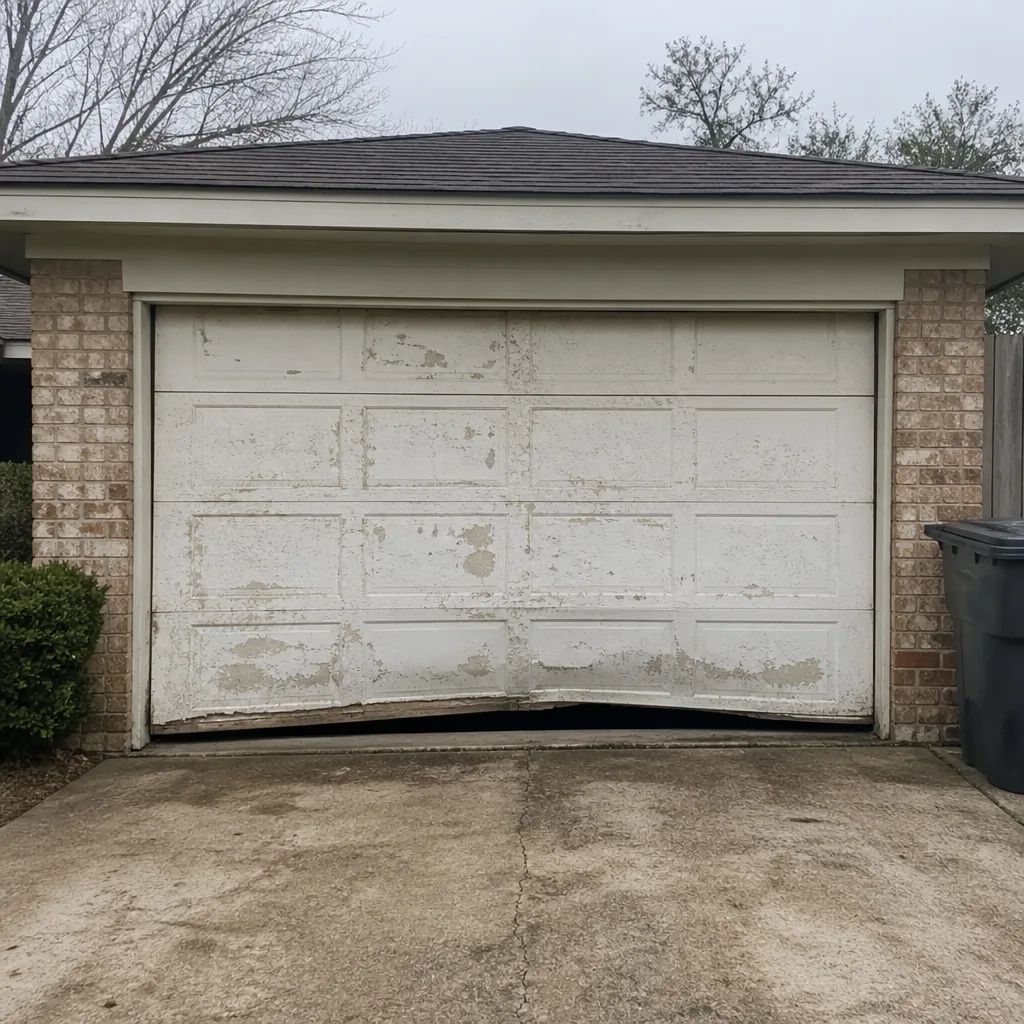 Before
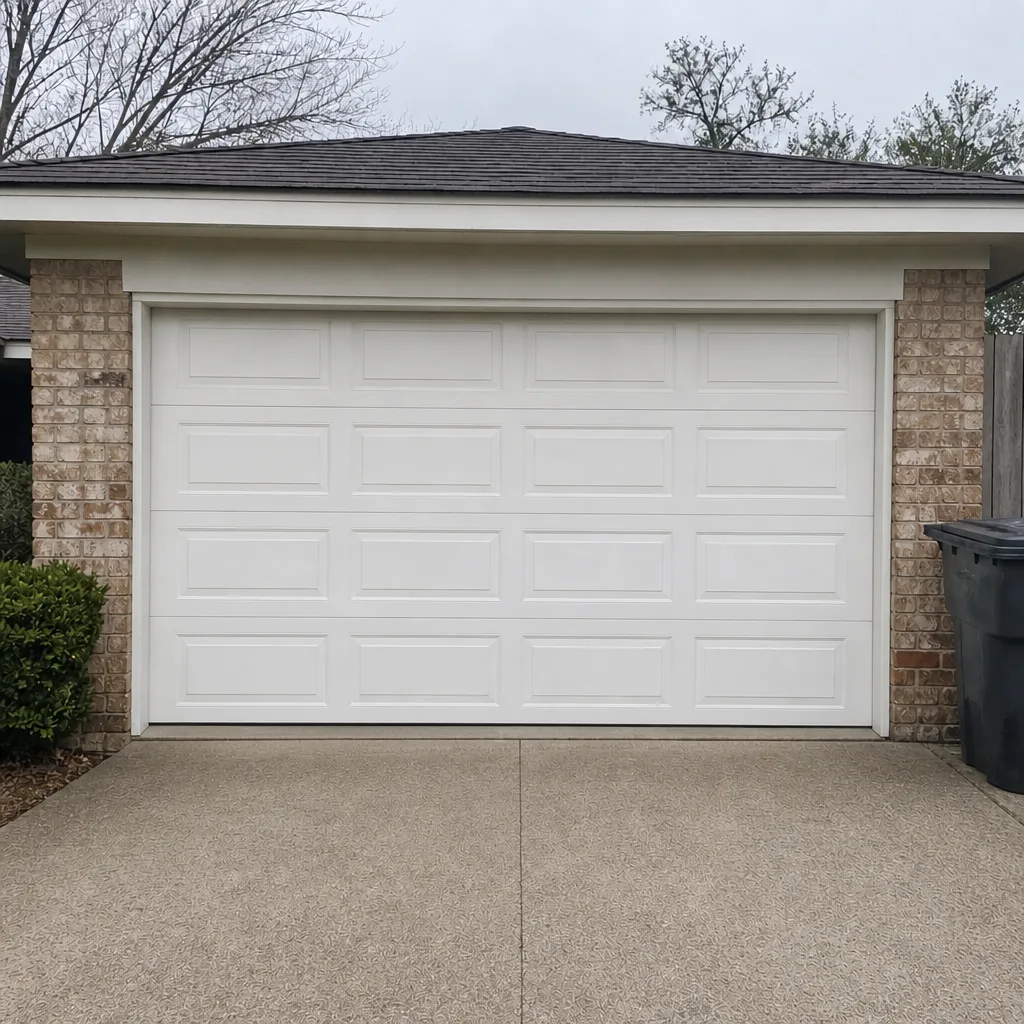 After
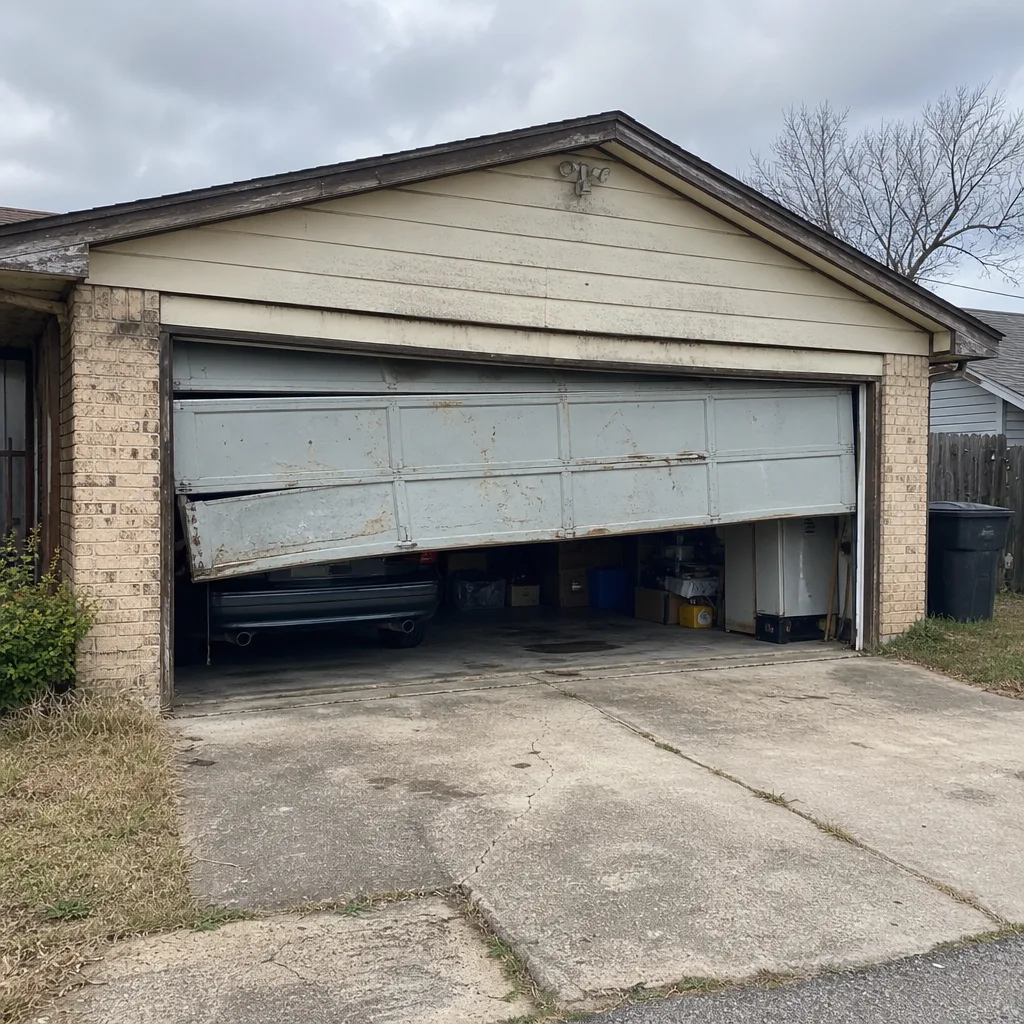 Before
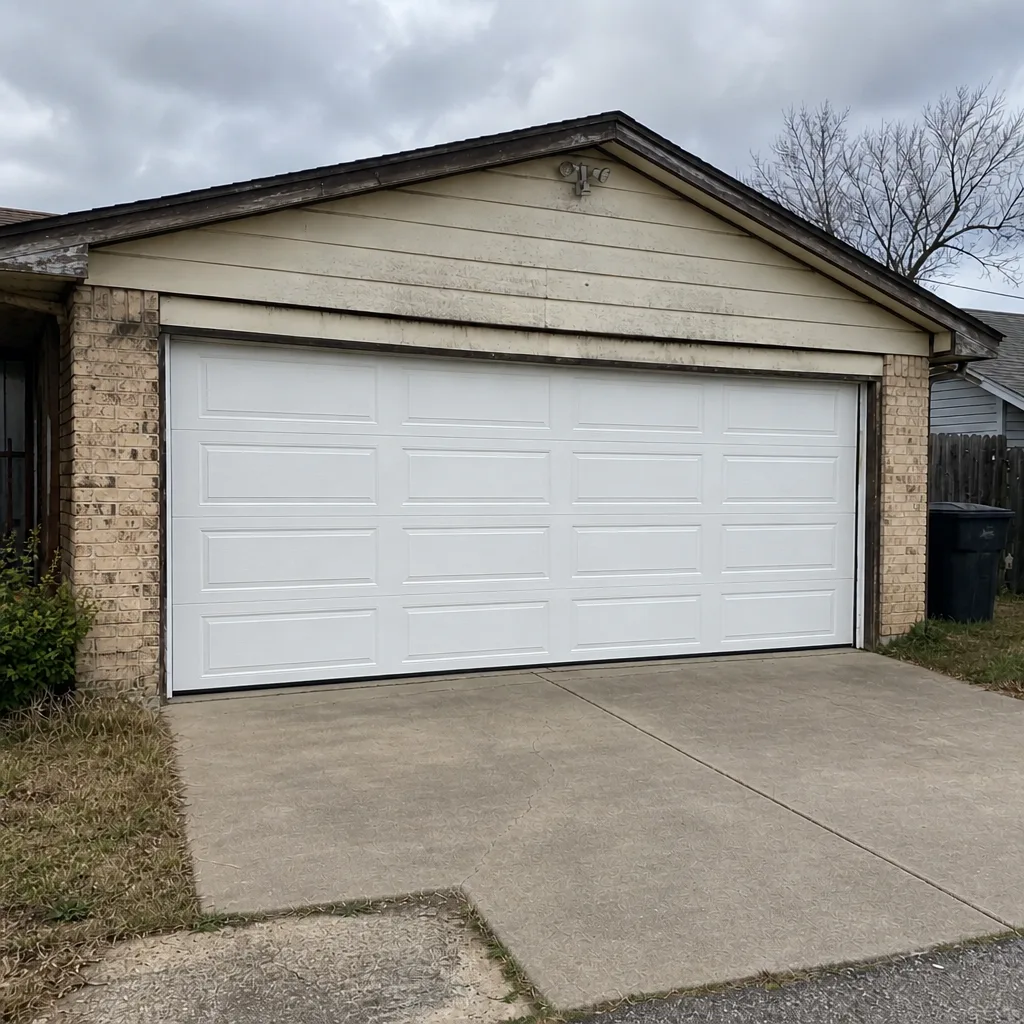 After
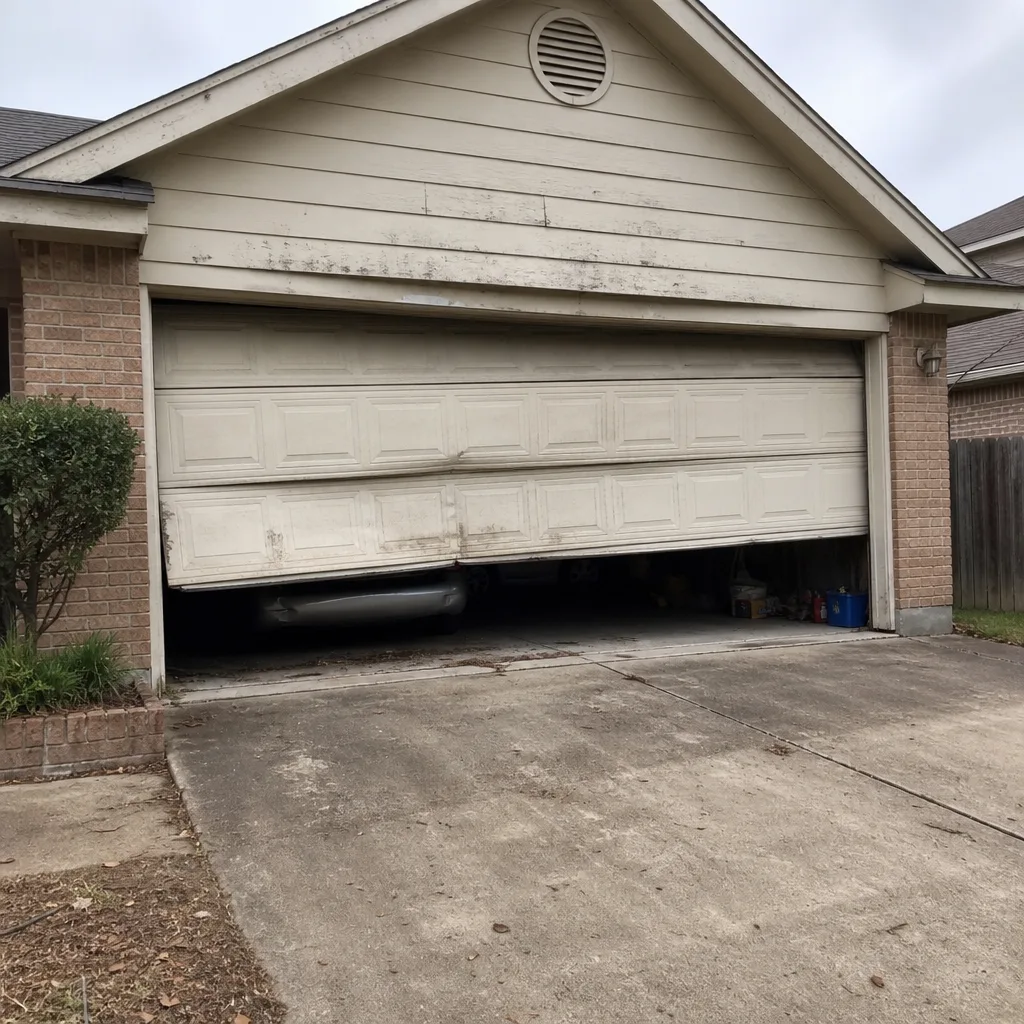 Before
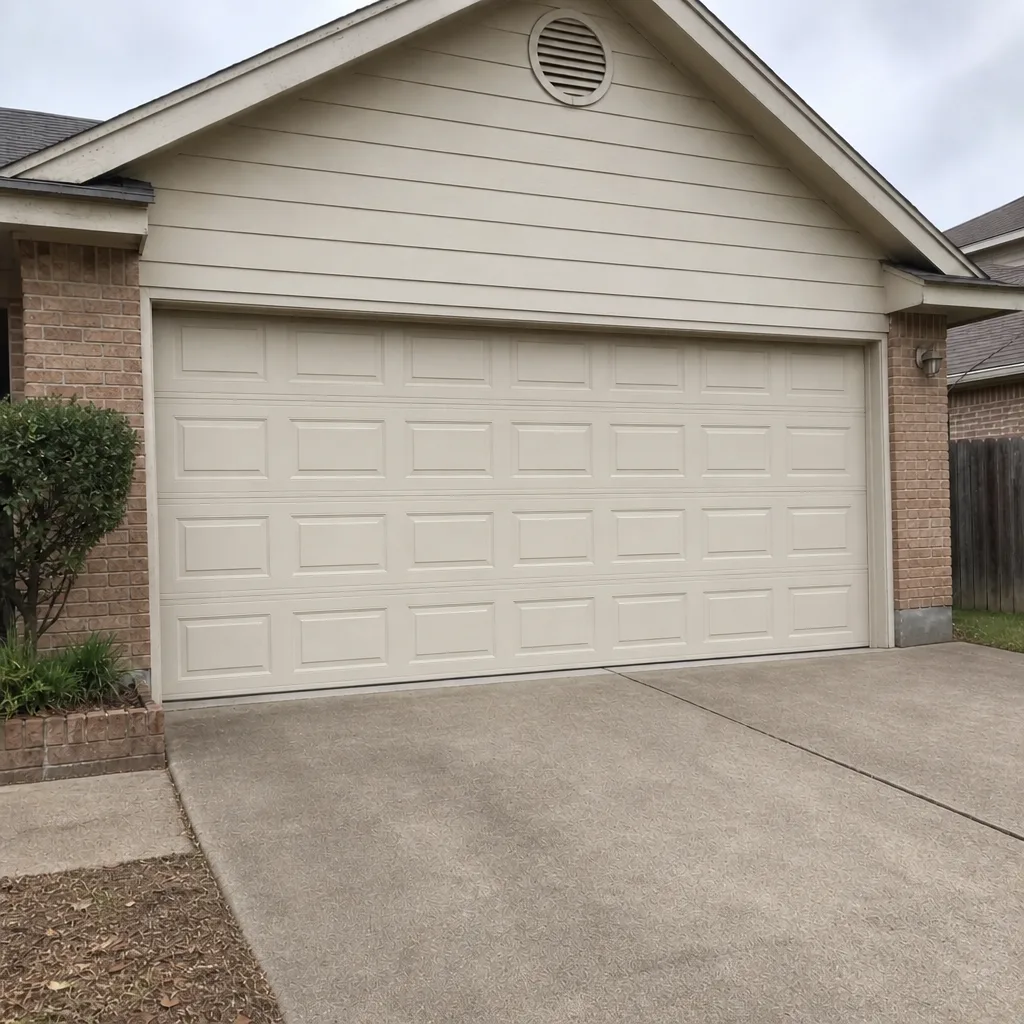 After
When to Call a Professional
Some maintenance is yours to do. Some is genuinely dangerous to attempt. Call a specialist when a torsion spring shows a gap, when either spring type has visible rust or stretch, when a cable is frayed or slack, or when the door has dropped out of balance and won’t hold halfway. Call for a bent track, a hinge that’s pulled free of the panel, or a door that’s begun scraping the floor. Call for an opener that reverses without cause, that stalls, or that throws the same error code repeatedly. Call when the door is stuck open and the home is exposed, or stuck shut and someone can’t get out. Our technicians have up to 14 years of experience, and we work on the door and the opener together so there’s no gap between trades. Baytown Garage Door Repair Pros offers free estimates in Baytown – call (877) 492-3142. We answer 24/7. Fast dispatch from 7am to 7pm, Sunday through Friday.
Frequently Asked Questions
Once a quarter for the visual inspection and lubrication pass, and once more in October for the full post-summer corrosion check. Baytown’s humid summers make the summer and fall checks the most important of the year. Call (877) 492-3142 for an exact quote on any repair the inspection turns up – estimates are free.
White lithium grease on springs and hinges, silicone spray on weatherstripping and seals, and nothing at all on the tracks. Petroleum-based sprays attract grit and accelerate roller wear, especially in a humid summer. Tracks should be wiped dry with a rag. Call (877) 492-3142 for an exact quote on roller replacement if yours are already worn.
Count the door’s openings per day, multiply by 365 to get annual cycles, then divide your spring’s cycle rating (on the spring tag) by that number. A spring rated for 10,000 cycles on a door that runs four times a day lasts about seven years; at ten times a day, less than three. Always have a technician replace them – springs are under dangerous tension. Call (877) 492-3142 for an exact quote on spring replacement.
Yes, for the visual inspection, the clean-and-lubricate pass, the safety-reverse test, and the weatherstripping replacement. No, for anything involving springs, cables, or bottom brackets – those are under heavy tension and require proper tools and training. Reaching under a closed or closing door to test it is also a risk worth avoiding. Call (877) 492-3142 for an exact quote on the work you’d rather leave to a specialist.
Most modern LiftMaster and Chamberlain models retain their diagnostic logs through short power interruptions, but some clear or reset on a full outage. If your log looks empty after a storm, don’t assume the opener is fine; run the manual checks. If you’re unsure what an error code means, call (877) 492-3142 for an exact quote on diagnosis and repair.
It puts real stress on unprotected steel, especially at hinge pivots, spring coils, and panel seams. Surface oxidation is common by late summer, and it’s why October is the second most important month on this schedule. The fix is regular greasing, dry tracks, and prompt replacement of any pitted part. Call (877) 492-3142 for an exact quote on any hardware replacement.
The Bottom Line
A garage door in Baytown doesn’t need the same task every season. It needs the right task at the right time. The core schedule is quarterly inspection and lubrication, a deep clean and storm-season prep in May, a full post-summer corrosion audit in October, and a cold-snap seal and safety check in December. Springs are replaced on cycle count, not calendar age, so track your openings. Use white lithium grease on springs and hinges, silicone on rubber seals, and nothing on tracks. Run the 10-point inspection yourself, and hand off anything involving springs, cables, or diagnostics. That’s the whole schedule, and most of it takes an afternoon across the year.
Call Baytown Garage Door Repair Pros at (877) 492-3142 for a free estimate. We answer 24/7. Fast dispatch from 7am to 7pm, Sunday through Friday. We work on the eight major brands – LiftMaster, Chamberlain, Genie, Clopay, Amarr, Wayne Dalton, Craftsman, and Raynor – and we handle the door, the springs, and the opener together.
Written by the team at Baytown Garage Door Repair Pros.