
Last updated November 21, 2026
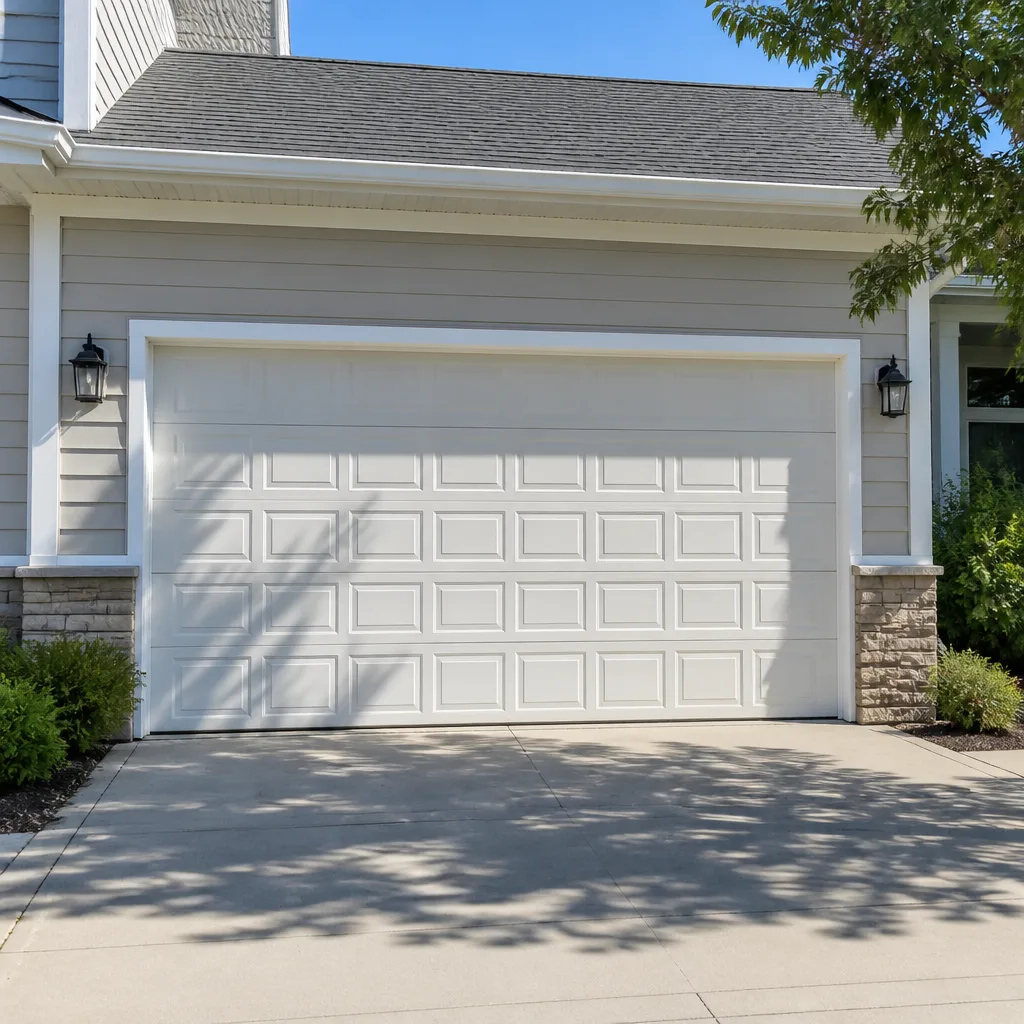 Raised-panel steel
 Carriage house
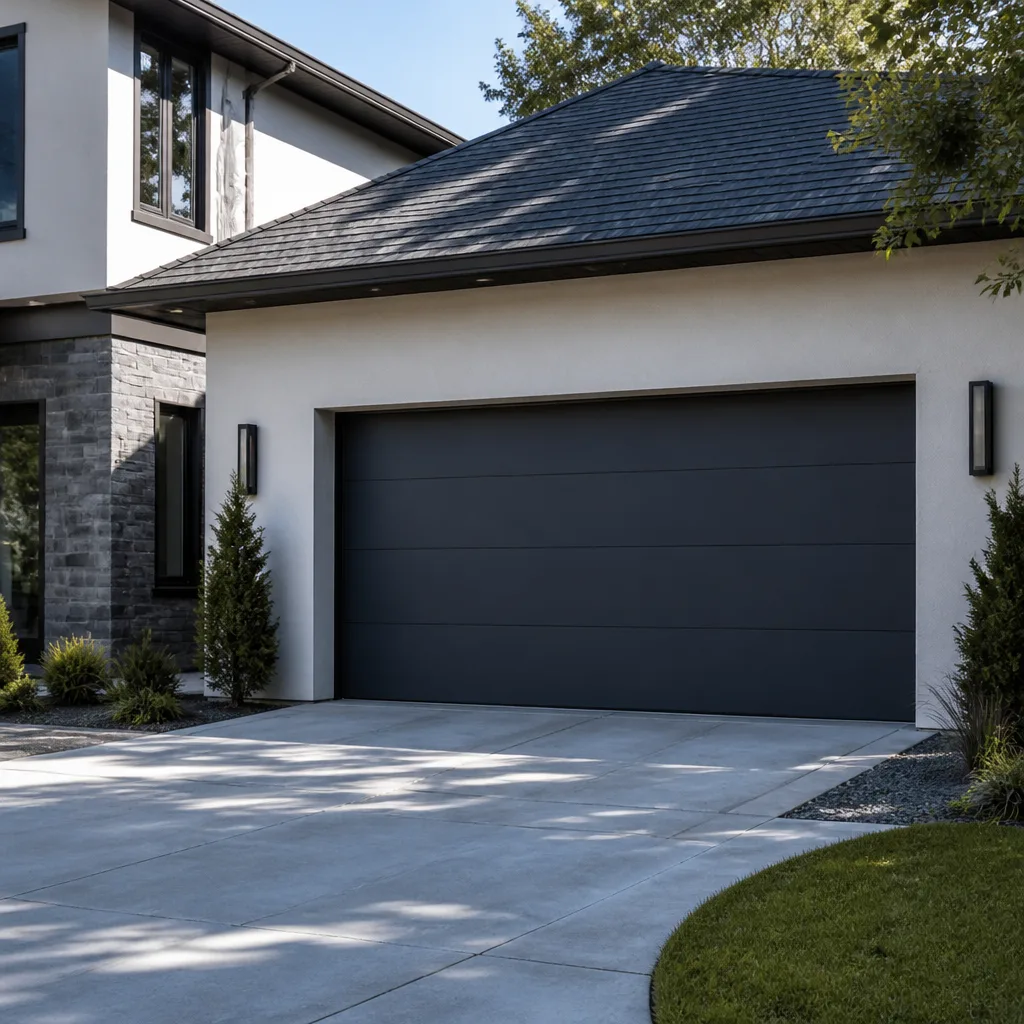 Modern flush
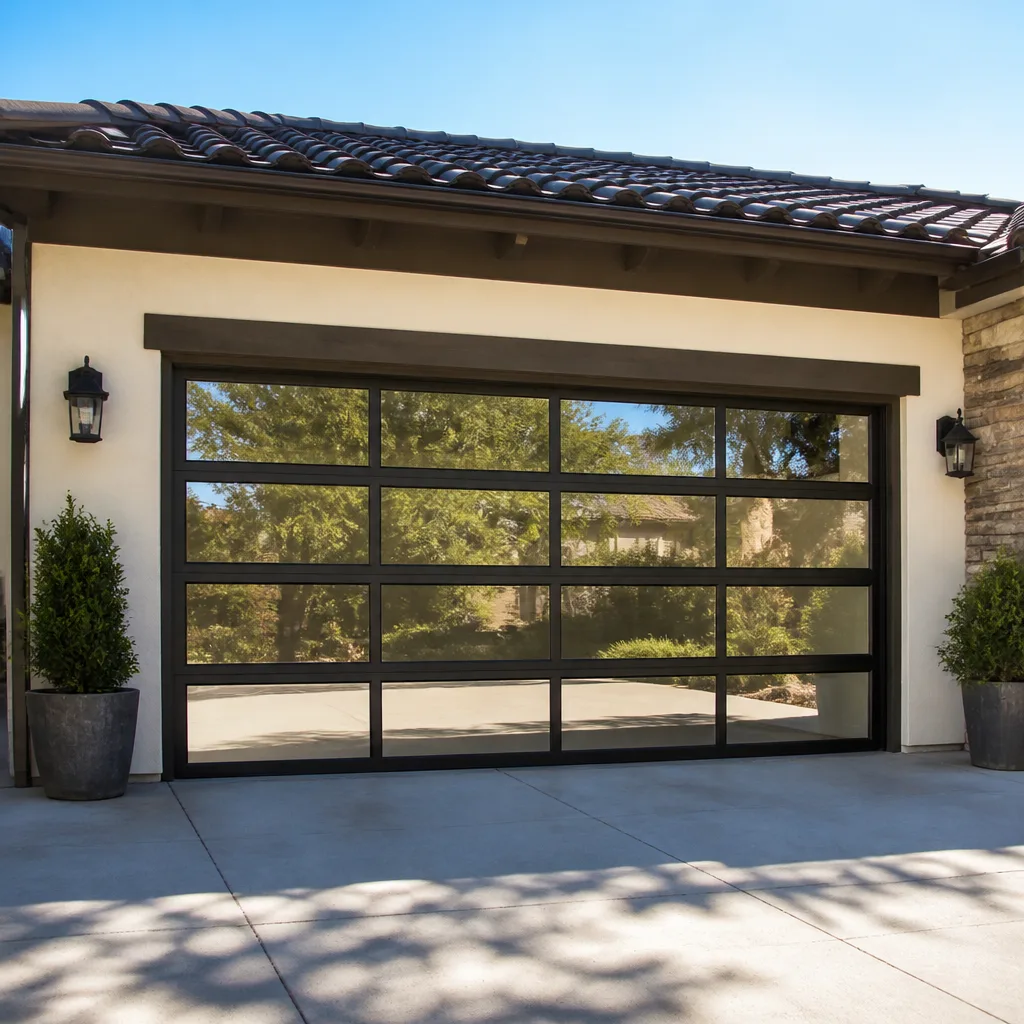 Full-view glass
 LiftMaster openers
 Chamberlain openers
Full 25-point door and opener safety check with every visit - springs, cables, rollers, tracks, and your LiftMaster or Chamberlain opener included
You get a price before we start. It does not change when the pro arrives.
Get your free estimateGarage Door Repair Troubleshooting in Baytown: Common Problems and How to Fix Them
A grinding door and a squealing door can sound like cousins, yet they point to completely different failed parts, and the wrong fix makes one of them worse. That’s the trap most homeowners fall into: they treat the noise or the stutter instead of tracing it back to the component that actually failed. Lubricating a worn roller because the door is loud won’t quiet a torsion spring that has lost tension, and tightening a track won’t stop a cable that’s beginning to fray.
We wrote this guide to help Baytown homeowners think in systems, not symptoms. You’ll learn how to sort common failures by their real root cause, run a two-second weight test on your door, tell a sensor problem from a force-limit problem, and recognize which jobs are safe to handle and which ones you should never touch. By the end you’ll know what’s worth a look and what’s worth a call.
Quick Answer
Most garage door problems in Baytown trace to one of five components: rollers and hinges, springs, cables, tracks, or the opener’s sensors and force limits. Matching the symptom to the right component is what separates a repair that lasts from a repair you repeat. Anything involving torsion springs or cables is a professional job; sensor wipes, track nudges, and opener limit adjustments are safe for most homeowners to try first.
Styles & brands we work with
- Raised-panel steel
- Carriage house
- Modern flush
- Full-view glass
- LiftMaster openers
- Chamberlain openers
Table of Contents
- Symptom-to-Cause: The Troubleshooting Decision Tree
- Grinding, Squeaking, or Rattling: What Each Noise Is Telling You
- How Baytown Humidity Shortens Cable and Spring Life
- Why Your Door Reverses: Sensor vs. Force Limit
- The Two-Second Manual Lift Test
- Safe DIY Fixes vs. No-Touch Zones
- Opener Problems: When It’s the Motor and When It Isn’t
- What Garage Door Repair Costs in Baytown
Symptom-to-Cause: The Troubleshooting Decision Tree
The fastest way to solve a garage door problem is to stop guessing and follow the symptom back to its source. Every failure you’re likely to see falls into a small number of categories, and each one has a tell. Here’s how we train ourselves to sort them, and how you can too.
Start with the question: what is the door doing that it shouldn’t? Then walk down this list.
- Won’t move at all. Check the opener’s power, the wall control, and the safety sensor alignment first. If the opener hums but the door doesn’t budge, suspect a broken spring or a snapped cable.
- Moves a few inches then reverses. This is almost always a sensor or force-limit issue, covered in detail below.
- Moves unevenly, one side lagging. A stretched or broken spring on one side, or a bound track on one edge. Don’t force it.
- Loud, rough, or jerky travel. Worn rollers, dry hinges, or loose track hardware. This is mechanical wear, not an opener problem.
- Door hangs in the open position. A broken torsion spring or a snapped lift cable. Keep people and vehicles clear and call for help.
Notice that only one of those five points back to the opener itself. In our experience, homeowners replace openers far more often than they need to. Your LiftMaster or Craftsman unit is usually fine; it’s the door system around it that’s struggling. That’s exactly why we treat springs, panels, tracks, and openers as garage door repair under one roof, since the real cause and the visible symptom rarely live in the same place.
Grinding, Squeaking, or Rattling: What Each Noise Is Telling You
Noise is the most useful diagnostic signal a garage door gives you, and the three most common sounds point to three different parts. Treat the noise as a clue, not the problem.
Grinding
Grinding usually means metal is rubbing metal where it shouldn’t. The usual suspects are worn steel rollers that have lost their bearing surface, or a torsion spring that’s starting to bind inside its coils. If the grinding happens right as the door starts to lift and you also see the door struggle, stop using the opener and have the springs looked at. Grinding plus a door that feels heavier than usual is a strong signal the spring has lost tension.
Squeaking
Squeaking is friction noise, and it’s usually the cheapest fix on this page. Hinges, rollers, and the pivot points at the bottom corners dry out and start chirping. A garage-door-rated lubricant on the hinges, roller stems, and bearing plates quiets most squeaks. Don’t spray the tracks themselves; lubrication there attracts grit and can make the door chatter. If the squeak persists after a proper lube, the roller bearings are likely worn and need replacing.
Rattling
Rattling points to loose hardware: track brackets, hinge bolts, the opener’s rail bolts, or a door panel that’s come slightly loose from its stile. A rattling door is usually safe but worth snugging up, because loose brackets eventually let a track drift out of alignment and that’s when the real trouble starts. If the rattle comes with a door that’s shimmying side to side, stop and check that the panels are seated on their hinges.
What all three have in common: the loudest part is rarely the failed part. That’s why we walk the whole system on a diagnostic visit – springs, rollers, hinges, tracks, and the opener – instead of chasing the sound and calling it done.
How Baytown Humidity Shortens Cable and Spring Life
Baytown’s Gulf Coast humidity is hard on garage door steel, and it’s the single biggest reason we see cable and spring failures earlier here than a homeowner might expect. The garage is a semi-enclosed space, so moisture settles in and stays. Metal that sits in damp air most of the year corrodes faster than metal in dry climates, and the two parts most affected are the lift cables and the torsion spring.
Cable fraying
Lift cables are braided steel under constant tension. In humid air, individual strands begin to rust and pit. A pitted strand weakens, and once one breaks the braid starts to unwind. What you’ll notice before failure is a fuzzy or frayed look near the drum, or a few broken strands poking out at the cable end. Catching a frayed cable early is a routine swap; a snapped cable under tension can whip and is genuinely dangerous. Check the cables visually every few months, especially the section wound around the drums.
Torsion spring corrosion
Torsion springs are steel wire under heavy load. Humidity does two things to them: surface rust weakens the wire over time, and corrosion between coils increases friction, which changes how the spring cycles. A corroded spring may still open the door but with less reserve, and it can give out without much warning. You can’t fix a corroded spring – it gets replaced – but you can watch for the signs: visible rust, a gap in the coil, or a door that’s suddenly heavier to lift.
Track and hinge hardware
Track brackets and hinge bolts also corrode. That’s part of why our garage door spring repair work is done as a specialist job rather than an add-on: the springs, cables, and the hardware that holds them are all exposed to the same humidity, and they fail as a system. Keeping the garage reasonably ventilated and wiping down visibly damp hardware after long wet stretches helps, but it doesn’t replace a proper inspection.
Why Your Door Reverses: Sensor vs. Force Limit
An opener that reverses immediately after touching the floor is almost always a safety-sensor problem. An opener that reverses partway through travel, or reverses on its way down in open air, is almost always a force-limit calibration problem. Those are two different components and two different fixes, and knowing which you have saves you from adjusting the wrong one.
How to tell them apart
- Reverses right at the bottom, or refuses to close from fully open: sensor issue. The photo-eye safety sensors on each side of the door need a clear, aligned beam. Check for cobwebs, dirt, a shifted bracket, or something blocking the lens.
- Reverses mid-travel or halfway down: force-limit issue. The opener thinks it’s hitting an obstruction when it isn’t, because the force limit is set too low or the door has gotten harder to move.
- Reverses on the way up: usually a force-limit or travel-limit setting, or a binding track that’s making the door hard to lift.
The sensor check
Look at both sensors. Each should have a steady indicator light when the beam is clear. If one is flashing or dark, wipe the lens with a soft cloth, check that both brackets point at each other, and confirm nothing (a broom, a bike, a trash can) is in the beam. Sensor alignment is safe to adjust yourself.
The force-limit check
Force-limit adjustment is done on the opener itself, usually with a small screw or a digital setting, and it should only be dialed up enough to move the door smoothly – never so high that the opener pushes through a real obstruction. If you have to raise the force setting, ask why the door got harder to move. Nine times out of ten it’s a spring that’s lost tension or a track that’s drifted, and adjusting the force just masks the real issue. If your Genie or Chamberlain opener keeps reversing after the sensors are clean and the force setting looks right, it’s time to bring in garage door opener repair rather than keep turning screws.
The Two-Second Manual Lift Test
Before you call anyone, run the lift test. It tells you in about two seconds whether your springs are carrying their share of the door’s weight, and it’s the single most useful check a homeowner can do. Disconnect the opener first – most openers have a red release cord or handle – so you’re lifting the door by hand and not fighting the motor.
How to do it
- Pull the emergency release to detach the door from the opener. Do this with the door fully closed.
- Lift the door by hand to about waist height, then let go gently.
- Watch what it does.
What the result means
- Door stays roughly where you left it: springs are balanced and healthy. Good sign.
- Door sags back down: springs have lost tension. They need adjustment or replacement.
- Door feels very heavy, like lifting a solid object: springs are badly compromised or one is broken. Stop, lower the door carefully, and don’t force it.
- Door springs up on its own: springs may be over-tensioned, which is also a problem worth a look.
Don’t reconnect the opener and keep using a door that fails this test. A door that’s heavier than its springs were designed for puts extra strain on the opener motor and the cables, and that’s how small problems turn into emergencies. The test is safe, but the fix behind it – adjusting or replacing springs – is not a DIY job. Reconnect the door only after the springs have been serviced.
Safe DIY Fixes vs. No-Touch Zones
Some garage door problems are genuinely safe for a careful homeowner to handle, and some are non-negotiable no-touch zones. Being honest about which is which protects you and saves money on the ones you can do yourself.
Safe to try yourself
- Sensor wipe-down and alignment. Clean the photo-eye lenses, straighten a shifted bracket, and confirm the indicator lights are steady. Low risk, high payoff.
- Lubrication. A garage-door-rated lubricant on hinges, roller stems, and bearing plates. Don’t over-apply and don’t lube the tracks.
- Track realignment (gentle). If a track has been bumped slightly out of line near the floor and the door is catching, a careful tap with a rubber mallet to reseat the bracket can help. If a track is bent, cracked, or clearly out of plumb, stop and call.
- Limit adjustment on the opener. Travel limits (how far the door opens and closes) are safe to nudge when the door isn’t quite reaching the floor or the ceiling. Follow your opener’s manual for your specific brand.
- Snugging loose hardware. Tightening hinge bolts and track brackets with a wrench is fine.
The no-touch zone
Torsion springs, extension springs, and any cable under tension are off-limits. These parts store enormous energy, and releasing that energy the wrong way can cause serious injury to hands, arms, and face. Never try to unwind a torsion spring, never cut a cable under tension, and never “help” a spring back into place with a screwdriver or pry bar. This isn’t caution for its own sake – spring repair is a dedicated specialty for a reason, and it’s one of the core jobs we handle for our customers. If you suspect a spring or cable problem, keep the door closed if you can, keep people and vehicles clear, and get a trained technician involved.
Opener Problems: When It’s the Motor and When It Isn’t
Openers are the most commonly misdiagnosed part of the garage door system. The motor itself is usually the last thing to fail. Here’s how to sort the symptoms.
- Opener hums but door doesn’t move: the motor is running but the door isn’t following. On a chain- or belt-drive unit this usually means a broken spring, snapped cable, or a stripped gear inside the opener. On a screw-drive unit, an uncoupled carriage can cause the same symptom. Check the springs first.
- Opener clicks but nothing happens: a bad wall control, a tripped circuit, or a failing logic board. Sometimes it’s as simple as a dead remote battery.
- Door reverses unpredictably: force-limit or sensor, as covered above. Rarely the motor.
- Opener runs and the door moves, but the light doesn’t come on: a bulb or a light socket, not a motor failure.
- Opener strains and the door moves slowly: the door is too heavy for the motor, which almost always means a spring or track issue, not a dying opener.
One more thing worth knowing: brands behave a little differently on the small stuff. A LiftMaster’s wall control diagnostic codes aren’t the same as a Wayne Dalton idrive’s, and a Raynor door with a jackshaft opener has different travel-limit behavior than a standard trolley unit. That brand-specific familiarity is part of why we train on the openers we service – LiftMaster and Wayne Dalton among them – so the first visit is a diagnosis, not a guess. When the opener really has failed, we replace it; when it hasn’t, we fix the door system it’s driving and leave the motor alone.
What Garage Door Repair Costs in Baytown
Garage door repair in Baytown typically runs from a modest fix like a sensor adjustment up to several hundred dollars for a matched pair of springs. The exact price depends on the component, the door’s size and brand, and whether other parts have worn alongside it. Every estimate we give is free, and the written price is set before any work begins.
Here’s how the common repairs break down by component. All figures are typical estimates, not final quotes.
- Safety sensor alignment or cleaning: usually no charge beyond a service visit for simple adjustments, or folded into a larger repair.
- Roller and hinge replacement (full set): a modest, routine repair; cost scales with door size.
- Track realignment or bracket repair: typically a small-to-mid repair, more if a track section needs replacement.
- Single torsion spring replacement: a dedicated specialty repair priced for one spring.
- Matched pair of torsion springs: usually replaced together, so the pair costs roughly twice a single spring. If your door has two springs, expect both to be quoted.
- Lift cable replacement: priced per cable, often paired with a spring service when both have worn together.
- Opener repair (board, gear, or limit): varies by brand and part; a common repair on LiftMaster and Craftsman units.
- Full opener replacement: priced with the new unit plus installation; a scheduled job, not an emergency one.
We won’t quote a range that ignores your actual door. A 7-foot single door and a 16-foot double door don’t share the same spring cost, and a Wayne Dalton with a torsion system is a different job than a Raynor with extension springs. The number that counts is the one on the written estimate after we’ve looked. Call (877) 492-3142 for a free estimate.
Common Mistakes to Avoid
- Replacing the opener when the springs are the problem. A new motor bolted to a door with bad springs will wear out fast and won’t fix the symptom. Diagnose the door before you shop for a motor.
- Lubricating the tracks. Lubricant on the tracks attracts grit and makes the door roll unevenly. Lubricate hinges, rollers, and bearing plates, not the track surface.
- Dialing up the force limit instead of fixing the door. Raising the opener’s force setting to force a heavy door through its cycle hides a spring or track problem and strains the motor. Find the cause first.
- Ignoring a frayed cable because the door still works. Baytown’s humidity accelerates cable corrosion, and a cable can look fine until a few strands break. Check the drums every few months.
- Forcing a stuck door up or down. If the door won’t move, forcing it can snap a cable or bend a track. Keep people and cars clear and get help.
- Attempting a torsion spring repair. This is the one mistake on the list with real injury potential. Springs and cables under tension are a professional-only job.
- Buying a new door to fix an opener problem. A stuttering door on a newer opener is usually a sensor, limit, or track issue. Rule those out before you replace anything structural.
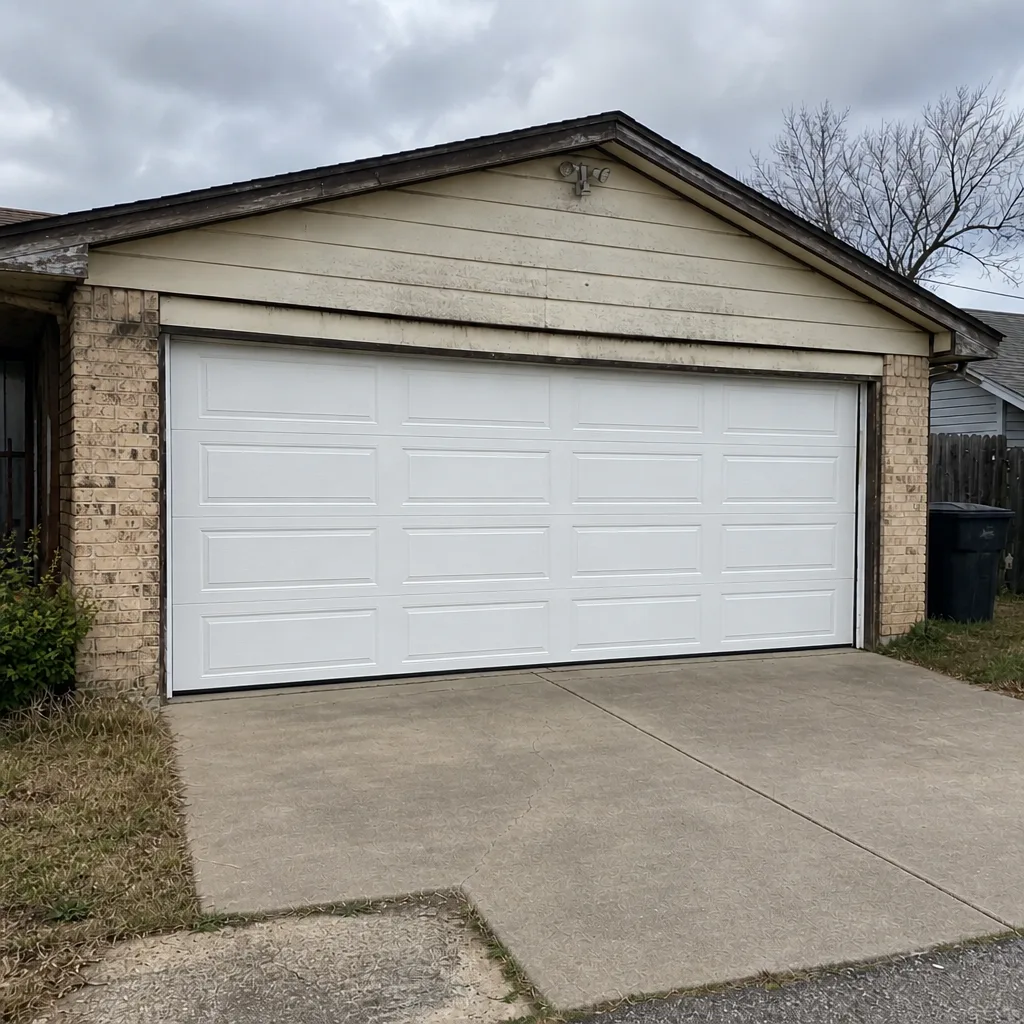
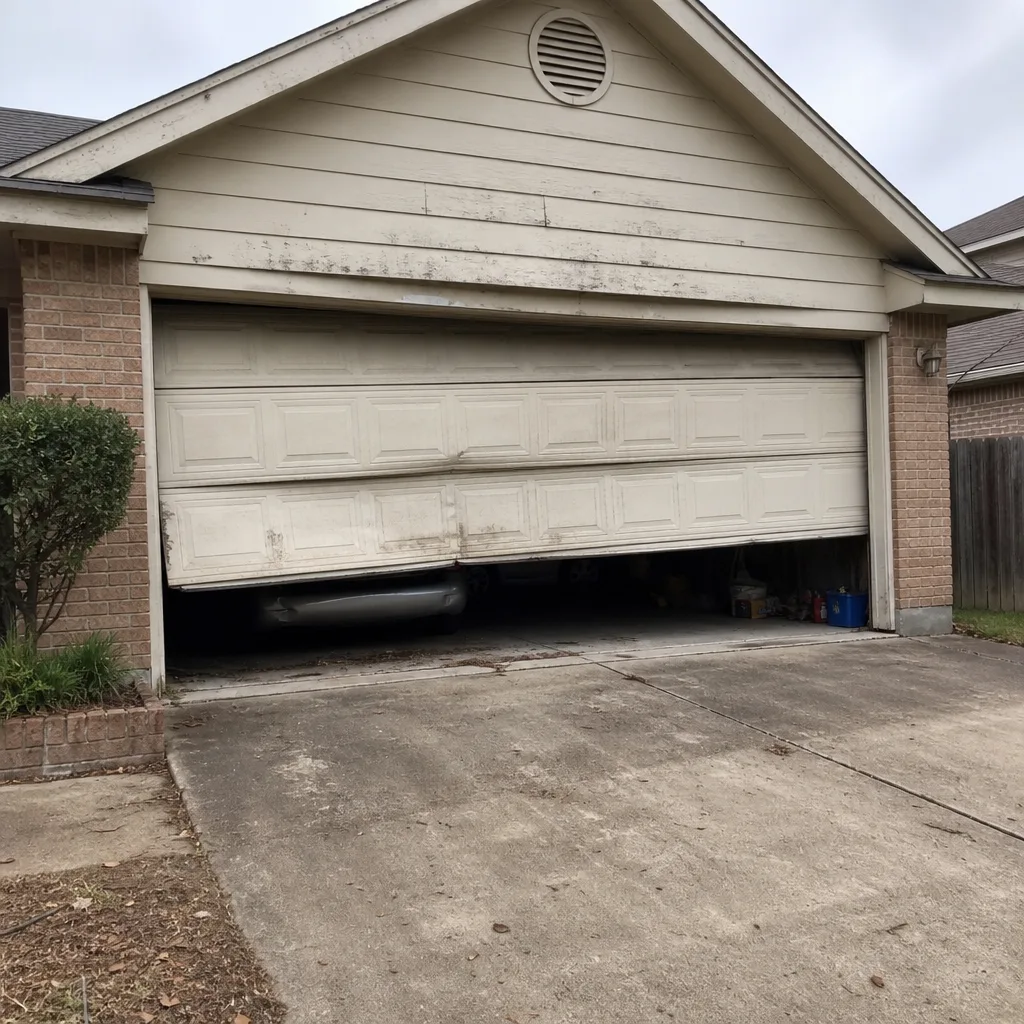
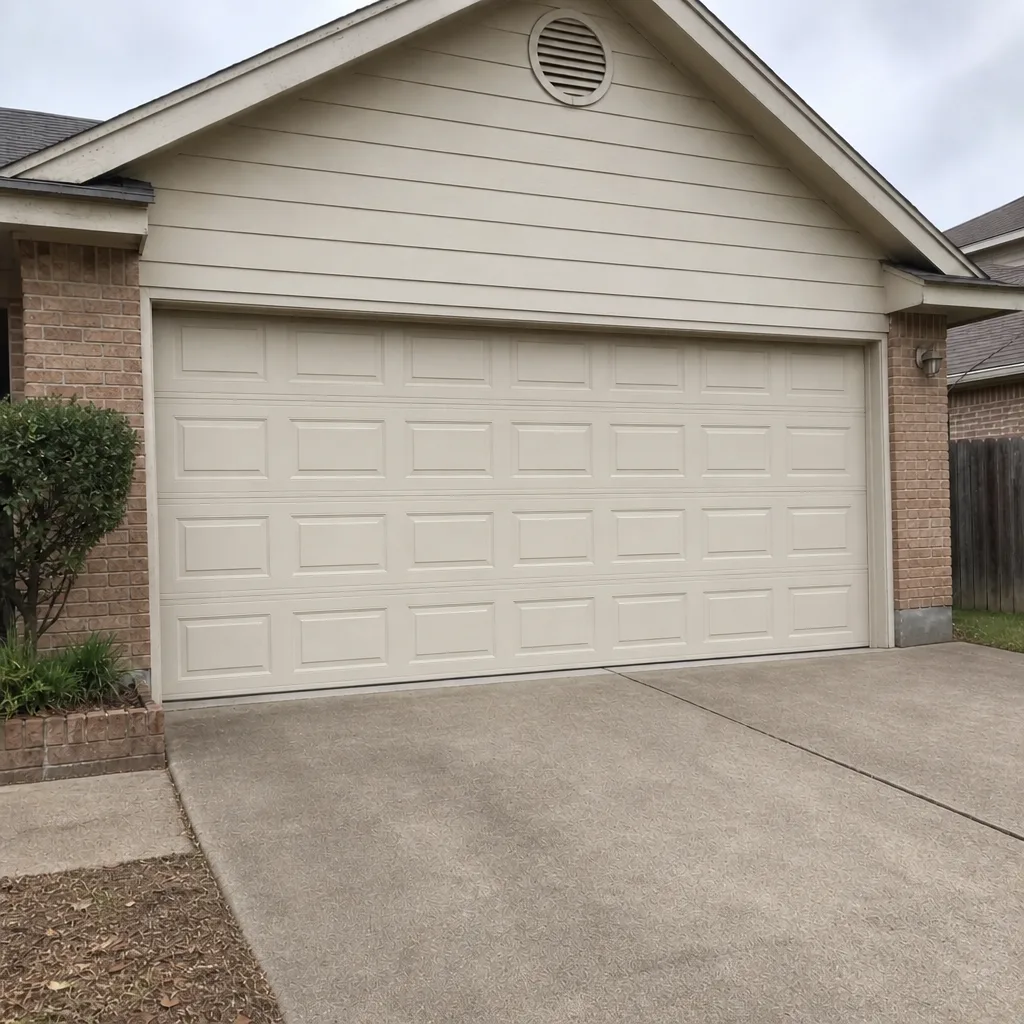
See the difference
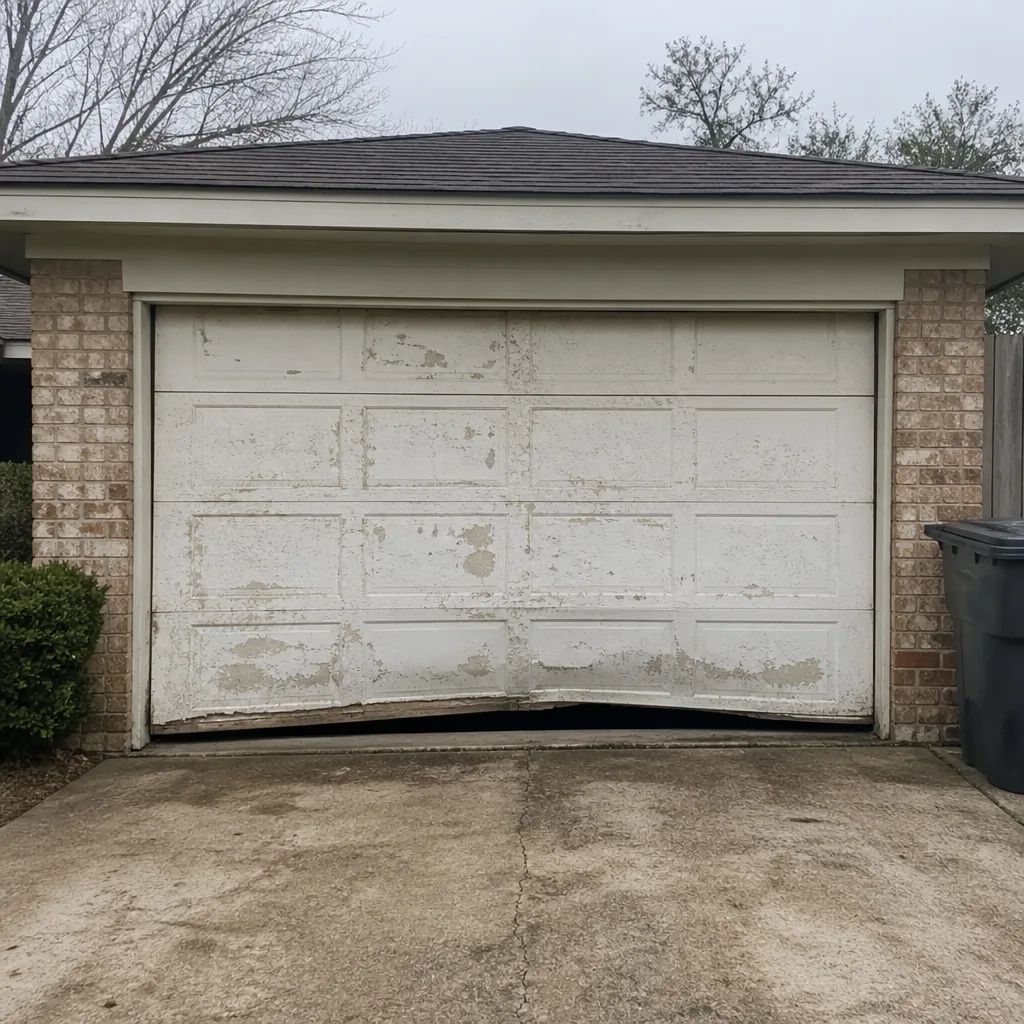 Before
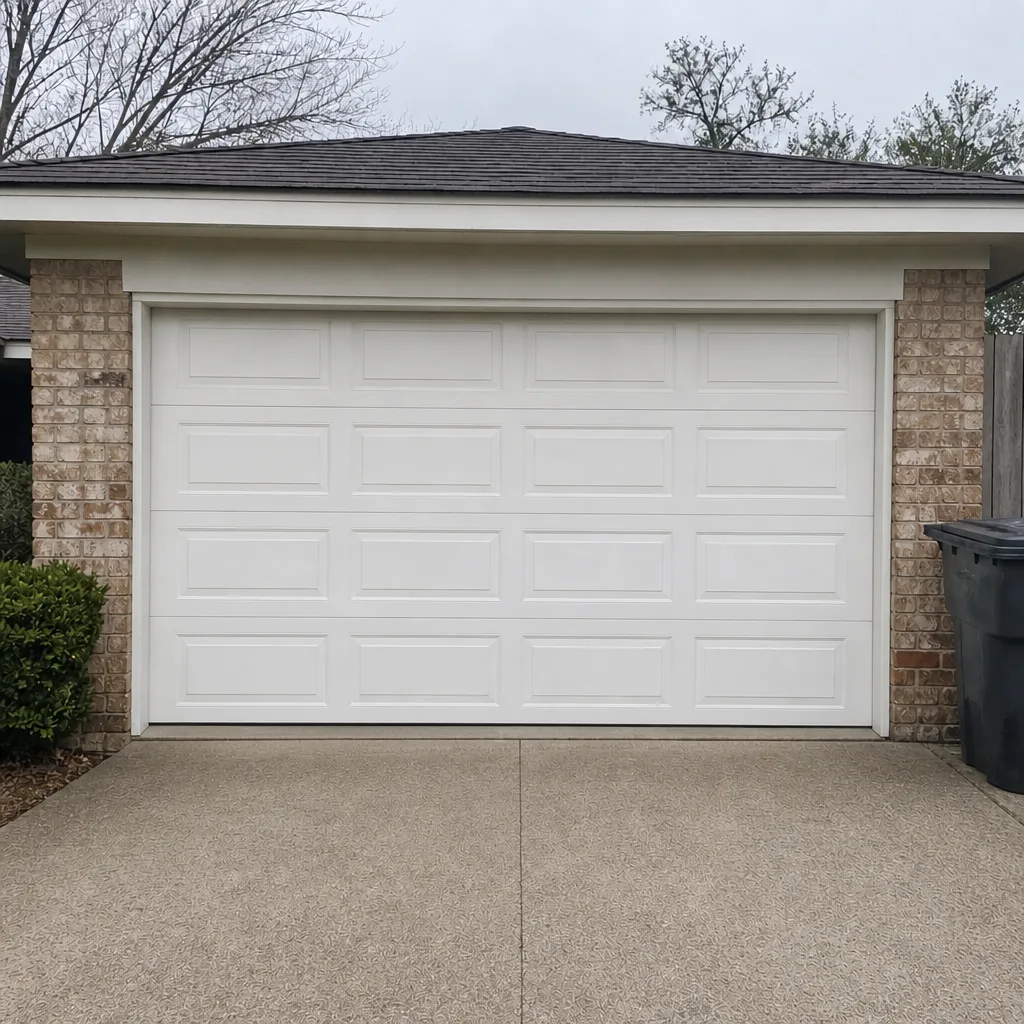 After
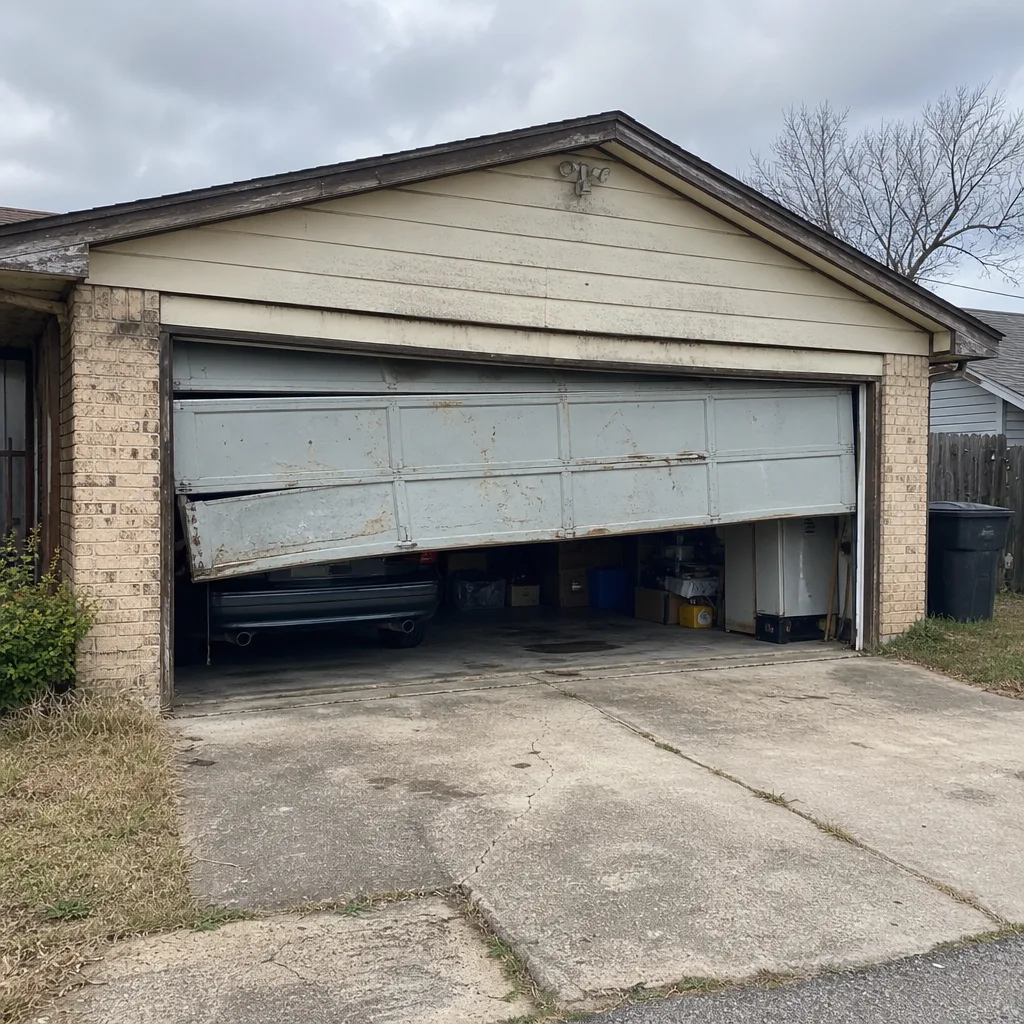 Before
 After
 Before
 After
When to Call a Professional
Call a professional when the symptom points to springs, cables, or anything that involves putting your hands near energized or high-tension parts. That includes a door that won’t lift by hand, a door hanging open, a snapped cable, a visible gap in a torsion spring coil, or an opener that hums while the door stays put. It also includes persistent reversing you can’t fix with a sensor wipe and a limit nudge, and any door that’s been hit by a vehicle or has clearly bent track. If you’re not sure, describe the symptoms and let a specialist sort it; a partial diagnosis beats a guess. Baytown Garage Door Repair Pros offers free estimates in Baytown – call (877) 492-3142. Our technicians have up to 14 years of experience, we answer 24/7, and fast dispatch runs from 7am to 7pm, Sunday through Friday.
Frequently Asked Questions
Spring repair in Baytown is priced per spring, and a single torsion spring is typically a few hundred dollars; a matched pair usually costs about twice that, because pairs are replaced together. The written estimate sets the final price, and it’s free. Call (877) 492-3142 for an exact quote – estimates are free.
Yes, same-day service is often available for urgent repairs like a door stuck open, a snapped spring, or a failed opener. We answer 24/7, and fast dispatch runs from 7am to 7pm, Sunday through Friday. Call (877) 492-3142 and we’ll book you in.
No – the price is quoted and agreed before any work starts, so what you approve is what you pay. If we find a second worn part, we’ll tell you before doing anything and quote it separately. Call (877) 492-3142 for a free estimate.
Yes – the local professionals we connect you with are licensed and insured as Texas requires. Our technicians have up to 14 years of experience and are trained on the major brands we service. Call (877) 492-3142 with any questions – estimates are free.
An immediate reversal at the floor is almost always a safety-sensor problem – a dirty lens, a misaligned bracket, or something blocking the beam. Wipe both sensor lenses and confirm they point at each other. If it still reverses, call (877) 492-3142 – estimates are free.
Usually not if the door itself is the problem. If springs have lost tension or a track has drifted, a new opener just forces a heavy door and wears out sooner. Fix the door system first, then judge the opener. Call (877) 492-3142 for a free diagnosis.
The Bottom Line
Garage door problems get cheaper and faster to fix when you trace the symptom to its real cause instead of replacing whatever part is loudest. Check the lift test to judge your springs, tell a sensor issue from a force-limit issue before you adjust anything, and remember that Baytown’s humidity wears cables and springs faster than a dry climate would. Handle the safe fixes yourself – sensor wipes, lubrication, limit nudges – and leave torsion springs and cables to a specialist. When you’re ready to hand it to someone who works on garage doors and nothing else, we’re here for the whole system.
Call (877) 492-3142 for a free estimate. We answer 24/7, and fast dispatch runs from 7am to 7pm, Sunday through Friday. From a snapped spring to a new door, Baytown Garage Door Repair Pros handles the full job in Baytown.
Written by the team at Baytown Garage Door Repair Pros.