
Last updated November 21, 2026
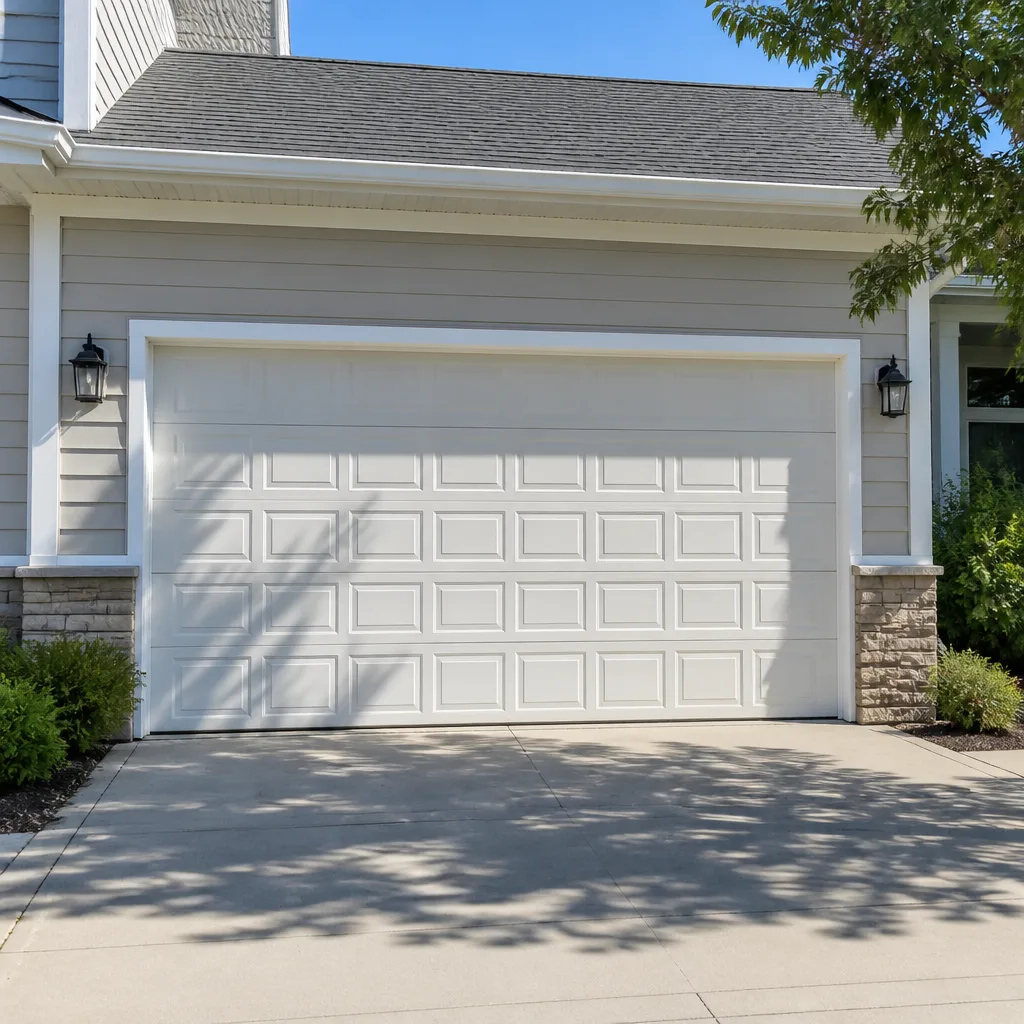 Raised-panel steel
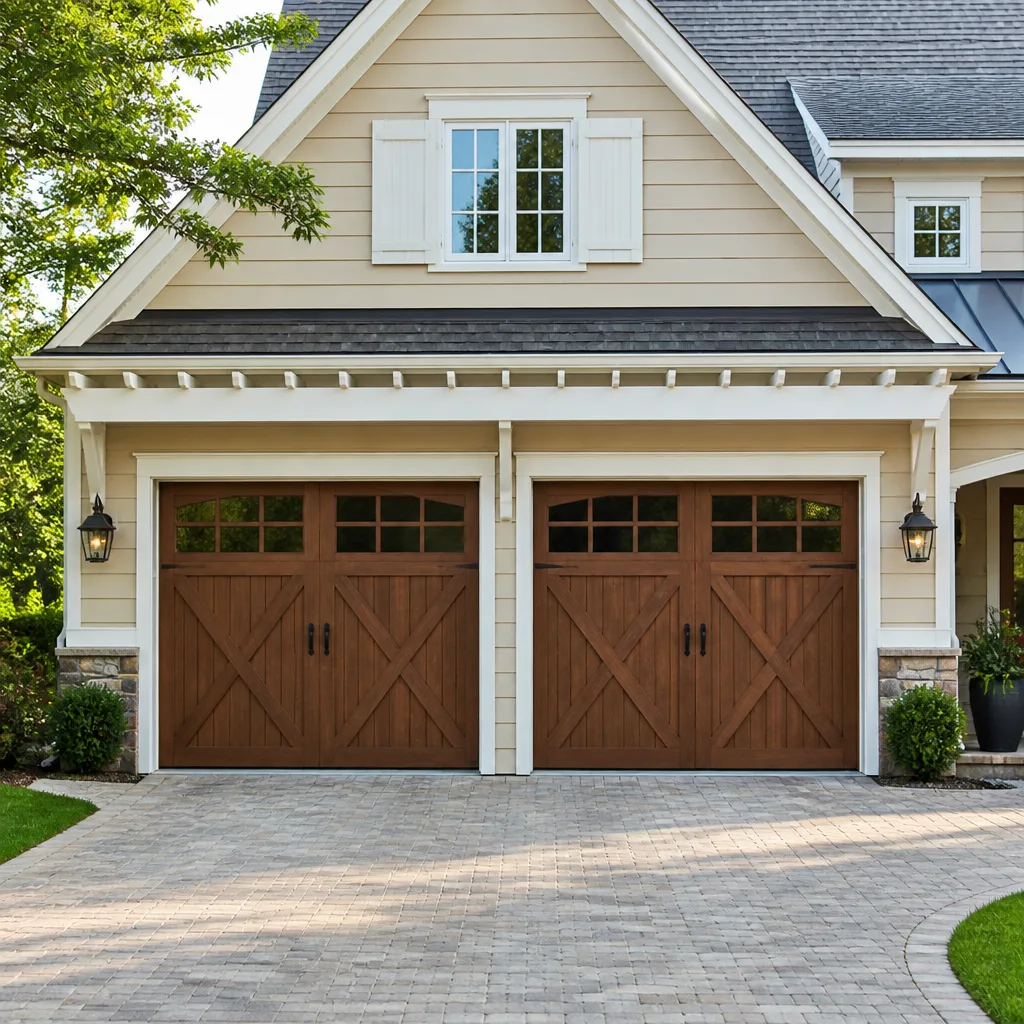 Carriage house
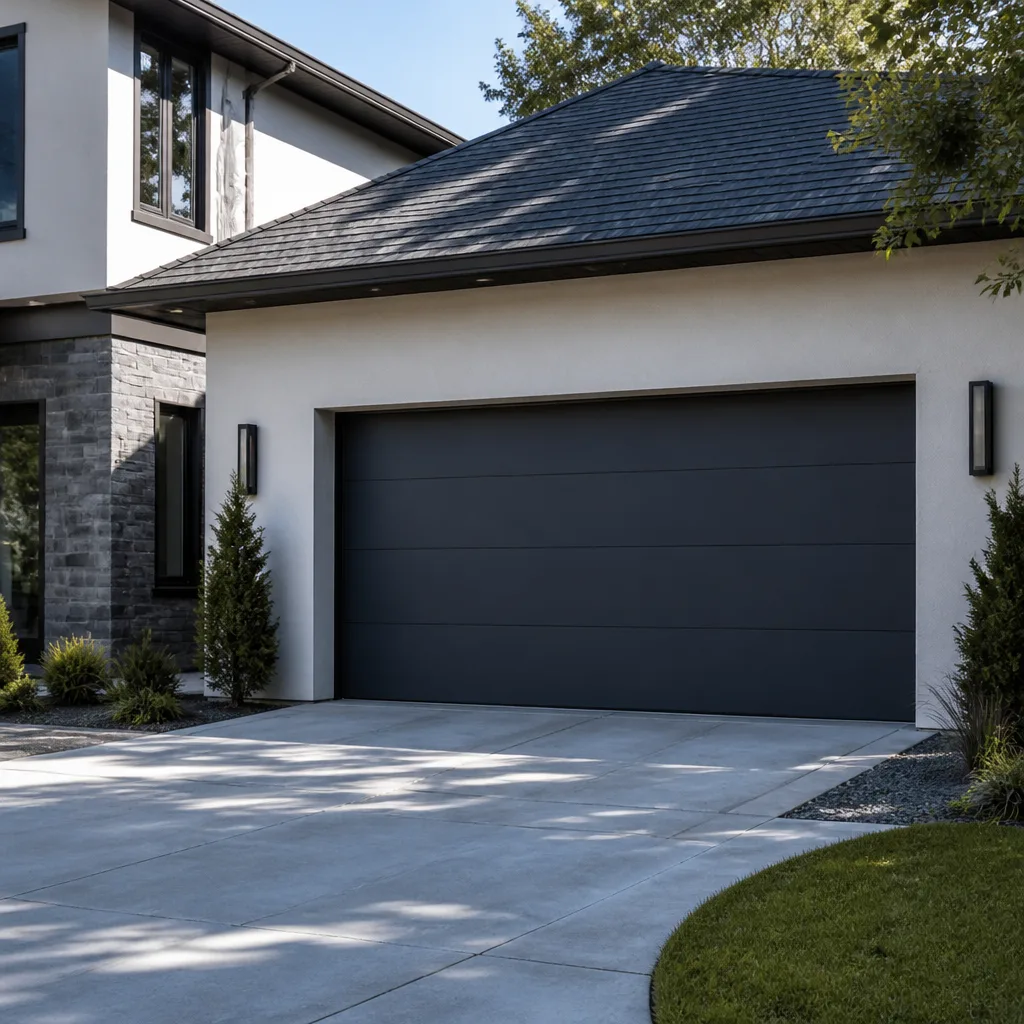 Modern flush
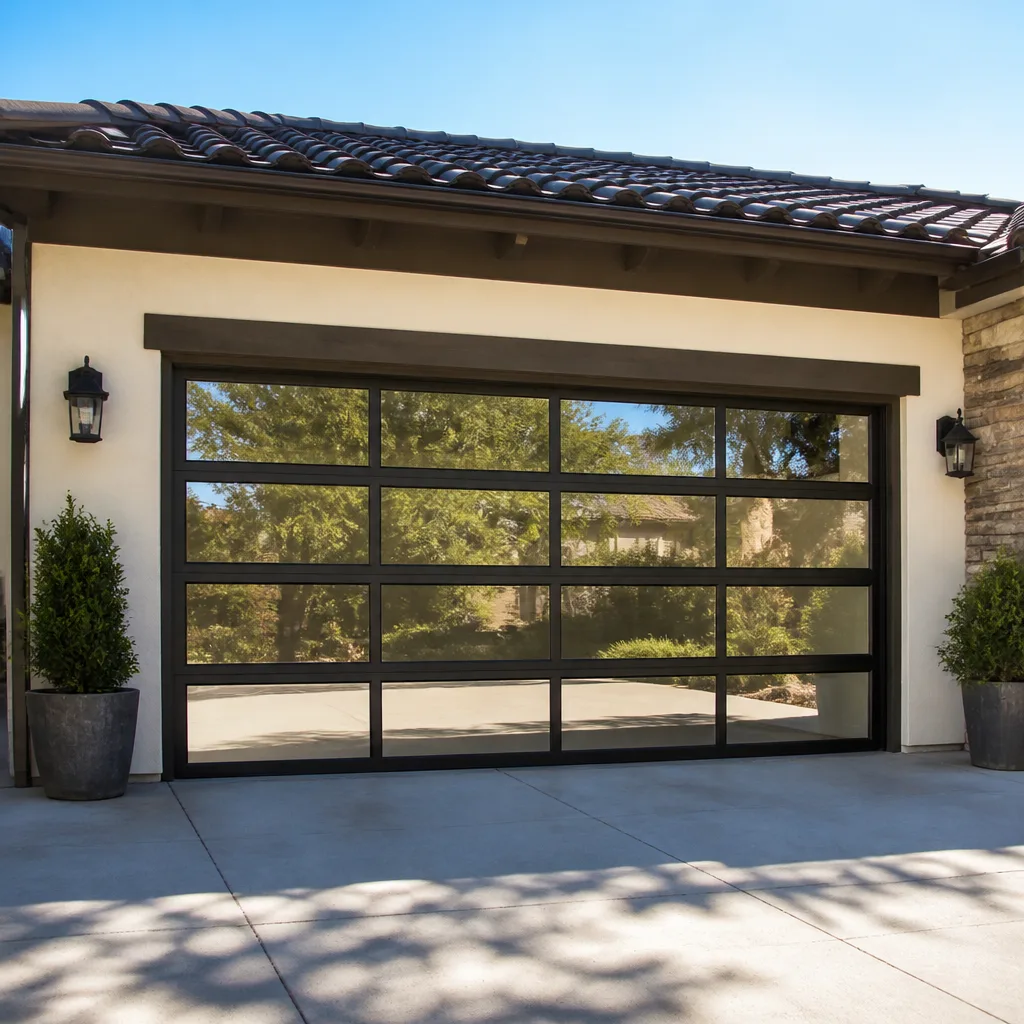 Full-view glass
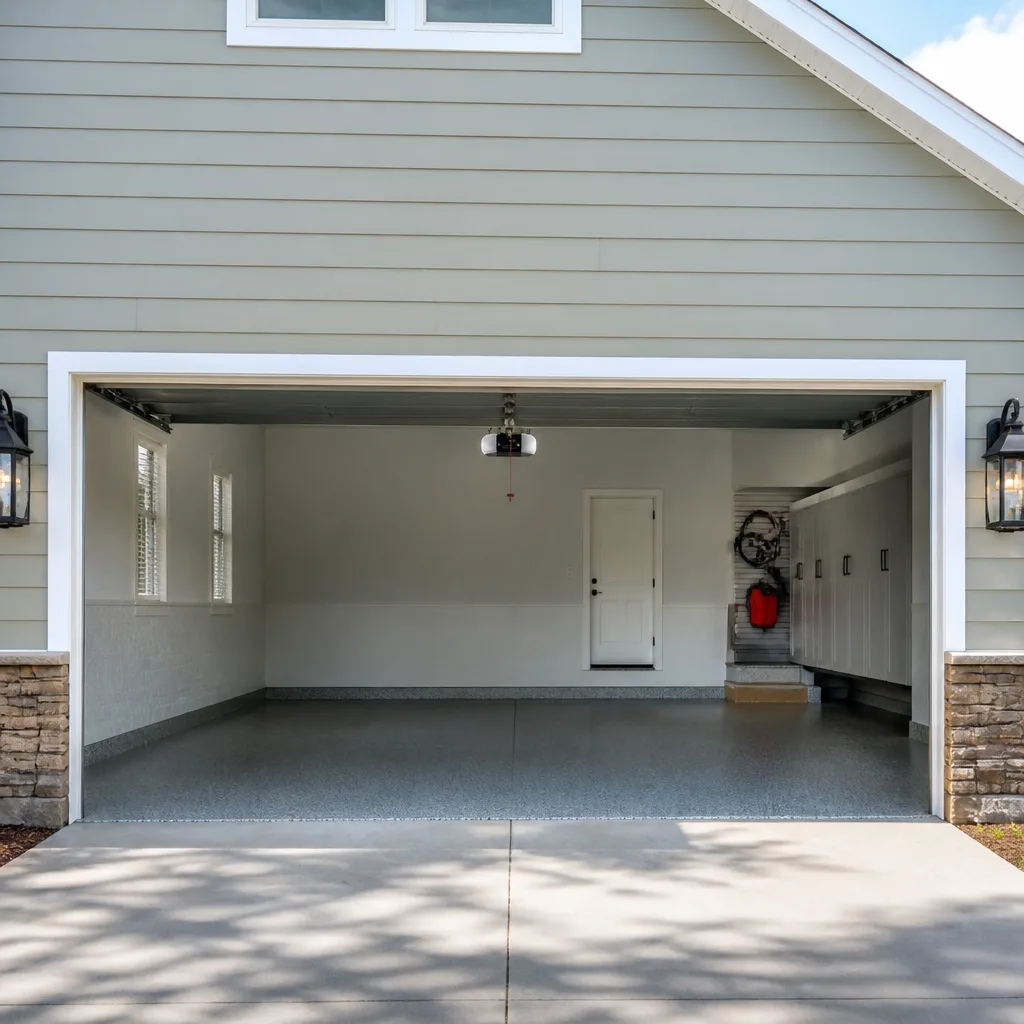 LiftMaster openers
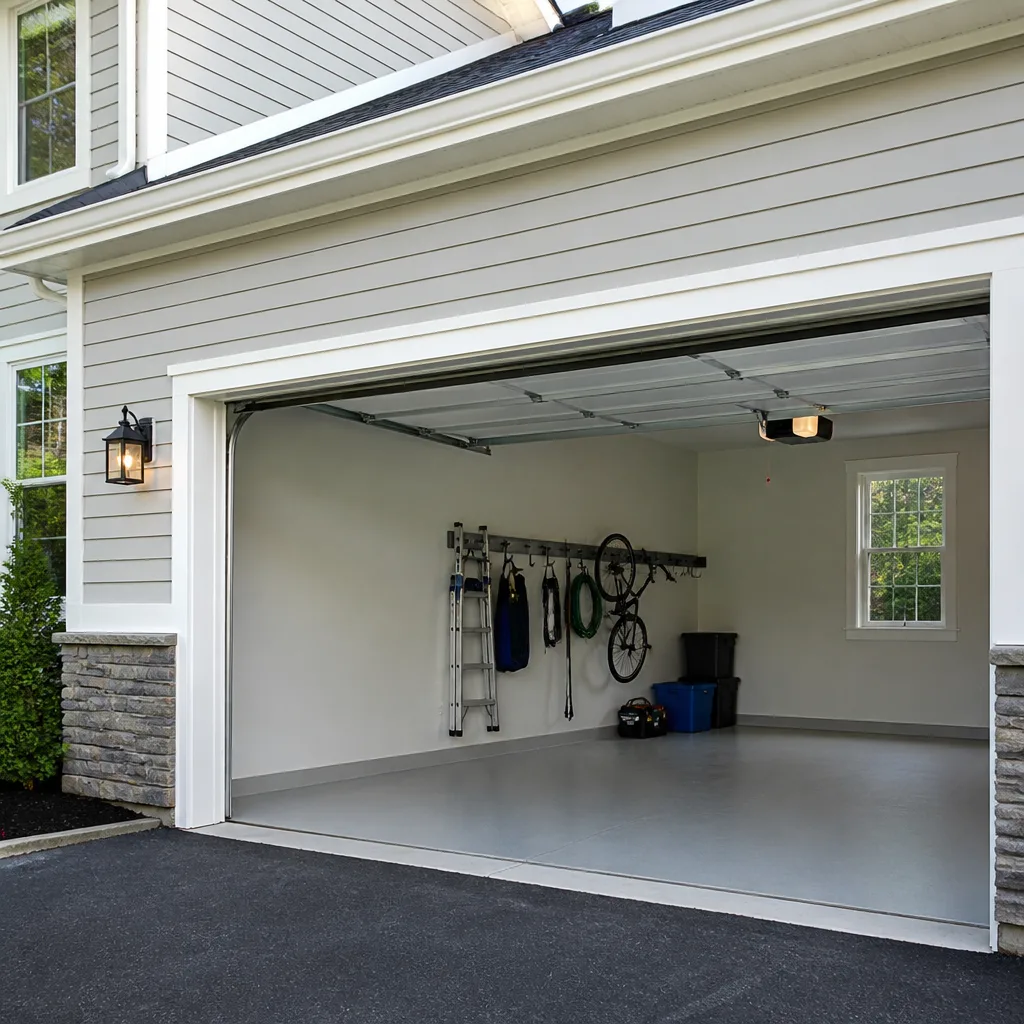 Chamberlain openers
Full 25-point door and opener safety check with every visit - springs, cables, rollers, tracks, and your LiftMaster or Chamberlain opener included
You get a price before we start. It does not change when the pro arrives.
Get your free estimateGarage Door Emergency Preparedness Guide for Baytown Homes
Most Baytown homeowners treat the garage door as a convenience until the power goes out. Hurricane Harvey made the point clearly: during the storm, dozens of Baytown homeowners couldn’t get their cars out or their gear in because they’d never once practiced the manual release on the opener they’d owned for years. It’s a thirty-second operation. It just has to be learned before you need it. This guide walks through the disconnect procedure for the three most common opener brands in Baytown, how to lock a door from the inside when the power is dead, which battery backup openers make sense here, how to reinforce a non-rated door before a storm, and the exact sequence for safely getting back to automatic operation when the lights come back on.
Quick Answer
Garage door emergency preparedness in Baytown means three things: knowing how to manually disconnect and operate your specific opener without power, knowing how to physically lock the door from the inside once it’s disconnected, and knowing what to inspect before you re-engage the opener after the storm passes. A door you can’t open by hand during an outage is a door that can trap a vehicle, block access to supplies, and leave a wind-rated opening unsecured.
Styles & brands we work with
- Raised-panel steel
- Carriage house
- Modern flush
- Full-view glass
- LiftMaster openers
- Chamberlain openers
Table of Contents
- Why Hurricane Preparedness Starts at the Garage Door
- How to Manually Disconnect Your Opener: LiftMaster, Chamberlain, and Genie
- Operating the Door by Hand Once It’s Disconnected
- How to Lock the Door From the Inside When the Power Is Out
- Battery Backup Openers: What Actually Works Under Hurricane-Prep Load
- Pre-Storm Reinforcement: Bracing Kits vs. a Rated Door
- The Post-Storm Re-Engagement Sequence
- What to Inspect Before You Press the Button Again
Why Hurricane Preparedness Starts at the Garage Door
Baytown sits in a part of the Texas Gulf Coast where hurricane season runs from June through November, and the garage door is the largest single opening on most homes in this area. It’s also the weakest link in a wind event when it isn’t rated, reinforced, or properly latched. A sectional door that gives way under pressure turns the garage into a wind tunnel, and the pressure has to escape somewhere. That’s why emergency planners treat the garage door as a structural element, not an appliance.
A power outage adds a second layer. When the grid drops, every modern opener loses its ability to lift the door, and the homeowner is left looking at a handle they’ve never pulled. The door doesn’t become dangerous at that moment, but it becomes useless for whatever the household needed the garage for: sheltering a vehicle, storing storm supplies, moving family members through to the house.
Here’s the point most people miss. A garage door emergency in Baytown is rarely just a broken spring or a dead motor. It’s usually the combination of an outage and a door nobody has ever operated by hand. If you’ve practiced the release, the outage is a minor inconvenience. If you haven’t, it’s a crisis during the exact hours you can’t get help easily.
Two things worth knowing as you plan. First, most openers are rated for a specific door weight and balance, and once you disconnect the door you’ll feel immediately whether it’s balanced. A door that’s hard to lift by hand on a normal day is going to be nearly impossible during a storm. Second, a door that’s been struck or twisted by wind should never be forced back into operation. If you’re not sure whether it’s safe to run, garage door repair is the first call after the storm clears. We’ll cover the whole sequence below.
How to Manually Disconnect Your Opener: LiftMaster, Chamberlain, and Genie
All three of these brands use a manual release for the same basic purpose: to detach the door from the opener’s carriage so you can lift the door by hand. The mechanism looks similar across the three, but the location and feel of the release differ enough that homeowners who switch brands often get confused. LiftMaster and Chamberlain share a great deal of internal design (both fall under the same corporate family), so their release cords and trolley systems are almost identical. Genie uses a related but distinct carriage design.
The universal pull-cord release
Most sectional doors paired with a LiftMaster or Chamberlain opener use a red-handled pull cord that hangs from the carriage on the rail. Pulling it toward the door (not straight down) disengages the trolley so the door slides freely on the tracks. Genie openers use a similar cord, sometimes with a different handle shape, and the pull direction is the same.
Here is the step-by-step procedure we recommend practicing once, calmly, on a day when the power is on.
- Close the door fully before you pull the release. Pulling while the door is partway up sends it dropping under its own weight.
- Locate the release cord. It hangs from the trolley or carriage on the opener rail, usually within reach of the top of the door. On LiftMaster and Chamberlain cords the handle is typically red. Genie cords are usually also color-coded, but confirm before a storm.
- Pull firmly toward the door, at a slight angle, not straight down. You should hear a distinct click when the carriage releases.
- Test the door immediately. Lift it about a foot by hand. If it moves smoothly, the disconnect worked. If it feels locked, the carriage is still engaged – pull the release again, harder.
- Practice re-engagement the same day. Pull the door open until the carriage re-clicks into the trolley, or follow the brand’s re-engagement procedure below.
The brand-specific differences worth noting: on LiftMaster and Chamberlain openers with a trolley that slides on the rail, re-engagement usually happens automatically when the door is fully opened or when you run the opener once. On some Genie models and older Craftsman units (Craftsman openers were made by Chamberlain for decades, so they behave similarly), you may need to manually slide the carriage back along the rail until it clicks. If your opener is a Genie and the re-engagement doesn’t feel positive on the first try, don’t force it. That’s a sign the trolley or door arm needs a look.
If you’ve practiced this once and something still feels wrong – the door drops, the release doesn’t click, or re-engagement fails – that’s a mechanical problem, not a user-error problem. Our garage door opener repair service handles this exact diagnosis, and we work on all of these brands.
Operating the Door by Hand Once It’s Disconnected
Once the trolley is disengaged, the door is on its own. A properly balanced sectional door should lift with one hand – roughly the effort of lifting a loaded grocery bag – and stay put wherever you leave it. If it doesn’t, the springs or cables are compensating poorly, and that’s a separate issue from the outage. Two hands on the bottom panel, lifting straight up with your legs, is the safe technique; never lift with your back alone.
A few operating notes that matter in a storm:
- Open it only as far as you need. Lifting the door on a windy day exposes the panels to gusts and lets rain drive in sideways. If you need to move a car out, open up, drive, close.
- Never leave the door partly open and unattended. A partially lifted sectional door has no positive lock and can drop if a spring or cable gives way.
- Watch the tracks. If a track has been bent or a roller has popped, don’t force the door along it. That bends panels, which turns a fixable problem into a door replacement.
- Don’t try to operate a door with a visibly broken spring. The door will be incredibly heavy, and the spring itself is under enormous tension. That’s a job for a technician with the right tools and knowledge of your door’s spring system, not for a homeowner with a hurricane on the way.
If the door feels much heavier than it did on a normal day, or if the springs are more than a decade old, this is worth a check before the next storm season. Torsion and extension springs both fatigue over time, and the difference between a smooth lift and a strained one is often just age. Handle a broken spring as a hazard: don’t touch the spring, the bracket, or the cable. Call a trained professional. Baytown Garage Door Repair Pros handles garage door spring repair as a dedicated specialty, and our technicians have up to 14 years of experience with torsion and extension systems on the brands most common in this area.
How to Lock the Door From the Inside When the Power Is Out
Most Baytown homeowners don’t know their door has an internal locking feature. It’s built into the door itself, not the opener, and it’s the correct tool for the job when the power is out and you’ve manually disconnected the opener. There are two forms on residential doors.
The slide lock or night latch
On most Clopay and Amarr residential doors, and many Wayne Dalton models, you’ll find a slide lock near the bottom or middle of one side stile – a handle that slides horizontally into a receiver on the door jamb. On sectional doors it’s common to find the slide lock on one side; on some configurations there’s a lock on each side for a stronger hold. It engages only when the door is fully closed.
How to use it
- Close the door fully by hand. The lock can’t engage unless the door is all the way down and the opener is disconnected – otherwise the opener’s force will fight you.
- Locate the slide lock. It’s a chrome or powder-coated handle attached to the inside face of the door, usually on the left stile of one panel, sometimes both.
- Slide it firmly toward the jamb. It should drop into the receiver with a positive feel. If it doesn’t, the door may not be fully seated; check for debris or a slight misalignment.
- For double doors with two locks, engage both. The whole point of the lock is resisting an inward push from wind or a would-be intruder.
- Add a brace if you’re concerned about wind. A vertical or horizontal reinforcement bar kit is the better pre-storm tool for a non-rated door (see below), but the slide lock alone is the difference between a door that can be pushed in and a door that can’t.
One caution. The slide lock is not a wind-rated device. It’s a security feature. If your door doesn’t have one and you’re worried about wind, the reinforcement section below is the answer. And if you can’t find one anywhere on your door, that doesn’t mean you missed it – some doors simply aren’t fitted with an interior lock. In that case the door should be considered unsecured until the opener is re-engaged or a reinforcement kit is installed.
Battery Backup Openers: What Actually Works Under Hurricane-Prep Load
A battery backup opener keeps the door moving when the grid drops. This is one of the single most useful upgrades for a Baytown home, because outages here can last for days, and a door that opens on battery means you can still get the car out and shelter supplies in. The LiftMaster 8550WLB is one of the models we install most often for this purpose, and it’s a good example of the trade-offs to understand before you buy.
Runtime is the honest part of the conversation. The battery inside a backup unit is designed for a limited number of open/close cycles per charge, and the cycle count drops as the battery ages, as the door weight rises, and as the temperature climbs. During hurricane prep you’ll typically use the door for a handful of movements – loading the vehicle, securing the door, maybe one more movement if you need to shelter – not dozens. If you’re treating the opener as a generator, you’ll be disappointed. If you’re treating it as a way to open the door five to ten times over a few days, it does exactly what it’s meant to.
A few practical points:
- Test the battery backup before storm season, not during it. Unplug the opener from the wall, run the door one cycle on battery, plug it back in. If the door doesn’t move on battery, the battery is likely past useful life.
- Know which of your two power sources runs what. Some battery backup units power the opener only; the wall control, lights, and Wi-Fi features may go down with the grid.
- Match the opener to the door. A high-lift door on a weak opener drains the battery faster through every cycle. Proper spring balance matters as much as the motor.
- Consider battery backup as part of an overall opener replacement if your current unit is past its service life. We install LiftMaster, Chamberlain, Genie, and Raynor openers, among others, and can walk you through which models include battery backup.
If you’re weighing a replacement, our team handles the whole system – springs, openers, panels, the whole door – so there’s no gap between the mechanic and the electronics. It’s one call and one point of responsibility.
Pre-Storm Reinforcement: Bracing Kits vs. a Rated Door
The most common mistake we see in Baytown homes before storm season is trusting a bracing kit to do what a wind-rated door is designed to do. It’s a fair confusion – both involve metal bars across the door – but they’re solving different problems.
What horizontal bracing kits actually do
A horizontal bracing kit is a set of steel or aluminum struts that bolt to the inside face of the door across several panels, tying the panels together so the door resists bowing inward under wind pressure. They work. They meaningfully raise the wind resistance of an existing non-rated door by distributing force across the full width of the door instead of concentrating it in the center of a single panel.
What they don’t do is make a non-rated door wind-rated. A rated door has been tested and labeled by its manufacturer to a specific design pressure; no kit retrofits that label onto a different door. The kit raises the door’s real-world performance, but the tested rating belongs to the door, not the accessory.
How to think about the choice
- If you’re staying in your Baytown home and plan to be there for another storm season, a bracing kit on a sound door is a reasonable investment. It’s the difference between a door that might buckle and a door that’s much less likely to.
- If the door itself is old, sagging, or already showing panel damage, the kit isn’t the answer. A new wind-rated door from Clopay or Amarr – both of which offer labeled wind-load doors – is the safer path.
- If you’re selling the home, a rated door adds a verifiable feature; a bracing kit is a modification.
- Either way, installation matters. A kit bolted through a damaged stile is a kit that will fail. The door has to be structurally sound first.
If you’re not sure what your door is rated for, the label is usually on a sticker near the bottom of the inside face, or on the door’s documentation. If you can’t find it, that’s fine – most residential doors in this area weren’t rated when new. Call us and we’ll tell you honestly whether a kit makes sense for your door, or whether it’s time to look at a rated replacement. There’s no upsell here; the right answer is the one that keeps the door on the house.
The Post-Storm Re-Engagement Sequence
The lights come back on, the storm has passed, and the temptation is to run the opener and get back to normal. Don’t. Re-engaging an opener on a door that’s been stressed by a storm without inspecting it first is one of the most common causes of avoidable damage we see after a wind event in Baytown. Here’s the sequence we recommend.
- Walk the door by hand first. Before you touch the opener, lift the door by hand along its full travel. If it binds, jerks, or feels uneven on either side, stop. That’s a track or spring problem, and re-engaging will make it worse.
- Look at the tracks. Are they straight? Are the rollers seated? Is there any debris (palm fronds, roof shingles, fence pieces) wedged in the track?
- Check the panels. Is any panel visibly bowed, dented, or separated from its hinge? A stressed panel can fail outright under opener force.
- Inspect the springs and cables from a distance. Look for gaps, kinks, or fraying. Don’t touch. If anything looks wrong, stop and call.
- Re-engage the carriage. Pull the door open by hand until the trolley re-clicks, or follow your brand’s specific re-engagement step. On most LiftMaster and Chamberlain units, running the opener once will reseat the carriage; on some Genie and older Craftsman units, you may need to slide it manually.
- Run the opener one full cycle with the door in view. Watch the door the entire travel. If you hear a bang, see the door lurch, or the opener stops itself, stop the test and call.
- Test the safety reverse. Place a two-by-four flat on the ground under the closing door. The door should reverse on contact. If it doesn’t, stop and call.
If anything in that sequence doesn’t feel right, don’t push through. A door that’s been through a hurricane has been through a load it wasn’t designed to hold passively, and the re-engagement is the moment you find out whether it held. Call us before you press the button. Free estimates on any inspection or repair, and we can get a technician out for urgent situations.
What to Inspect Before You Press the Button Again
If you want a simple pre-storm checklist that takes under ten minutes and doesn’t require any tools, this is the one we give to Baytown homeowners. Run it once in late May, once before any named storm, and once after the season ends.
The 10-minute pre-storm walk-around
- Operate the manual release. Pull the release cord, lift the door a foot, re-engage. Confirm the door is light enough to lift by hand.
- Test the slide lock or night latch. Confirm it engages and holds the door when pulled from the outside.
- Test the battery backup. Unplug the opener, run one cycle, plug it back in.
- Look at the spring. A visible gap or kink in a torsion spring is a call before the storm, not after.
- Check the weatherstrip along the bottom. A torn seal lets water in during driving rain and can be replaced cheaply before it becomes a floor issue.
- Clear the tracks. Remove any debris that’s accumulated. A clean track is a smoother cycle under stress.
- Note the door’s rating, if any. If your door has a wind-load sticker, record the number and keep it handy for your insurance file.
If anything in this list is unfamiliar or looks off, our team is happy to walk through it with you. We see the same cycles of wear on Baytown doors year after year, and most of the emergency calls we get after a storm trace back to a small item that would have taken ten minutes to fix in May.
Common Mistakes to Avoid
- Never testing the manual release until you need it. Homeowners who practice in calm weather move through an outage without drama. Homeowners who don’t are the ones calling at the worst possible time.
- Assuming all opener releases work the same. A homeowner who moves from a Genie to a Chamberlain (or vice versa) often pulls the wrong mechanism. Read the release handle before you pull it.
- Trusting a bracing kit as a wind rating. A kit raises the door’s real-world strength, but the tested rating belongs to the door. If you’re counting on the door to protect the house, count on a rated door.
- Leaving a partly open door unattended during a storm. A partially opened sectional door has no positive lock and no wind defense. Keep it closed.
- Re-engaging the opener before inspecting the door after a storm. This is the number one cause of avoidable damage we see after every wind event in Baytown.
- Forcing a door with a visibly broken spring. This turns a manageable repair into a door replacement and creates a serious safety risk. Stop and call.
- Skipping the safety reverse test. It’s a two-minute check that confirms the opener will stop on contact. It’s also one of the first things a technician tests on any call.
See the difference
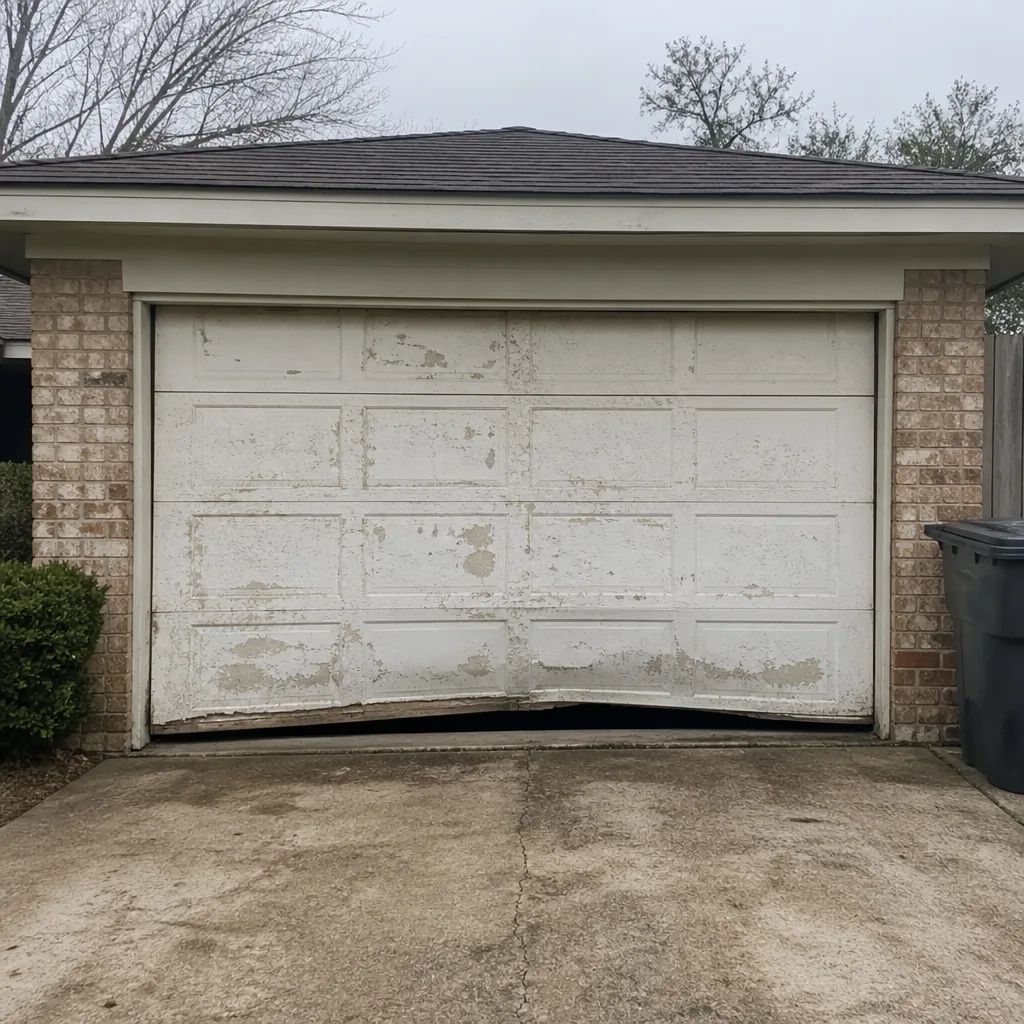 Before
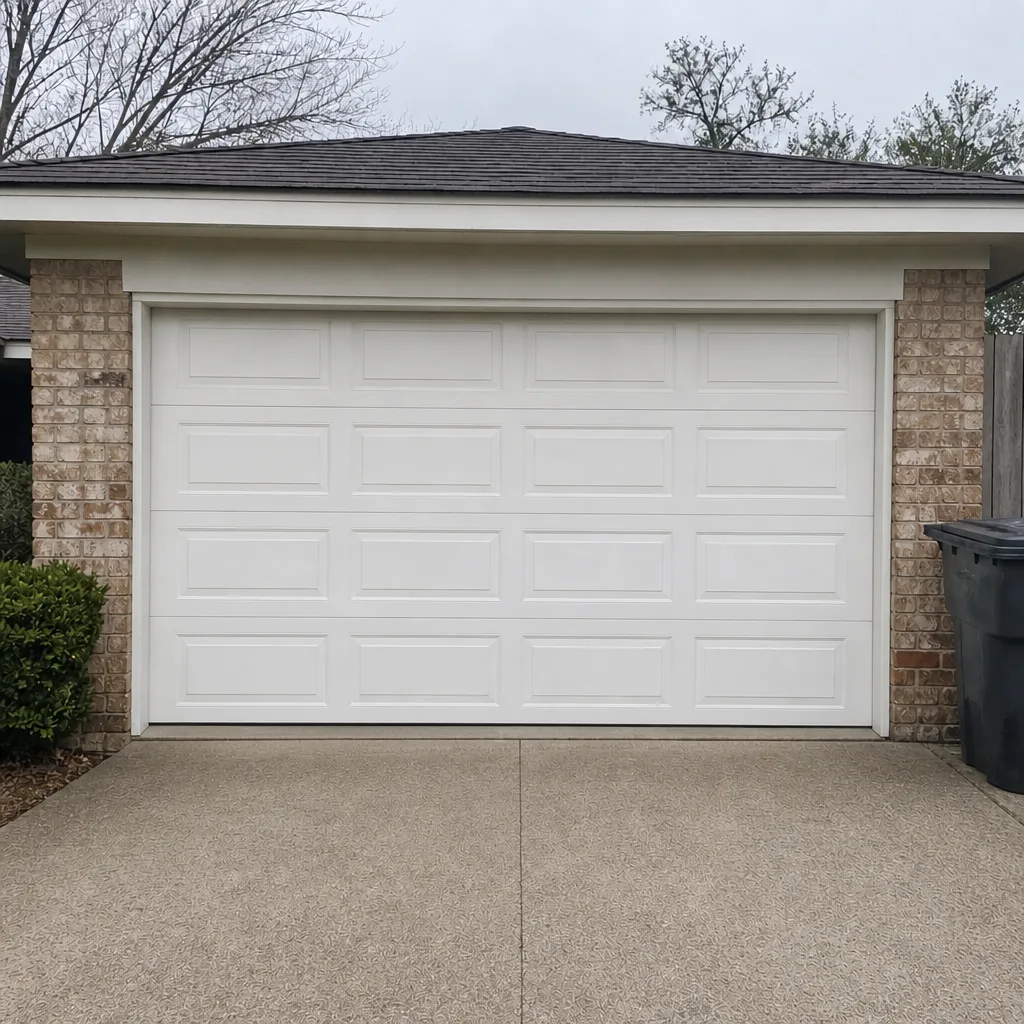 After
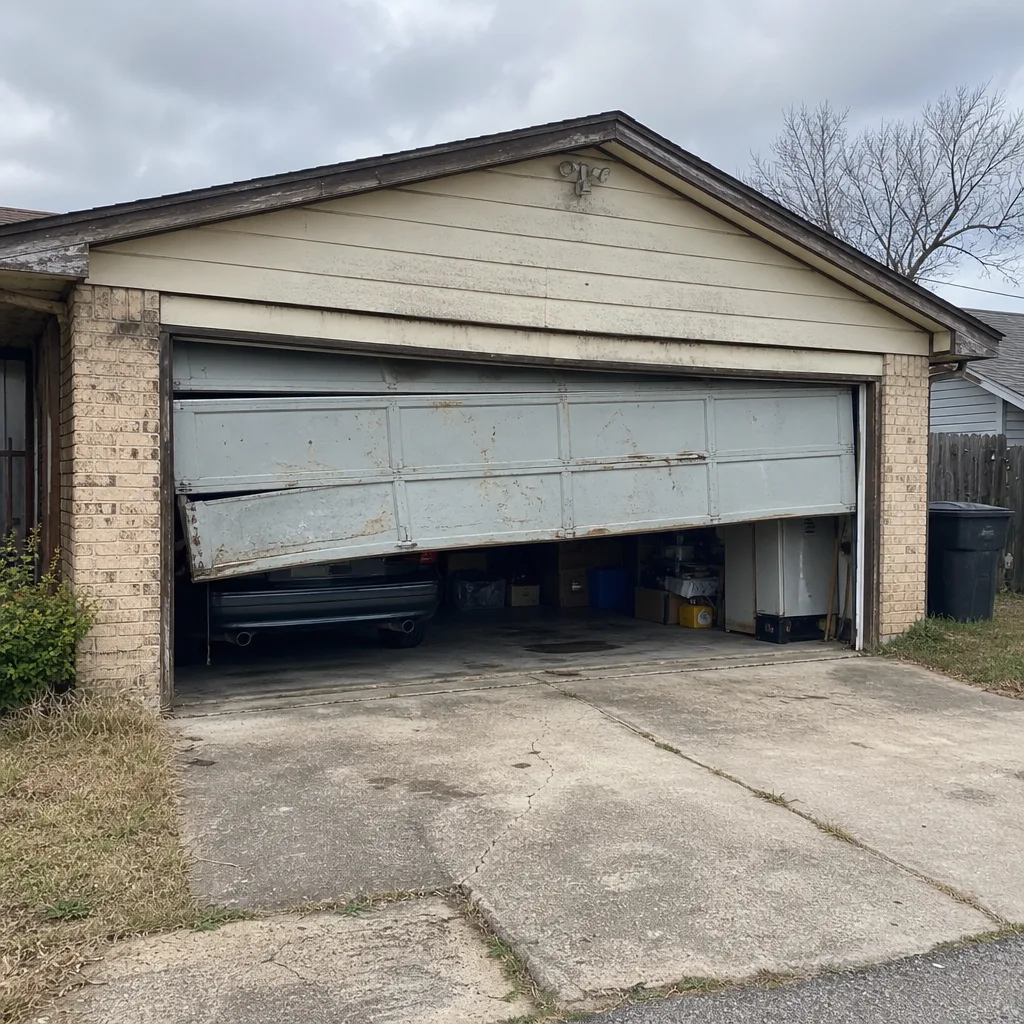 Before
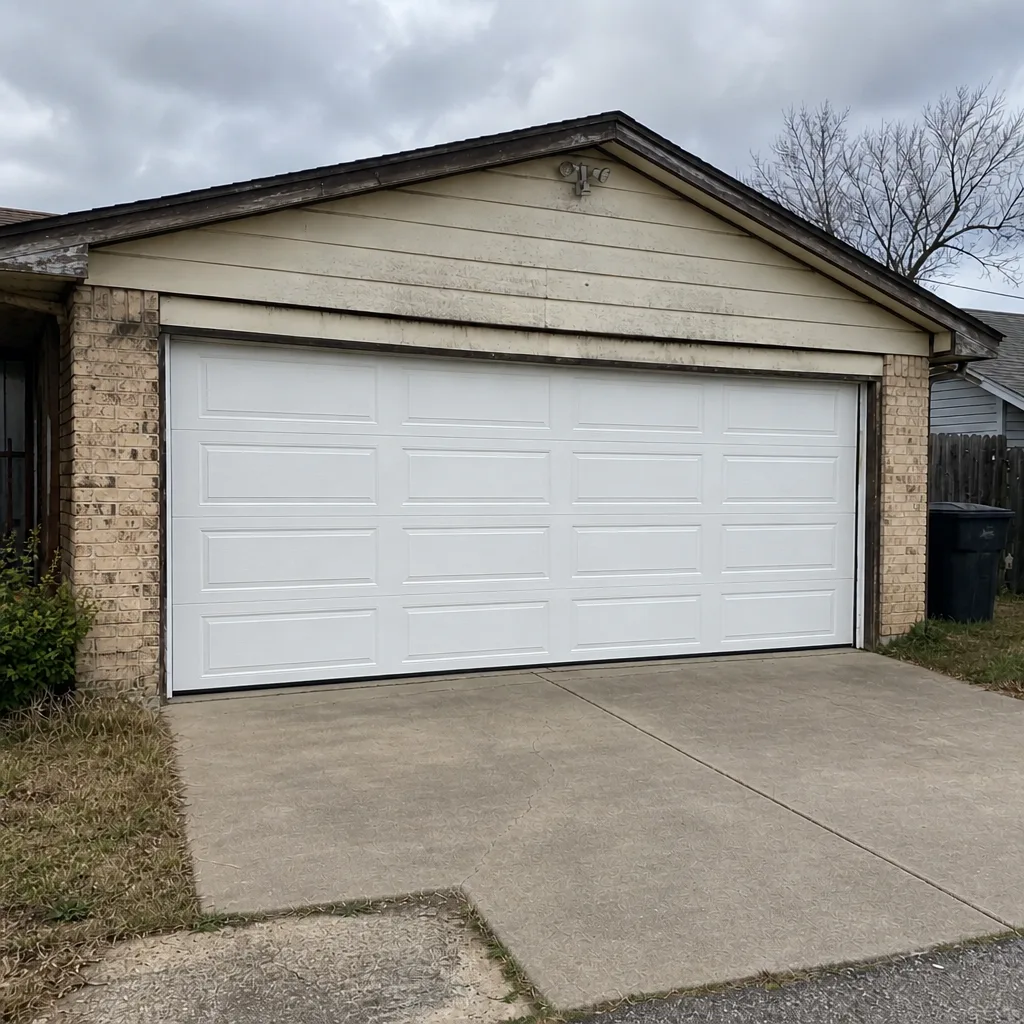 After
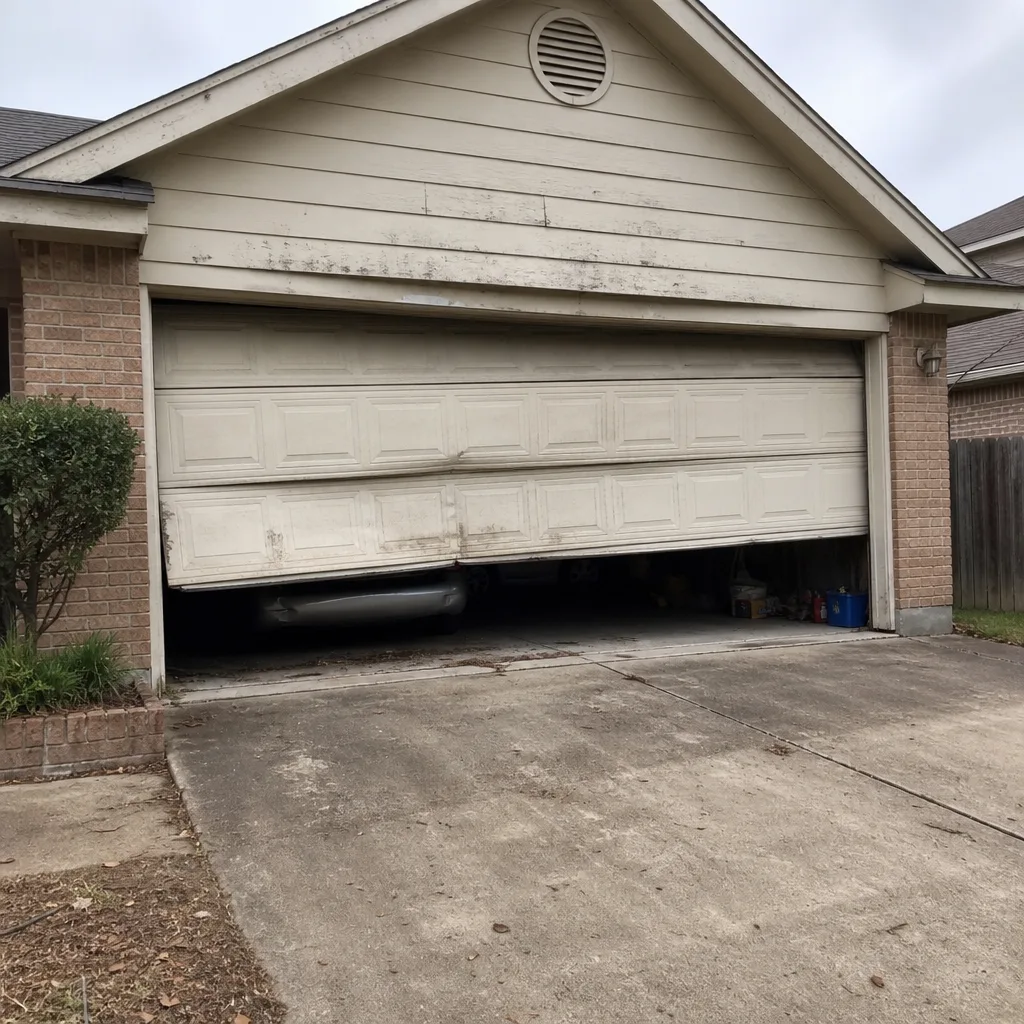 Before
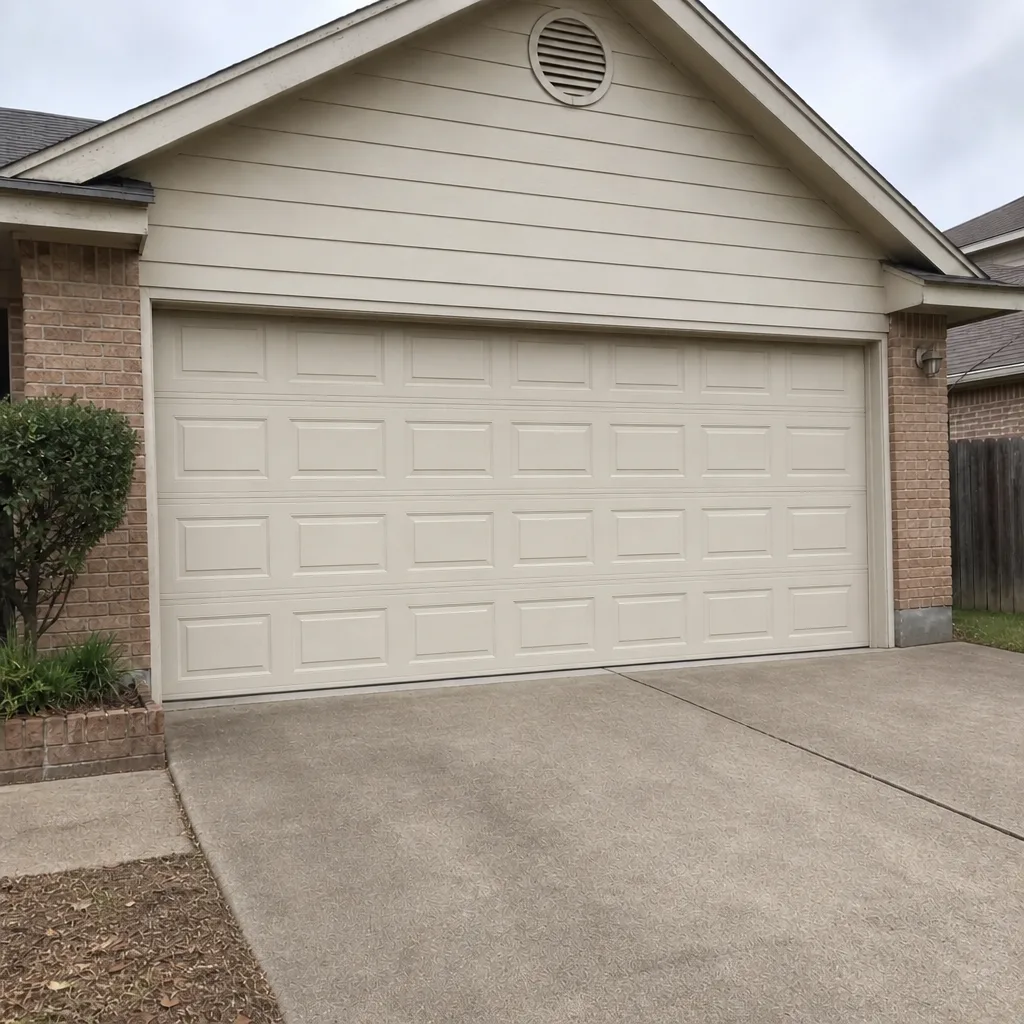 After
When to Call a Professional
A garage door is one of the few home systems where the DIY ceiling is genuinely low. Anything involving the springs, the cables, or the attachment points that hold the door to the tracks is a trained-professional job; a torsion spring under load can cause serious injury, and the tools required to work safely on it aren’t in most home toolboxes. Call us if your door is heavy to lift by hand, won’t re-engage after a storm, has a visible gap or kink in a spring, has a cable that’s off its drum or frayed, has a panel that’s bowed or detached from its hinge, or has an opener that runs but doesn’t lift the door. Call us before you force anything. Baytown Garage Door Repair Pros offers free estimates in Baytown – call (877) 492-3142. We answer 24/7. Fast dispatch from 7am to 7pm, Sunday through Friday.
Frequently Asked Questions
Pull the manual release cord that hangs from the carriage on the opener rail, close the door first if it’s open, then lift the door by hand from the bottom panel. The release disconnects the door from the opener so it moves freely. Practice it once before a storm so you’re not learning the procedure in the dark. If the door is too heavy to lift, or if you can’t find the release, call us – that’s not a step to force.
Most sectional doors have a slide lock or night latch that engages only when the door is fully closed and the opener is disconnected. It’s built into the door face, not the opener, so it rarely comes up in daily use. On most Clopay, Amarr, and Wayne Dalton residential doors, you’ll find it as a handle on one side stile. If you’ve had the door for years without noticing it, you’re not alone – but it’s the right tool for securing the door during an outage. If you can’t locate one anywhere, your door simply may not be equipped with a lock; in that case, a reinforcement kit or a rated door is the right path.
Yes, if outages are a real concern in your area. A battery backup unit keeps the door opening when the grid drops, which matters during hurricane season when outages can last days. The runtime is limited – a handful of cycles per charge, less as the battery ages – so it’s a way to move the door, not a generator. The LiftMaster 8550WLB is a common model for this purpose. Test it before storm season by unplugging the opener and running one cycle; if the door doesn’t move on battery, replace the battery before the next storm.
They help, but they don’t make a non-rated door wind-rated. A horizontal bracing kit distributes wind pressure across the door so panels resist bowing, and that’s a real improvement over no reinforcement at all. It does not transfer the manufacturer’s tested rating onto a door that wasn’t labeled. If the door is in good shape and you want a real upgrade, a kit makes sense. If the door itself is old or shows damage, a rated replacement from Clopay or Amarr is the safer answer, and the tested label is the only claim an insurer can verify.
Inspect the door by hand before you run the opener. Lift it along its full travel and watch for binding, then check the tracks for debris and the panels for visible damage. If everything looks clear, re-engage the carriage and run one full cycle with the door in view, then test the safety reverse with a flat object under the closing door. If anything lurches, bangs, or fails to reverse, stop and call us before you use it again. Re-engaging first and inspecting second is the mistake we see most often after storms in Baytown.
The local professionals we connect you with are licensed and insured as their state requires, and our own team holds the same. Estimates are free, the price is quoted and agreed before any work starts, and the written estimate is what sets the final price. We answer 24/7 at (877) 492-3142, with fast dispatch from 7am to 7pm, Sunday through Friday. If you have questions about credentials or scope before booking, ask when you call – it’s a fair question, and you should get a straight answer.
The Bottom Line
Garage door emergency preparedness in Baytown is really hurricane preparedness with a specific tool attached: the door itself. The manual release, the slide lock, the battery backup, and the reinforcement decision are all choices you make in calm weather, not during a storm. Practice the release once, find your door’s interior lock, test the battery every May, and inspect the whole system by hand before you run the opener after a storm. The rest of the year, keep an eye on the springs – they’re the component most likely to fail without warning. If anything looks wrong, call us and we’ll tell you honestly what you’re looking at.
Baytown Garage Door Repair Pros is a garage door specialist, not a generalist. Springs, openers, panels – the whole system – for LiftMaster, Chamberlain, Genie, Clopay, Amarr, Wayne Dalton, Craftsman, and Raynor. Our technicians have up to 14 years of experience. Call (877) 492-3142 for a free estimate. We answer 24/7. Fast dispatch from 7am to 7pm, Sunday through Friday.
Ready to get your door storm-ready or back in service today? Call us at (877) 492-3142 and we’ll take it from there.
Written by the team at Baytown Garage Door Repair Pros.